Weft vs Tape-In Hair Extensions
If you’ve spent any time stocking hair for your salon or resale shop, you’ve had at least three clients ask you to break down weft vs tape-in hair extensions for them. We’ve packed thousands of orders of both out of our warehouse over the last decade, seen every install mistake, every quality complaint, every happy client review that makes a stylist’s whole month. This isn’t a list of marketing buzzwords—just the real tradeoffs we watch new and veteran buyers miss all the time.
The basics, no fancy marketing jargon
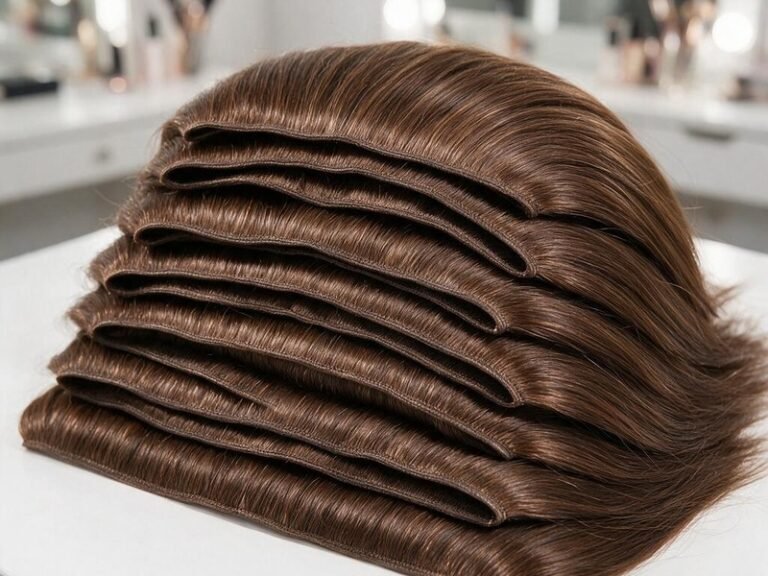
Let’s cut to the chase. Wefts are long, continuous tracks of hair stitched together along a thin top seam, designed to be sewn onto braided base tracks in a client’s hair. Most of the weft hair we ship is 100g per bundle, with options for hand-tied, machine-tied, or flat weft construction depending on how thin your stylists want the track to lay. There’s no adhesive attached right out of the package, which makes them easy to trim, color, and customize on site.
Tape-ins are smaller, pre-cut sections of weft with medical-grade, pressure-sensitive adhesive pre-applied to the top tab. Stylists install them by sandwiching a tiny, thin slice of a client’s natural hair between two matching tape tabs, no braiding required. Our standard tape in hair packs hold 40 pre-taped 1.5-inch pieces, totaling 100g of hair per pack, sealed individually so the adhesive doesn’t stick together in transit.
How weft vs tape-in hair extensions compare on install and wear
We talk to stylists every week who pick one method and swear it’s the only option anyone should ever use, but that’s just not true. It all comes down to what your client can tolerate, how much time they want to spend in the chair, and how they treat their hair day to day.
A full head of wefts usually takes a stylist 2 to 3 hours to install. First, they braid neat, flat base tracks across the client’s head to match their usual part, then sew each weft securely to those braids. Clients can go 6 to 8 weeks between move-up appointments, when stylists take out the wefts, adjust braids as natural hair grows, and re-sew tracks back in. This method works best for clients with thick, coarse, or curly hair that can hold a braid without excess tension, daily gym-goers, swimmers, and anyone who regularly wears high ponytails or updos. For clients who want a super flat root for sleek styles, many stylists reach for the thinner, flexible invisible tape style we break down in our guide to invisible tape-ins.
Tape-in installs are drastically faster. A full head takes 45 minutes to 90 minutes, no braiding required. Stylists section thin slices of hair, press the tape tabs in place, and seal them with a quick clamp. Wear time between appointments is shorter, though—usually 4 to 6 weeks, because adhesive breaks down over time from scalp oils, sweat, and hair products. Tapes work beautifully for clients with fine to medium density hair who don’t want to sit through a long sew-in, and people who prefer lower tension at the root. They don’t hold up as well for people who douse their roots in hair oil daily, or competitive swimmers, because both break down adhesive fast.
Real costs for you as a buyer, not your clients
We see so many new buyers compare per-gram prices across methods and assume one is way cheaper than the other, but that math never adds up once you factor in labor, reuse, and extra supplies.
For premium cuticle-intact Remy human hair, wholesale weft prices run $65 to $95 per 100g bundle, depending on length and texture. Machine-tied wefts sit on the lower end of that range, while ultra-thin hand-tied wefts cost more due to the skilled hand labor required to stitch them without bulk. Our MOQ for wefts is 2 bundles per length and texture for wholesale accounts, since no extra processing is needed once wefts come off the factory line.
Tape-ins of the same hair quality run $75 to $110 per 100g pack. The price gap comes from extra factory work: cutting wefts to size, applying medical-grade adhesive, adding protective peel strips, and packaging pieces so they don’t stick together. MOQ for tape-ins is a little higher, usually 5 packs per length and color, to account for that prep work.
Reuse makes a huge difference in long-term value, too. Wefts can be reused for up to 12 months with proper care, since there’s no adhesive to gum up the seam—stylists just un-sew them, wash gently, and reattach to new braids. Tape-ins can be reused 2 to 3 times (roughly 3 months total wear), but every move-up requires scraping old adhesive off tabs and applying new tape, adding $5 to $10 in supply cost per client and 15 to 20 minutes of chair time.
The annoying downsides no sales page mentions
No extension method is perfect. We hear about every frustration, because buyers call us when something goes wrong, so we don’t sugarcoat this stuff.
Wefts can cause serious tension if a stylist braids base tracks too tight. We get at least two emails a month from new stylists whose clients have sore scalps or small traction alopecia patches from over-tight braids, and there’s no quick fix except taking the install out to let the scalp rest. If you cut a machine weft without sealing the edge, it will shed like crazy—we’ve seen new stylists snip wefts down the middle to fit a client’s head, leaving loose hair all over their client’s shirt a week later. Even thin hand-tied wefts can show if a stylist places them too high for clients who wear their hair pulled tight.
Tape-ins have their own headaches. The adhesive hates silicone. If a client uses silicone-heavy conditioner or oil within an inch of their roots, tapes will slide right out, no exceptions. We had a Florida salon send back a whole batch of tape-ins a few years back swearing adhesive was defective, turns out every client with slips used a popular drugstore silicone-heavy oil applied straight to roots. Bleach and hair color break down adhesive too, so stylists have to keep color off tabs when toning, adding extra appointment time. Dry shampoo buildup under tabs also causes lifting, so clients have to wash roots thoroughly between installs.
If you’re doing quick back-of-the-napkin math to decide what to stock first, these are the hard numbers we reference for new buyers:
- Average wholesale cost per 100g, premium cuticle Remy: $65-$95 for wefts, $75-$110 for tape-ins
- Full head install time: 2-3 hours for wefts, 45-90 minutes for tape-ins
- Wear between move-ups: 6-8 weeks for wefts, 4-6 weeks for tape-ins
- Maximum reuse with proper care: 12 months for wefts, 3 months for tape-ins
- Ideal client hair type: Thick/coarse/curly hair for wefts, fine/medium/straight-wavy hair for tape-ins
Quick answers to the questions we get every week
Which method causes less hair damage?
Honestly? It doesn’t matter what method you pick if the install is bad. Over-tight weft braids cause way more tension damage than a correctly applied tape-in. Tape-ins that are too heavy for fine hair, or ripped out instead of removed with solution, cause just as much breakage as a bad sew-in. There is no zero-damage extension method, no matter what ad copy says. The best way to cut damage is to match the method to the client’s natural hair density, and make sure stylists aren’t overpacking installs to chase extra length or volume.
Do I need to stock both for my business?
For most US buyers, yes, but you don’t need to stock every length, color, and texture in both right out the gate. We usually tell new salon owners and resellers to start with their top three selling lengths (almost always 18, 22, and 26 inch) in their three most requested neutral colors for both methods, then expand as clients ask for specific shades or textures. Once you have a feel for what your client base gravitates to, you can add in other styles when you browse all hair extension styles without locking up too much cash in slow-moving stock.
At the end of the day, there’s no universal “better” option between the two. A lot of the most successful salons we work with make 60% of their extension revenue from wefts and 40% from tape-ins, adjusting recommendations to match each client instead of pushing a one-size-fits-all solution. If you have specific questions about which stock mix makes sense for your area, you can always reach out to our team—we’re happy to walk you through what buyers in your region are ordering most, no hard sell.
Send Us Your Hair Inquiry
Need bulk pricing, samples, or a private-label quote? Fill in the form and our team will get back to you within one business day.