What Does Raw Bulk Hair Mean?
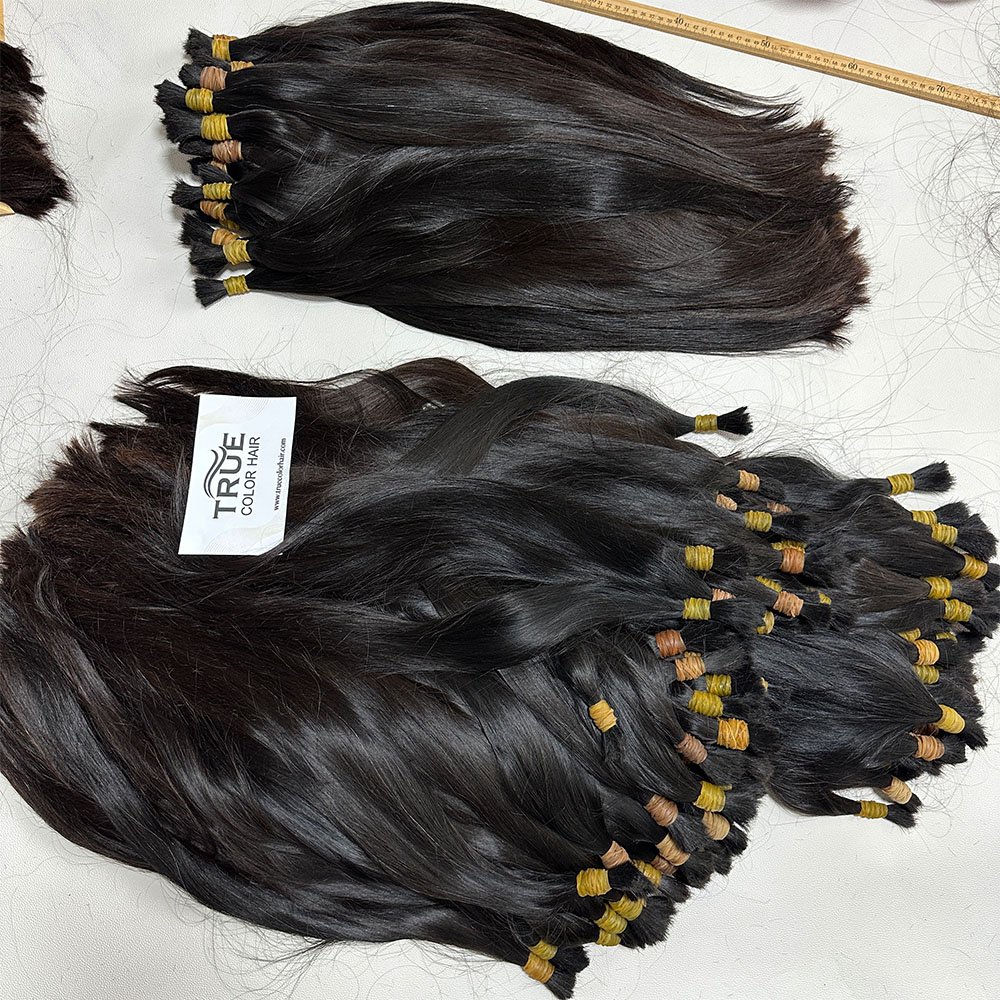
When people search for what is raw bulk hair, they are usually trying to understand two things: what “raw” really means and why the hair is sold in a loose form instead of as finished wefts, bundles, or extension pieces. Raw bulk hair is human hair supplied as loose strands or a collected ponytail rather than being sewn into a weft. The key idea is that the hair has not been heavily processed into a finished extension product. Depending on the supplier and sourcing method, raw hair may have undergone basic cleaning, sorting, drying, and preparation, but it is generally marketed as hair that retains much of its natural characteristics.
The word “raw” deserves some caution. It is not a universal industry grade with one fixed definition. Different suppliers may use the term in different ways, so buyers should not assume that every product labeled raw bulk hair has exactly the same level of processing. A reliable supplier should be able to explain where the hair comes from, how it was collected, whether it has been chemically treated, and what sorting or preparation was performed. This matters especially for buyers comparing raw human hair from different factories or countries.
The loose format is one of the biggest advantages of bulk hair. Because the hair is not already attached to a finished weft or tape, manufacturers and professional hair businesses can decide how they want to use it. It can be made into bulk hair extensions, wefts, braiding hair, custom pieces, or other hair products. This flexibility is one reason raw bulk hair is popular with brands that want more control over their final product.
Raw bulk hair can also be supplied in different lengths, textures, and colors. Natural straight hair is common, but the exact texture depends on the source. Chinese raw hair, for example, can naturally have a relatively straight and smooth appearance, although characteristics vary from one collection to another. For buyers, the most useful approach is to evaluate the actual sample rather than relying only on the word “raw.”
How Is Raw Bulk Hair Collected and Prepared?
The quality of raw bulk hair starts before it reaches a factory. Hair must first be collected, sorted, and prepared carefully. The collection method can vary depending on the source and supplier. Once collected, the hair may be grouped according to length, texture, color, and overall condition. This sorting stage is important because a loose collection can contain differences in length and texture if it is not carefully handled.
After collection, the hair is normally cleaned and prepared for further use. Basic preparation may include washing, drying, removing unwanted material, and sorting the strands. The exact process is supplier-specific, which is why buyers should ask clear questions instead of assuming that all raw hair is prepared in the same way. If you are buying for a brand or manufacturing operation, it is worth asking about sourcing, processing, sorting, and quality-control procedures before placing a large order.
One detail that deserves special attention is cuticle direction. When hair is kept in a consistent direction, the outer cuticle layers can remain oriented the same way from root to tip. This can contribute to a smoother feel and more consistent movement. That is why buyers interested in cuticle aligned hair often ask how the hair was collected and sorted. However, “raw” and “cuticle aligned” are not interchangeable terms. Raw describes the level of processing or natural state being claimed, while cuticle alignment describes how the strands are arranged and handled.
A good supplier should also be able to discuss quality control. For wholesale buyers, consistency matters almost as much as the quality of one sample. A sample may look excellent, but the more important question is whether future batches can meet the same specifications. This is particularly important for bulk hair wholesale because brands and salons need products they can reorder with reasonable consistency.
If you are comparing suppliers, ask for a sample first. Check the texture, ends, density, smell, cleanliness, shedding, and overall feel. If the hair is intended for coloring or other processing, ask what treatment it has already received. The more clearly a supplier can explain the product and its preparation, the easier it is to judge whether the hair fits your intended use.
Raw Bulk Hair vs. Remy Hair and Virgin Hair
Raw, Remy, and virgin are three terms buyers often see together, but they do not mean the same thing. Raw bulk hair generally refers to loose human hair that is presented as minimally processed or retaining natural characteristics. Remy hair usually refers to hair in which the cuticles are kept aligned in the same direction. Virgin hair is commonly used to describe human hair that has not been chemically processed, although definitions and marketing practices can vary by supplier. These terms can overlap, but none should automatically be treated as a guarantee of quality.
For example, raw hair can be cuticle aligned, but “raw” by itself does not prove that every strand is perfectly aligned. Likewise, Remy hair can be sold as a finished extension product, while raw bulk hair is a loose material that can be manufactured into different products. This distinction becomes important when comparing Remy bulk hair with raw bulk hair. Instead of asking which label sounds better, buyers should ask what was actually done to the hair.
The intended use also matters. A salon that wants ready-to-install extensions may prefer finished weft hair or tape-in products because they are already manufactured for a specific application. A brand developing its own extension line may prefer loose bulk hair because it offers more flexibility in production. Bulk hair can be turned into different extension formats depending on the manufacturing process and final design.
The same principle applies to tape-in hair extensions and K-tip hair extensions. These are finished extension formats, while raw bulk hair is a starting material. A business that wants to create custom extensions may therefore look at raw bulk hair differently from a customer shopping for a ready-to-wear product.
For buyers, the safest way to compare these categories is to look beyond labels. Ask whether the hair is chemically treated, whether color has been changed, how the cuticles are handled, how the hair is collected, and whether the supplier can provide consistent specifications. A clear product description and a physical sample will usually tell you more than a quality claim printed on a product page.
How to Choose Raw Bulk Hair for Your Business
Choosing raw bulk hair is less about finding the product with the most impressive description and more about matching the hair to your actual application. Start with the basics: length, texture, natural color, desired processing, and order quantity. If you are producing extensions, determine whether you need hair that can be made into wefts, tape-ins, K-tips, or another format. If you are a salon or small brand, a smaller trial order can help you evaluate the hair before committing to larger quantities.
Supplier transparency is another important factor. A dependable bulk hair supplier should be able to answer practical questions about sourcing, processing, quality control, available lengths, packaging, lead times, and repeat orders. Ask what the supplier means by “raw,” rather than assuming the term has one universal definition. If your business depends on repeat production, ask how the supplier manages consistency between batches.
It is also useful to compare the sample under realistic conditions. Feel the hair before washing and after washing if appropriate. Look at the ends, observe the natural texture, and check whether the strands behave as expected. If coloring or bleaching is part of your production process, discuss the intended technique with the supplier before testing. Hair that has already been chemically processed may behave differently from minimally processed hair.
For a broader explanation of bulk hair, you can also review What Is Bulk Hair. It can help clarify how loose hair differs from finished extension formats. If you are looking for products, you can compare bulk hair with weft hair, tape-in hair extensions, and K-tip hair extensions depending on your production or installation needs.
Finally, take time to verify the supplier itself. Look at the company background, communication quality, product information, and willingness to provide samples and answer technical questions. A supplier’s About Us page can provide additional background, while an FAQ page may answer common questions about products, orders, and shipping. Raw bulk hair can be a useful material for custom hair production, but the best buying decision comes from understanding exactly what you are getting and confirming that the supplier can deliver it consistently.