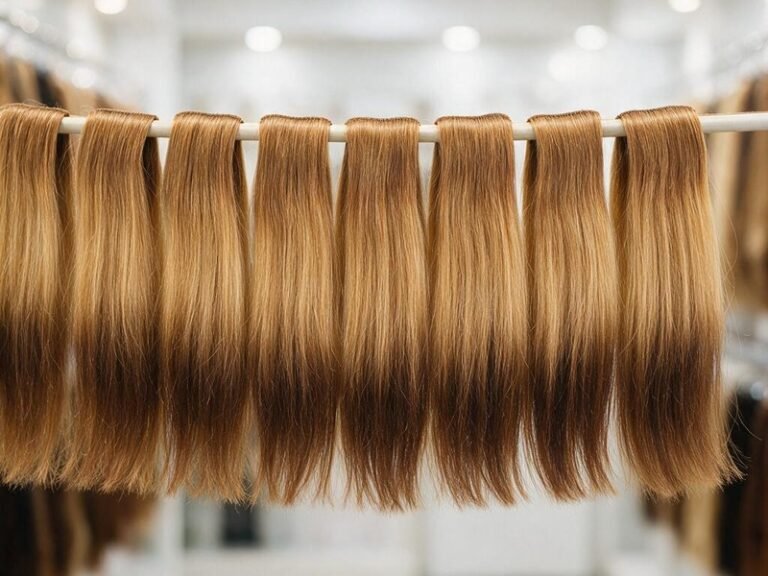
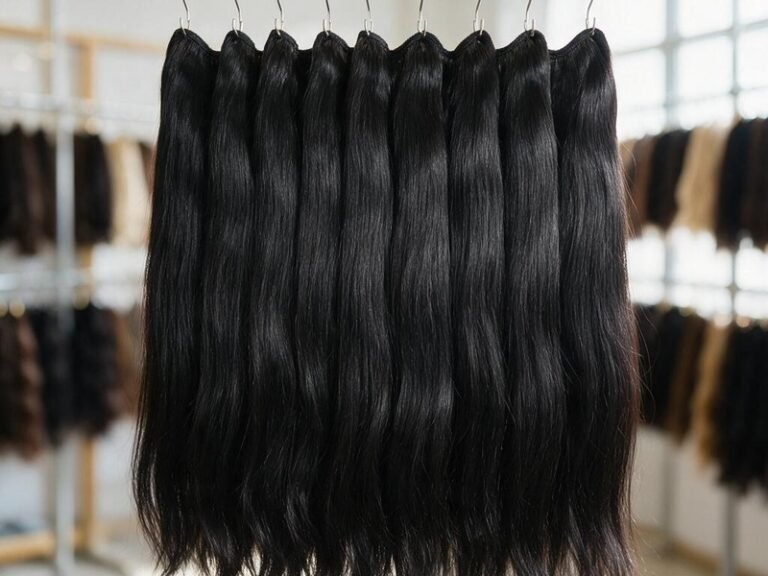
What Is Chinese Remy Hair?
If you’ve shopped for human hair extensions in the last 15 years, you’ve seen “Chinese Remy hair” listed on just about every wholesale and retail site out there. Most of those listings don’t tell you what the term actually means, or how the definition gets stretched so thin you can end up with a product that barely qualifies as human hair, let alone Remy. We’ve run our processing and warehouse operations for over a decade, so we’ve seen every trick, every mislabel, and every solid batch come through our sorting tables, and we’re cutting through the noise here.
The no-fluff definition of Remy hair (no marketing speak)
Let’s get one thing straight first: Remy is not a hair type, an origin, or a premium brand. It’s a processing standard. For hair to qualify as real Remy, every single strand in a bundle has to be aligned so the cuticle faces the same direction, root end to tip end, just like it grows on a human head.
Non-Remy hair, by contrast, is collected from random piles of shed hair, swept up from salon floors, brush waste, or loose ponytail clippings where roots and tips get all mixed up. Factories will strip the entire cuticle layer off with an acid bath to stop that misaligned hair from tangling instantly, then coat the strands in a heavy silicone layer that feels soft and silky right out of the package. That coating washes out in 3 to 4 shampoos, though. Once it’s gone, the rough, cuticle-stripped strands grab onto each other, mat into tight knots at the nape, and turn dry and frizzy faster than you can explain it to an upset client.
That’s not to say non-Remy has no place. If you’re working with a client who needs hair for a one-time event, like a wedding or photoshoot, and has no plans to reuse the install, non-Remy can be a budget-friendly pick. It just won’t hold up for long-term wear.
So where does the “Chinese” part come in?
Here’s the part a lot of sellers lie about: “Chinese Remy” doesn’t always mean the hair was donated by people in China. It means the hair was sorted, processed, and quality-checked in Chinese factories that specialize in cuticle-aligned hair production. Some of the hair is sourced domestically, but a large portion comes from donors across India, Southeast Asia, and Eastern Europe, shipped to Chinese facilities because that’s where the most experienced sorting teams are based.
It’s not about cheap labor, either. The best factories have spent 20+ years refining their sorting process to hit 95%+ cuticle alignment across every bundle, a consistency level that smaller operations in other countries rarely match. The hair processed in these facilities tends to have a slightly thicker, more resilient individual strand than finer Indian Remy, which makes it hold heat styles really well. If you’ve ever ordered sleek, bone-straight bundles that hold a press for weeks without reverting, that’s the consistent strand density that makes Chinese straight hair extensions such a staple for salons.
Why half the “Chinese Remy hair” on the market isn’t actually Remy
Mislabeling is rampant in this industry, and we see it every time a new salon owner comes to us after getting burned by a random supplier. The playbook is always the same: a reseller buys the cheapest possible non-Remy stock for $10-$12 a bundle, slaps a “100% Remy Chinese Hair” label on it, and sells it for $30+ a bundle to buyers who don’t know how to spot the difference.
For context, right now a legitimate 100g bundle of 18-inch Chinese Remy weft costs between $28 and $35 wholesale, depending on texture and length. If you see that same spec advertised for less than $20 a bundle for orders over 10 pieces, you are not getting real Remy. You’re getting acid-stripped, silicone-coated hair that will fall apart on your client in a month.
This mislabeling happens across every product format, from bulk hair for braiding to tape-ins and clip-ins, because it’s almost impossible to tell the difference from a product photo. The silicone coating feels just as soft as real Remy when the hair is brand new, so buyers don’t realize they got scammed until after the first wash.
Real Chinese Remy hair: what you actually get (and what you don’t)
Real cuticle-aligned Chinese Remy isn’t some miracle product that never tangles or sheds, no matter what a flashy ad says. It’s just well-processed human hair, and it has clear tradeoffs, just like any other material. Here’s what you can actually expect:
- Lifespan: With basic care — sulfate-free products, heat kept under 375F, regular gentle detangling — it lasts 12-18 months for sew-in installs that get taken down and reinstalled every 6-8 weeks. Tape-in and k-tip formats last 3-6 months with regular move-up appointments. That’s 3 to 4 times longer than non-Remy stock, which usually needs replaced after 2-3 wears.
- Color flexibility: You can lift real Chinese Remy 2-3 levels without turning the strands mushy or stretchy, which makes it easy to match custom client colors, from warm honey blondes to bright fashion shades. We break down the exact limits and safe process in our guide to bleaching Remy bulk hair.
- Low but not zero tangling: You won’t get that impossible matted bird’s nest at the nape after a week of wear, but the hair will tangle if it’s left uncombed for days, exposed to salt water or chlorine without protection, or coated in heavy product buildup. It’s human hair, not plastic.
- Real downsides: It costs more upfront, which can be a barrier for buyers serving super price-sensitive clients. It also sheds a small amount, just like your natural hair, especially if you don’t seal weft ends before installing. There is no such thing as zero-shed human hair, no matter what a seller claims.
Quick checks to run before you place a bulk order
You don’t need a lab test to spot fake Remy, and you don’t have to take a supplier’s word for what they’re selling. Start small. Any trustworthy seller will let you order a single sample bundle across every format they carry, whether you’re testing wefts, k-tip hair extensions, or bulk for braids, so you can run your own checks before committing to a large order. If a supplier demands a $1000 minimum order just to let you touch and test the product, walk away.
When your sample arrives, run two quick tests. First, hold a dry strand at the mid-shaft, and run your fingers up from the tip to the root. Real Remy will feel slightly rough as you push against the cuticle, but it won’t catch or snag in random patches. If it feels perfectly smooth in both directions? It’s been acid-stripped and silicone coated. Second, wash a small section with regular clarifying shampoo 3 times, no conditioner. If the hair feels dry, tangles instantly, and leaves a slick silicone residue in the sink, it’s not real Remy.
Quick answers to common questions
Is Chinese Remy hair better than Indian or Brazilian Remy?
It’s not universally better, just different. Chinese Remy has slightly thicker individual strands, so it holds curls and straight styles longer and resists humidity-related frizz better than finer hair types, making it a great pick for clients who want long-lasting, low-maintenance styles. Indian Remy is finer and softer, which blends more naturally with clients who have thin, fine hair. As for “Brazilian Remy”? 9 times out of 10, that’s just Chinese Remy rebranded with a higher price tag, attached to a vague story about “exotic donor hair” to mark it up 40%.
Can I get virgin Chinese Remy hair?
You can, but it’s rare and expensive. Virgin hair has never been colored, permed, relaxed, or chemically treated, making it roughly 50% more costly than standard Remy. It’s also extremely hard to source in lengths over 22 inches, because very few people grow their hair that long without processing it. If you see a supplier selling 30-inch “virgin Chinese Remy” bundles for $40, that’s an outright lie.
Why does some Remy hair have short strands mixed in?
That’s not automatically a sign of bad quality. Real human hair grows with a natural taper — a single ponytail cut from a donor will have strands of slightly varying lengths, not every single strand cut to the exact same measurement. Good factories will sort out any strands shorter than 2 inches for standard bundles, but a small percentage of shorter strands is normal, and it helps the ends look full instead of thin and stringy. If every strand in a bundle is exactly the same length from top to bottom, that’s machine-cut non-Remy hair that will shed heavily as soon as you install it.
At the end of the day, the biggest mistake new buyers make is overcomplicating their purchasing decisions. Chinese Remy hair isn’t a scam, and it’s not some unbeatable miracle product. It’s just human hair that’s been sorted carefully to keep cuticles aligned, so it wears better, colors more predictably, and lasts longer than cheap, mass-processed non-Remy stock.
If you’re still sorting through questions about lead times, return policies, or texture matches, our frequently asked questions page has answers to most of the common questions we get from salon owners and resellers. If you’re ready to test samples, you can browse our full stock to find the right texture for your client base, no hidden fees or mislabeled stock.
Send Us Your Hair Inquiry
Need bulk pricing, samples, or a private-label quote? Fill in the form and our team will get back to you within one business day.