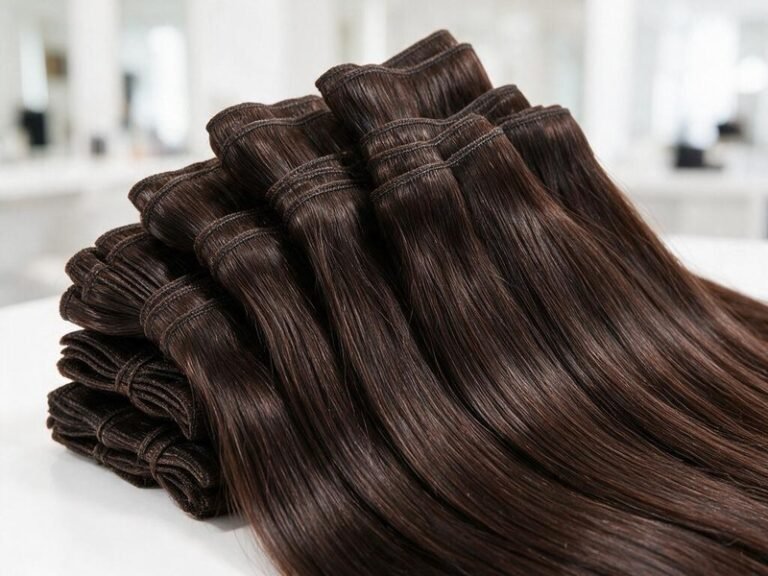
How to Check Chinese Hair Quality
If you’ve ever gotten a wholesale hair shipment that looked perfect in sample photos but turned into a dry, tangled mess after one client wash, you already know why learning how to check Chinese hair quality before you buy isn’t just a nice-to-have—it saves you hundreds, even thousands, in refunds and lost client trust. We’ve run our warehouse in China for over a decade, and we’ve seen buyers throw away 30%, 50%, even full orders because they didn’t know what red flags to look for before they paid. None of these checks require fancy lab equipment, either—most take 2 minutes or less once you know what you’re looking for.
First, stop trusting perfectly lit sample photos alone
Every supplier, even the ones selling the lowest quality mix of synthetic and animal hair, can pull a single nice bundle, set it under ring lights, and post a reel that makes it look like raw virgin hair. We see new buyers make this mistake every single week. They place a $1,200 order based on three curated photos, and the shipment that shows up is brittle, mismatched in length, and sheds so bad their clients complain before they even leave the salon. If you’re sourcing bulk hair for braiding or wefts, that unedited clip should show you the hair both dry and run gently under a tap, so you can see how it reacts to water before it’s coated in silicone spray. Don’t accept a pre-saved video, either. Ask the rep to hold up today’s newspaper or write your name on a piece of paper in the clip, so you know it’s not old footage from a better batch. It takes 10 seconds for them to film, and any legitimate supplier will do it without pushing back. If they make excuses? Walk away.
Do the 30-second wet test before you commit to a full order
If you’ve read our breakdown of what makes Chinese hair different, you know the highest quality batches have fully intact, aligned cuticles, just like the hair growing from your scalp. When cuticles are stripped or flipped the wrong way, hair tangles instantly the second it gets wet, no matter how nice it feels dry. The wet test is dead simple, and you can do it on any sample you get sent, or ask the supplier to do it on camera for you. Take a small strand of the hair, hold it taut at the root end, and run it under room temperature water from root to tip. Then run your fingers down the strand from root to tip, then back up from tip to root. If it feels smooth both ways, and doesn’t knot up when you squeeze the water out, the cuticles are likely aligned. If it feels rough going back up, or instantly snarls into a little matted clump when you squeeze it, walk away. A lot of suppliers will tell you a little tangling is “normal for human hair,” but that’s a cop-out. Good quality hair, even budget-friendly remy, shouldn’t tangle when it’s wet and untouched by product.
Check for silicone coating that hides damage
Honestly, the worst quality Chinese hair on the market is basically processed, stripped hair fiber dunked in a thick silicone bath to make it feel soft and silky out of the package. That coating washes out after 1-3 shampoos, leaving dry, frizzy hair that breaks off if you look at it wrong. You don’t need any special solution to test for this, either. Take a small strand of the sample hair, put a single drop of regular dish soap on it, and lather it under warm water for 30 seconds. Rinse it, let it air dry, and feel it. If it’s suddenly rough, squeaky to the touch, or full of flyaways that weren’t there before, that hair was coated to hide damage. We’ve seen buyers pay premium virgin hair prices for this exact stuff, because it feels amazing when it first arrives. This is the exact trick a lot of trading companies pull, which we break down in our guide to Chinese hair suppliers vs trading companies. They buy cheap over-processed hair from factory offcuts, coat it, mark it up 200%, and disappear when you complain after your first client wash.
Don’t skip the weft or bundle end check
A lot of buyers only run their hands over the top of the bundle, where the hair is longest and nicest, and miss the issues that cause the most client complaints. For machine weft hair, flip the weft over and run your finger along the stitching line. You shouldn’t see loose hairs poking out every half inch, and the stitch line should be tight enough that you can tug gently on individual strands near the weft without them pulling free. Loose stitching means the hair will shed nonstop once it’s installed, no matter how carefully your stylist cuts it. For loose bulk hair, grab the bundle at the tied top, hold it straight up, and run your other hand down to the ends in one smooth stroke. Count how many short pieces fall out. A few stray 2-3 inch pieces are normal, even in top quality hair—we’re dealing with human hair, not plastic. But if you end up with a palm full of 1-2 inch short bits, that bundle was stuffed with “filler” hair to make it look thicker than it is. Those short pieces will fall out within a week of install, leaving your client with thin, scraggly ends that look nothing like the full bundle they paid for.
Stop confusing “thick” bundles with actually good quality
There’s a weird myth floating around that a “good” bundle weighs 4 oz, or 113 grams, no matter the length. That’s not how hair works. Longer hair is heavier, so a 28 inch bundle should weigh more than a 12 inch bundle if it’s full from root to tip. Shady suppliers know buyers fixate on bundle weight, so they’ll cram that 113 grams of hair into every bundle, but most of that weight is short filler hair concentrated near the top weft, so the ends are thin and see-through. The actual test for fullness? Hold the bundle up to light, fanning the ends out. If you can see straight through the ends to the other side, it’s overstuffed with short hair, even if the total weight hits that magic number buyers look for. Don’t get us wrong, weight matters—we make sure our bundles are weighted consistently per length, so a 12 inch is 95-100 grams, a 20 inch is 105-110 grams, a 28 inch is 115-120 grams, no filler. But weight alone doesn’t tell you anything about how the hair will hold up after install, or how full it will actually look on a client’s head.
To put this in perspective, here’s the real quality difference you’ll see at common wholesale price points per 100 grams of 18 inch straight hair, so you know what checks to prioritize based on your budget:
- Under $20: Almost always silicone-coated, mixed filler, cuticles stripped. Expect 1-2 weeks of wear before it tangles and sheds. Skip for any permanent install.
- $20-$35: Decent remy hair, aligned cuticles, minimal silicone, little to no filler. Will last 6-12 months with proper care, great for everyday salon use.
- $35 and up: High quality virgin or raw hair, no harsh processing, minimal shedding, will last 1-2 years with proper care. Worth it for clients who want long-term installs.
We get the same questions from new buyers every time we walk through these checks, so let’s answer the most common upfront:
Can I do these checks before I pay for a full order?
Absolutely. Any supplier worth working with will let you place a small test order of 2-3 bundles, for a small sample fee that gets credited to your first full order, so you can run all these tests yourself before you commit to a 10kg+ wholesale order. If a supplier demands you order a 5kg minimum just to see their product, run—they’re hiding something. We always recommend testing at least two samples from different batches, too, because even good factories have occasional off batches.
How do I know if hair is 100% human, not mixed with synthetic?
The easiest test is the burn test, though we only recommend doing this on a tiny snip of hair so you don’t ruin a full bundle. Real human hair burns slowly, smells like burning natural hair, and crumbles into soft ash when you touch it. Synthetic hair melts, smells like burning plastic, and leaves a hard plastic bead when it cools. A lot of the super cheap silicone-coated hair is mixed with 10-20% synthetic fiber to cut costs, and it’s almost impossible to tell by feel alone until it melts under a 400-degree flat iron.
How long should good quality Chinese hair last?
It depends on the grade, how it’s processed, and how the client cares for it, but even mid-tier remy Chinese hair should last 6+ months with regular washes, minimal heat, and proper detangling. If it’s falling apart after a month, that’s not bad client care—that’s bad hair.
At the end of the day, checking Chinese hair quality doesn’t require a fancy degree or years of industry experience. It just requires not taking marketing copy at face value, asking for verifiable proof of what you’re buying, and running 2-3 simple tests before you drop thousands on a full order. If you have specific questions about batch testing for your next order, our frequently asked questions page covers minimum test order sizes and lead times, too. You can browse our full line if you’re ready to test a batch, or reach out directly if you want that unedited, name-in-frame video of whatever length or texture you’re sourcing. We don’t do the silicone coat trick, we don’t stuff bundles with filler, and we never send pre-recorded sample videos from three years ago.
Send Us Your Hair Inquiry
Need bulk pricing, samples, or a private-label quote? Fill in the form and our team will get back to you within one business day.