Sourcing Hair Donation Organizations 6 Inches: A Practical Guide for Hair Businesses
Most established hair donation programs do not want 6-inch hair for wig making because the finished usable length is too short after processing. For a hair business, donation organizations are usually not a reliable wholesale source; they are better treated as partners for salon donation drives, community goodwill, and understanding hair quality standards.
That does not mean 6 inches is useless. Six-inch ponytails can sometimes support shorter pieces, training hair, salon practice swatches, or smaller charity projects, but the rules vary by organization and the supply is rarely consistent enough to stock a business.
Do hair donation organizations accept 6 inches of hair?
The short answer: some may list 6 inches as a minimum, but many require 8 to 12 inches or more. A ponytail measured at 6 inches before cutting loses working length once the tying band, uneven ends, split tips, and processing loss are removed. A wig maker may only get a few usable inches from a short donation, which makes construction difficult, especially if the organization makes wigs for children or adults experiencing medical hair loss.
When reviewing hair donation organizations, check the current requirement directly with each program before advertising a donation event. Some groups measure straight from the elastic band to the longest tip. Others require the hair to be pulled straight, dry, secured in multiple bands, and placed in a sealed bag. Curly hair is often measured after gentle pulling, but every program sets its own rule.
Businesses sometimes assume short donations can be sold to cover event costs. That can cause problems. Most donated hair is given under the understanding that it supports a charitable program, not a resale channel. If your salon or store wants to collect hair, be transparent with donors about what will be donated, what cannot be accepted, and whether any rejected hair will be discarded or returned.
Can a hair business buy donated hair from these organizations?
Usually, no. Charitable hair donation organizations are not raw-material warehouses for extension brands. They use donations for mission-based programs, sort what they can use, and often discard or repurpose hair that does not meet standards. They generally do not offer predictable grades, lengths, colors, weights, cuticle direction, or business invoices.
If your goal is inventory, donated hair is a difficult input. A donation box may contain mixed textures, colored hair, gray hair, heavily heat-damaged ends, pet hair, product buildup, mold from wet packaging, or bundles that are too short. Even good ponytails may have inverted cuticles because hairs are collected from different donors and heads rather than kept in factory-controlled alignment.
For commercial extensions, buyers usually need terms like virgin hair, meaning hair that has not been perm-ed, color-treated, bleached, or chemically processed; Remy, meaning the hair strands are kept with cuticles facing mostly the same direction; and raw hair, meaning unprocessed donor hair with minimal steam or texture treatment. The strongest premium label is cuticle aligned, where cuticles run in one direction to reduce tangling and matting. Donation piles rarely meet those specifications consistently.
Where 6-inch donations can still help a salon or brand
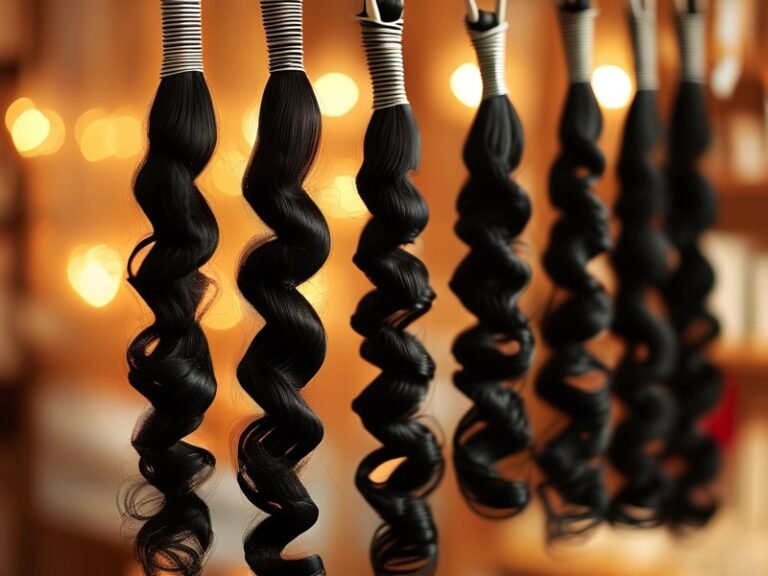
Six-inch hair can work better for community outreach than for resale inventory. A salon can host a cut-a-thon, educate clients about minimum lengths, and partner with a charity that accepts short hair for its specific programs. This builds trust with clients and stylists, but it should not be pitched to customers as a sourcing pipeline unless the organization explicitly confirms a commercial arrangement.
Short usable donations may be used for small wig components, repair projects, theatrical pieces, education, or practice mannequin work, depending on the program. Some organizations also accept gray hair, colored hair, or layered hair, while others do not. Never assume a group accepts everything; sorting short and nonstandard hair is labor-intensive, and charities may pay disposal costs for unusable shipments.
If you host a drive, give donors a printed requirement sheet: hair must be clean and dry, secured tightly at the top and often at one or two points below, placed in a bag, and mailed or delivered according to the charity’s instructions. Wet or damp hair can mildew in transit and ruin an entire donation. Also tell donors that cutting hair at home without proper banding can make even 8-inch hair unusable.
What buyers should compare before treating donations as supply
A commercial hair business needs repeatable quality, not just a bag of real human hair. If you sell install services, wigs, ponytails, or extension lines, your supplier should be able to tell you the origin, texture, length, weight, processing method, hair grade, and whether cuticles are aligned. You should also know whether the product uses single-donor or mixed-donor hair.
- Length: A 6-inch donation is not the same as a finished 6-inch weft. Extension length is measured on the straightened hair, and installed pieces need enough length to trim and blend.
- Weight: Bundle buyers commonly see 95–105 gram bundles, while tape-in sets may range from 40–70 grams for a smaller pack to 100–120 grams for a fuller set. Weight should be confirmed before ordering.
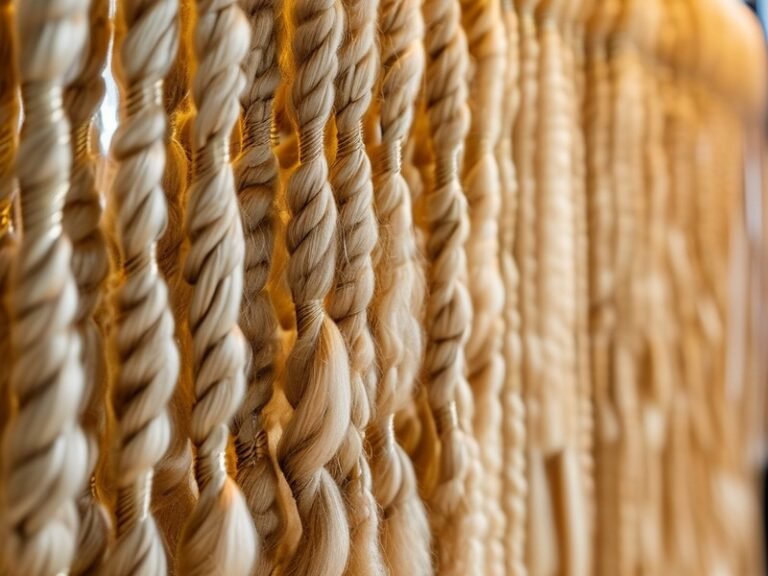
- Construction: A weft is hair sewn or bonded into a track for sew-in or beaded methods. Bulk hair is loose hair without a weft, often used for braiding or knotting.
- Application type: Tape-in hair uses adhesive tabs, while k-tip hair has keratin bonds applied with heat. An install is the professional application of extensions or a weave.
- Top pieces: A closure is a smaller lace or silk base, usually 4×4, 5×5, or 6×6, while a frontal spans ear to ear across the hairline. Both require matching hair texture and workmanship.
- Density: Density means how full a wig or unit is, often described as 130%, 150%, 180%, or higher. Higher density uses more hair and changes cost, not just appearance.
- MOQ and lead time: Wholesale orders often have a minimum order quantity, with stock colors shipping faster than custom textures, custom labels, or special lengths.
The tradeoff is straightforward. Donated hair may carry a strong story, but sorting, disinfecting, aligning, testing, and manufacturing it into saleable pieces can cost more than buying factory-controlled wholesale hair. A reputable supplier may cost more per kilo upfront, but you reduce chargebacks, tangling complaints, short shipments, and inconsistent texture.
How to work with donation organizations without confusing charity and inventory
If you want a charity program, contact the organization as a salon partner, not as a reseller. Ask for the current minimum length, accepted hair conditions, mailing process, donor forms, tax-receipt rules, and whether the group accepts colored or gray hair. In the U.S., tax deductibility can depend on the donor’s situation and the organization’s status, so your front desk should avoid giving tax advice.
Set expectations with clients. Many clients grow their hair for years and feel disappointed when a 6-inch ponytail cannot be accepted. Train stylists to measure before the cut: gather the hair in a ponytail, measure from the tight band near the scalp to the longest ends, and account for layers. If the donor is close to the cutoff, waiting a few months is usually better than sending hair that may be discarded.
Keep donation operations separate from purchasing. Use one tracker for charity donations and a separate purchase order system for wholesale stock. If a vendor markets “donated hair” commercially, ask for proof of consent, processing standards, sanitation, batch consistency, and export documents. Vague language such as “temple hair” or “charity hair” without paperwork is not enough for a serious B2B buyer.
What to ask a wholesale supplier when 6 inches is not enough
For commercial inventory, the practical question is not where to obtain random 6-inch donations, but how to buy the shortest usable product that fits your service menu. Short wefts, bulk hair, tape-ins, closures, frontals, and bob wig units all have different hair requirements. A factory can sort by length and texture, keep cuticle direction consistent, and produce enough units for a launch without depending on individual donors.
Ask suppliers whether the listed length is true length after straightening, whether curly textures shrink compared with straight textures, and how much waste is normal after ventilating or sewing. Request sample bundles before placing a larger order, then check shedding by running your hand along the weft, inspecting short hairs near the track, washing gently, and air drying. Compare weight, luster, curl return, coloring response, and tangling after several washes.
Be realistic about price. Human hair that is unusually cheap may be mixed with synthetic fibers, heavily shed hair, poorly aligned cuticles, or over-processed strands that become dry after coloring. A factory should explain the difference between budget steam-processed hair, Remy hair, and premium raw or cuticle-aligned hair without pressuring you to buy the most expensive option for every client.
FAQ
Can I donate 6 inches of hair to make a wig?
Only some organizations accept 6 inches, and many set higher minimums because wig making loses length during sorting, trimming, and processing. Always confirm the current rule before cutting, and make sure the hair is clean, dry, banded correctly, and long enough at the longest point.
Can my extension brand source hair from donation charities?
Most charities do not sell donated hair as wholesale inventory, and donation-based hair is inconsistent in length, quality, cuticle direction, and condition. For resale, work with a verified wholesale supplier that can provide consistent batches, clear specifications, sample orders, and proper documentation.
If you want to host a donation drive, keep it focused on clients, stylists, and clear charity guidelines. When you need saleable 6-inch or longer extension inventory, talk with a supplier that can match samples, weights, textures, and lead times to your business plan.
If you want the full background before you order, our guide on Sourcing Flat Tip Hair Extensions: A Practical Guide for Hair Businesses walks through it in plain terms.
Send Us Your Hair Inquiry
Need bulk pricing, samples, or a private-label quote? Fill in the form and our team will get back to you within one business day.