If you have been comparing human hair suppliers or looking into hair extensions, you have probably seen the word “Remy” used everywhere. But what is Remy bulk hair, and what does “Remy” actually tell you about the hair? The terminology can be confusing, especially when suppliers use words such as Remy, raw, virgin, human hair, and bulk hair together.
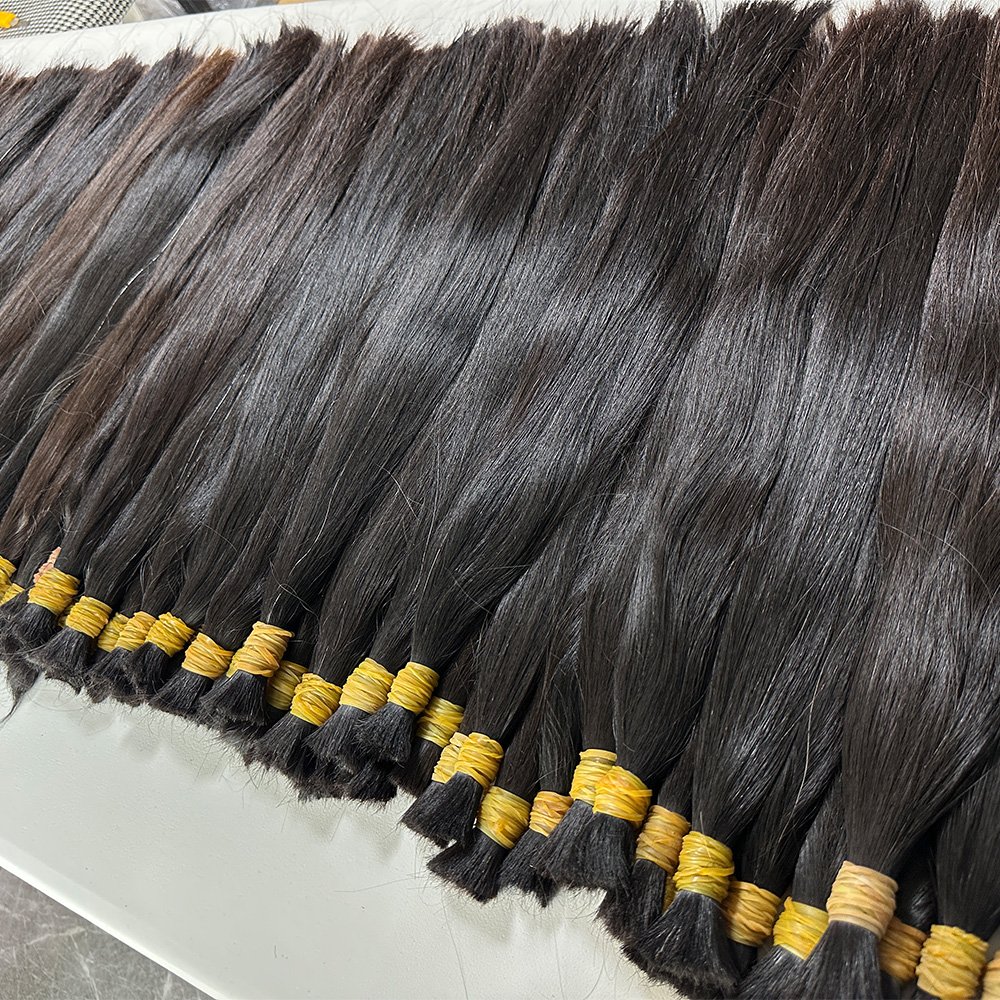
In simple terms, Remy bulk hair is human hair supplied in a loose, bulk form while maintaining the natural direction of the hair cuticles. Unlike finished tape-ins, clip-ins, or weft extensions, bulk hair has not yet been attached to a finished extension base. This makes it particularly useful for manufacturers, salons, hair brands, and professional buyers who want to create or customize their own products.
However, “Remy” does not automatically mean that every product is identical or that every supplier follows exactly the same standards. The quality of Remy hair can still vary depending on how the hair is collected, sorted, processed, and handled. For buyers, understanding what the term actually means is more useful than simply looking for the word “Remy” on a product page.
This guide explains what Remy bulk hair means, how it compares with raw and virgin hair, how it is used, and what you should look for when choosing a reliable supplier.
What Does Remy Bulk Hair Mean?
The easiest way to understand Remy bulk hair is to separate the two terms: “Remy” and “bulk.”
Bulk human hair describes the way the hair is supplied. Instead of being manufactured into a finished product such as a weft, tape-in, clip-in, or K-tip extension, the hair is supplied loose. The buyer can then use that hair to manufacture or customize a finished product.
“Remy” refers primarily to the condition and direction of the hair cuticles. In Remy hair, the cuticles are generally kept intact and aligned in the same direction. Natural hair has overlapping cuticles along the shaft, and maintaining their direction can help the strands move and feel more naturally when properly prepared.
This is different from simply saying that hair is human hair. Human hair tells you what the material is, but it does not tell you how the hair was collected or prepared. Two products can both be made from human hair while having very different characteristics.
The word Remy is also not a guarantee of overall quality. A supplier can describe hair as Remy, but buyers should still ask questions about the actual sourcing, processing, sorting, length, texture, and quality-control process. This is particularly important when purchasing Remy bulk hair wholesale, because a business needs more than a good-looking sample. It needs a product that can be supplied consistently.
Another important point is that Remy does not necessarily mean “raw.” Remy hair may have been processed, colored, steamed, or otherwise treated depending on the supplier and product. If you specifically want minimally processed hair, you should ask whether the hair is raw and what treatments have been performed.
For manufacturers and hair brands, this distinction matters. You may be looking for Remy bulk hair because you want aligned cuticles, while at the same time needing a particular texture or color. Knowing exactly what you are purchasing gives you much more control over the final product.
When comparing Remy human hair suppliers, look beyond the label. Ask how the hair is sourced, how the cuticles are handled, whether the hair has been chemically processed, and what quality checks are performed before shipping. Those details tell you much more about the product than the word “Remy” by itself.
Why Does Cuticle Alignment Matter?
The natural structure of human hair plays an important role in how it feels and behaves. Each strand has a protective outer layer called the cuticle, made up of overlapping cells that generally point in one direction from the root toward the end. When these cuticles remain organized in the same direction, the hair can have a smoother and more natural feel.
This is why cuticle aligned hair is often preferred for certain types of hair extensions and professional applications. When the strands are running in different directions, the overlapping cuticles can rub against one another. This may contribute to friction, tangling, and a rougher feel. Keeping the direction consistent can help reduce some of these issues.
With Remy bulk hair, maintaining the direction of the strands is particularly useful because the hair is often going to be processed into another product. A manufacturer may turn the loose hair into a weft, custom extension, wig, or another finished product. Starting with organized hair gives the manufacturer greater control over the final result.
That does not mean cuticle alignment alone determines how long hair will last. Hair quality depends on many factors, including the condition of the original hair, chemical processing, heat exposure, daily handling, and aftercare. A well-aligned product can still become dry or damaged if it is heavily processed or poorly maintained.
It is also important to understand that cuticle alignment and Remy are closely related concepts but are not simply marketing words for “premium hair.” Buyers should still evaluate the physical hair. Look at the ends, texture, consistency, density, and overall feel. If you are purchasing a sample, washing and styling a small amount can provide useful information about how the hair behaves.
For salons and brands, this is especially relevant when developing a product line. A customer may not know whether the hair is technically Remy, but they will notice whether it feels smooth, blends naturally, tangles easily, or loses its appearance quickly.
This is also why what is cuticle aligned hair is a useful question for anyone new to the extension industry. Understanding the physical structure of the hair makes it easier to understand why certain suppliers emphasize alignment and why it can matter during production.
In short, cuticle alignment is one factor that can contribute to the performance and feel of human hair. It should be considered alongside sourcing, processing, texture, and overall quality rather than treated as the only measure of a good product.
Remy Bulk Hair vs. Raw and Virgin Hair
One of the biggest misunderstandings in the hair industry is assuming that Remy, raw, and virgin mean the same thing. They do not. These terms describe different characteristics, and a single product can sometimes fit more than one description.
Raw bulk hair generally refers to loose human hair that has undergone little or no chemical processing. However, there is no single universal interpretation of the term “raw” across every supplier, so buyers should ask exactly what has been done to the hair. Cleaning and sorting are different from chemical treatments such as coloring or bleaching, and suppliers may use the term differently.
Virgin hair is generally understood to mean hair that has not been chemically treated, although definitions can vary across the market as well. If a supplier describes hair as virgin, it is still worth asking whether the hair has been colored, bleached, permed, or otherwise chemically processed.
Remy, by comparison, primarily concerns the organization and condition of the cuticles. This means Remy hair can be processed and still be described as Remy if the relevant characteristics are maintained. Therefore, Remy hair vs raw hairis not really a simple “which is better?” comparison.
For example, a buyer might want Remy bulk hair because the hair is cuticle aligned, but may also need a particular color that requires processing. Another buyer may specifically want raw bulk hair because they plan to handle the coloring or manufacturing themselves.
The intended use should guide the decision. If you are a manufacturer creating customized extensions, you may value loose hair that gives you control over the production process. If you are a salon purchasing ready-made extensions, you may care more about the finished product’s texture, construction, and ease of installation.
Price can also vary significantly between these categories, but higher pricing does not automatically mean higher quality. The value of the hair depends on what you need it to do.
When sourcing, ask direct questions instead of relying on labels. Is the hair chemically processed? Are the cuticles aligned? How was it collected? Has it been colored? What lengths are available? Is the hair supplied loose or already constructed? These questions help you understand what you are actually paying for.
Understanding raw hair vs virgin hair, Remy hair vs raw hair, and Remy bulk hair makes the buying process much easier. Once the terminology is clear, you can compare suppliers based on real product characteristics rather than marketing language.
What Is Remy Bulk Hair Used For?
Remy bulk hair is particularly useful because it is supplied loose. Instead of receiving a finished extension with a fixed construction, buyers can decide what they want to make from the hair. This flexibility is one of the main reasons bulk hair is widely relevant to professional hair businesses.
One common application is manufacturing hair extensions. A supplier can provide loose Remy hair, which can then be made into wefts, custom extensions, or other products. For a hair brand, this can be useful when developing a product range with specific lengths, colors, textures, and weights.
Remy hair extensions can be produced in different formats depending on the manufacturing process. The loose hair itself does not determine whether the final product will be a tape-in, weft, clip-in, or another type of extension. That comes later during production.
Bulk Remy hair can also be used by salons and professional stylists for customized work. Some clients may have specific requirements that do not fit a standard extension product. Having loose hair can give professionals more flexibility when creating a particular look.
Manufacturers may also use bulk hair as raw material for other human hair products. Depending on the hair characteristics and production process, it can be incorporated into different finished products. This makes bulk hair particularly relevant to businesses rather than just individual consumers.
For hair brands, buying bulk hair can also be part of a private-label strategy. Instead of purchasing another company’s finished extensions and reselling them, a brand can source hair and work with a manufacturer to create products under its own name. This approach allows greater control over product specifications, packaging, and branding.
Bulk hair wholesale can therefore be attractive to businesses that expect repeat orders. A salon may need a relatively small amount for regular services, while a manufacturer or distributor may require much larger quantities. The important thing is matching the hair and supply arrangement to the actual business model.
Of course, Remy bulk hair is not necessarily the right choice for everyone. If you are an individual customer who wants a ready-to-install extension, purchasing finished weft or tape-in extensions may be much simpler. Bulk hair becomes more useful when customization, manufacturing, or professional application is involved.
Before purchasing, decide what the final product will be. If you know whether you want to manufacture wefts, create custom extensions, supply salons, or develop a private-label collection, you can then choose the appropriate length, texture, color, and processing level.
That approach prevents a common mistake: buying hair first and figuring out what to do with it later. The best bulk hair purchase starts with the finished product in mind.
How to Choose a Reliable Remy Bulk Hair Supplier
Choosing the right supplier is often more important than simply choosing the word “Remy.” A good product description can tell you the basic characteristics of the hair, but the supplier’s sourcing, quality control, communication, and ability to maintain consistent specifications will ultimately affect your business.
Start by asking about sourcing. If you are considering a Chinese bulk hair supplier, ask where the hair comes from, how it is collected, and how the raw material is sorted before production. Responsible sourcing and clear information about the raw material are important when building a long-term supply relationship.
Next, ask about processing. Do not assume that Remy means unprocessed. Find out whether the hair has been colored, bleached, steamed, or chemically treated. If you are planning to dye or bleach the hair yourself, knowing its previous processing history is especially important.
A sample order is often one of the most useful steps for a new buyer. Instead of judging a product only from photos, you can examine the hair in person. Look at the texture, ends, density, shedding, alignment, and overall feel. If the hair will be used for a specific production process, test it for that purpose before committing to a larger order.
Consistency is another major consideration. A supplier may provide an excellent sample, but wholesale buyers need confidence that future orders will remain within the agreed specifications. Ask how quality is checked and whether the supplier can maintain the same requirements for repeat orders.
You should also discuss practical details such as minimum order quantities, available lengths, colors, packaging, lead times, and customization. Businesses that are starting small may prefer a supplier that can support small batch trial orders before moving into larger production.
Price matters, but it should not be the only deciding factor. Compare the actual specifications and service rather than choosing the lowest quote. A slightly higher-cost supplier may provide better consistency, communication, and production support, which can be more valuable over time.
Finally, think about your long-term needs. If you plan to grow a hair brand, you may eventually need OEM manufacturing, private labeling, custom packaging, or larger wholesale orders. A supplier that can support those needs can make expansion much easier.
The best way to understand how to choose a bulk hair supplier is to treat the first order as the beginning of a relationship rather than a one-time purchase. Ask clear questions, test the product, confirm the specifications, and make sure the supplier understands what your business actually needs.
For salons, manufacturers, distributors, and hair brands, Remy bulk hair can be a flexible material for creating professional hair products. The key is not simply finding hair labeled “Remy.” It is understanding what that label means, checking the actual characteristics of the hair, and working with a supplier that can provide reliable quality and consistent supply.