How Bulk Hair Manufacturers Process Human Hair
If you’ve ever run your fingers through a smooth bundle of bulk hair and wondered how bulk hair manufacturers process human hair from raw collected strands to the finished product you hand off to braiders or resell to clients, you’re not alone. We’ve walked dozens of factory floors over the last 10 years, and most of the horror stories buyers tell us about tangling, matting, or weird chemical smells trace right back to corners cut in these processing steps. You don’t need a chemistry degree to spot bad processing, but knowing the baseline helps you avoid getting stuck with inventory you can’t move.
It all starts with sorting (and this is where most cheap hair cuts corners first)
When raw hair first arrives at a factory floor, it’s a far cry from the uniform bundles you know. It comes loosely packed, collected from temple donations, individual household sellers, and regional collection points, with strands of every length, texture, and direction mixed together. The first job is to separate out any synthetic or animal hair fibers, then sort strands by length, texture, and—most critically—cuticle direction. Proper cuticle alignment means every strand in a bundle runs root to tip, the same way it grew on a donor’s head. That’s non-negotiable for hair that doesn’t tangle.
Cheap factories skip this step entirely. They dump all the collected hair into big sorting bins without checking direction, which cuts sorting time by two-thirds but leaves cuticles rubbing against each other in every direction, causing instant matting the second the hair gets wet. All told, properly aligned cuticle hair takes 3x longer to sort than non-aligned stock, which is why it costs 40-60% more per bundle. That sorted hair feeds into every product line a factory makes, from bulk hair for braiding to clip-ins and wigs, so lazy sorting ruins every product down the line.
How bulk hair manufacturers handle sanitization (the step no one likes to talk about)
A lot of new buyers assume collected human hair just gets a quick shampoo before it’s dyed and packed. Nothing could be further from the truth. Raw hair comes with product buildup, sweat, environmental dirt, and sometimes even lice nits that have to be fully removed before the hair is safe to use. Reputable factories run hair through a 3-step wash process over 48 hours, using mild, pH-balanced cleansers that lift dirt without eroding the hair’s outer cuticle layer. After washing, hair gets a deep conditioning treatment to lock in moisture before it moves to color processing.
Cheap factories take a totally different approach. They dump raw hair into vats of high-pH chemical solution that strips every bit of cuticle, kills any bacteria, and removes buildup in 20 minutes flat. It’s fast. It’s cheap. It ruins the hair. That over-stripped hair feels silky right out of the package because the factory sprays it with a silicone coating, but after 2-3 washes the silicone wears off, and the hair turns dry, frizzy, and impossible to detangle. We’ve tested cheap batches that had a pH of 9.5 right out of the bag—so alkaline it can irritate sensitive scalps and break strands within a month of regular wear. Properly processed hair sits at a 4.5-5.5 pH, matched to the natural pH of the human scalp. If you’ve ever ordered a batch that had that sharp, acrid chemical smell when you cracked open the shipping bag, that’s leftover residue from those quick, harsh sanitization baths. We flag this for every new buyer who asks how to vet suppliers, which we cover more in our guide to buying bulk hair directly from China.
Color processing and texture matching, done right vs done fast
After sanitization and conditioning, hair gets sorted a second time, this time by natural color level (on the 1-10 scale from jet black to lightest blonde) and natural curl pattern. For unaltered natural black and dark brown stock, good factories don’t dye the hair at all—they match donor strands to standard color swatches to make sure every bundle is a uniform shade, no patchy bits. For custom colors and lighter shades, the tradeoffs get even starker. Low-grade factories dump whole batches of hair into boiling vats of permanent dye, leaving it to soak for an hour until the color sticks. This fries any remaining cuticle, which is why that cheap platinum bulk hair you bought last quarter turned brassy after one swim or salon wash.
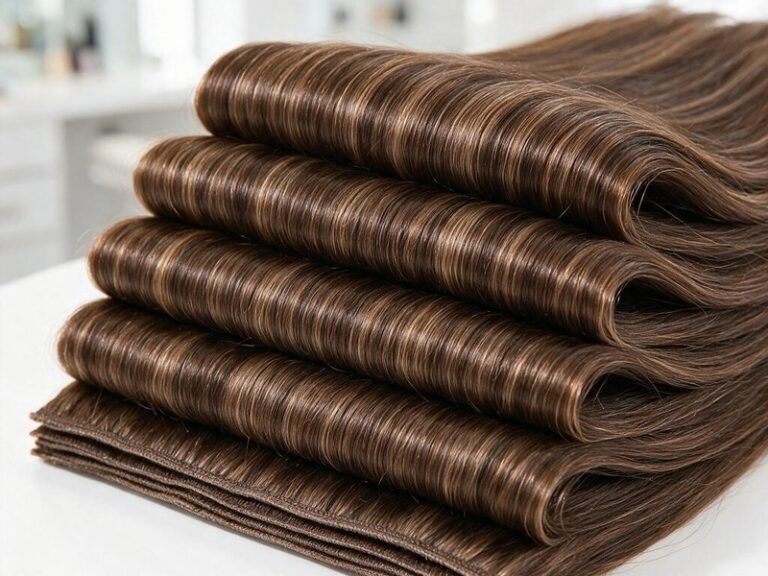
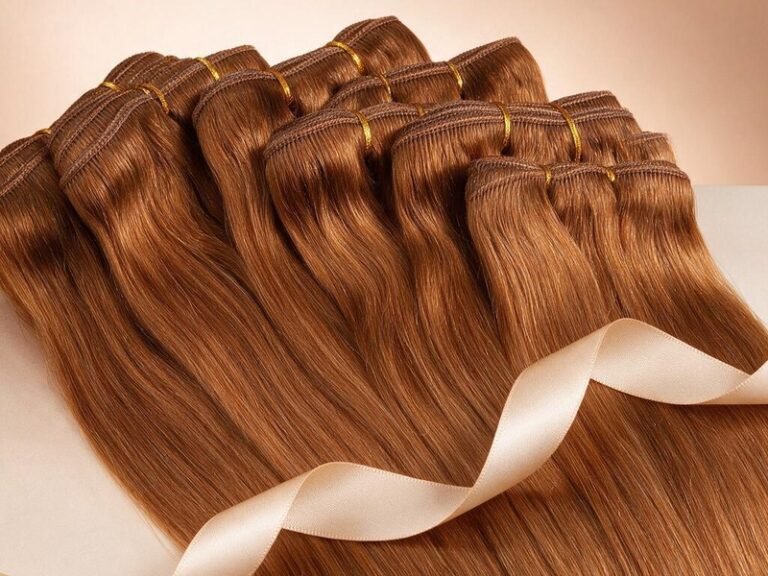
Higher-end operations use deposit-only color for darker shades, and a gradual lift process for blondes that happens over 2-3 days, with deep conditioning treatments between every lift session to keep hair from getting porous. For curly and coily textures, quality factories use steam setting to lock in curl pattern, rather than harsh perm solution that breaks hair bonds. Steam-set curls last 6-8 months with proper care, while permed curls drop in 4-6 weeks and leave hair feeling like straw. Once color and texture are finalized, the hair is measured and split into portions for different product lines: some is tied loose for bulk orders, some is sewn into weft hair extensions, and some gets bonded to tape tabs or keratin tips for other install types.
Quality checks that separate reseller-worthy stock from discount bin hair
Once hair is processed, you might assume every bundle gets inspected before it’s packed. You’d be wrong. Most high-volume, low-cost factories skip almost all QC steps to move orders out the door as fast as possible. The factories we partner with run every single bundle through four simple checks before it gets a label and bag:
- Weight check: Every standard 100g bundle is weighed to within a 2g margin, so you never get shorted. We’ve seen cheap factories send 82g bundles labeled as 100g, which adds up to almost 20% missing product across a 100-bundle order.
- Cuticle direction check: Workers run a small section of each bundle from root to tip and tip to root to make sure no strands are flipped, which would cause tangling down the line.
- Rub test: Teams rub a 1-inch section of hair between their fingers for 30 seconds to check for excessive shedding or fraying, a sure sign of over-processed strands.
- Smell check: If any bundle has leftover chemical odor, it gets sent back for an extra conditioning rinse instead of being packed out.
These checks add about 2 minutes of labor per bundle. That’s not a lot, but over thousands of bundles a day, it adds up to higher costs—costs cheap factories refuse to eat. If you’re comparing suppliers and aren’t sure what QC questions to ask, our FAQ page covers the minimum standards you should expect from any wholesale partner.
What these processing differences mean for your bottom line
We get it. When you’re comparing wholesale price lists, it’s tempting to grab the cheapest possible bundles to pad your profit margins. But those savings almost always come back to bite you. Have you ever wondered why the same “100% virgin human hair” can cost $15 from one supplier and $65 from another? It’s rarely markup—it’s the sum of all the processing corners cut (or not cut) along the way.
If your customer base is looking for low-cost, one-time hair for festival looks, Halloween costumes, or styles that only need to last a weekend, the fast-processed, cheap stock works fine. Your customers won’t expect it to last for months, and the price point matches that use case. But if you’re selling to clients who want reusable hair for boho braids, sew-ins, or long-term installs, skipping steps like cuticle alignment, gentle sanitization, and proper QC will leave you with bad reviews, returns, and clients who never come back—we break down what grade of hair works best for that use case in our guide to sourcing bulk hair for boho braids. There’s no universal “right” grade of hair. There’s only the right grade for your specific customers, and being honest about what you’re selling goes a long way.
Quick answers to the processing questions we get every week
Is all bulk hair processed with harsh acid?
No, not all. The discount, fast-turnaround stock is, because acid baths strip cuticles and kill bacteria in minutes, letting factories turn around orders in 3 days instead of 2 weeks. But properly processed Remy or virgin hair uses mild, pH-balanced cleansers and conditioning treatments that leave the cuticle intact, so the hair behaves just like natural growing hair. If a supplier won’t tell you what they use to sanitize their hair, order a small sample to test—run it under warm water, and if it feels squeaky and tangles immediately when wet, it’s been acid-stripped.
How long does full processing take from raw hair to finished bundle?
It depends entirely on the grade. Fast, discount processing can turn raw collected hair into packed, labeled bundles in 3-4 days total, but as we covered earlier, that skips almost all the care steps that make hair last. Premium cuticle-aligned hair takes 12-18 days from arrival at the factory to fully QC’d, packed stock, which is why lead times for premium wholesale orders are usually 7-10 days longer than discount orders. There is no way to rush that process without damaging the hair, no matter what a smooth-talking sales rep tells you.
Can my clients re-dye processed bulk hair?
Only if it wasn’t over-processed at the factory. Acid-stripped, fast-dyed hair is so porous that any color you apply will grab unevenly and fade in a week or less. Properly processed hair with intact cuticles takes color just like natural hair, so your clients can tone it, darken it, or lift it a shade or two without ruining the strands. Just remind them to deep condition after any color service, the same way they would with their own natural hair.
At the end of the day, you don’t need to be a processing expert to stock good hair. You just need to know what questions to ask, and be realistic about what quality level matches your customers’ needs and budget. If you want to see the difference careful, low-damage processing makes, you can browse our full stock lineup or reach out to our team to request free sample swatches before you place your next bulk order.
Send Us Your Hair Inquiry
Need bulk pricing, samples, or a private-label quote? Fill in the form and our team will get back to you within one business day.