If you have been shopping for human hair extensions or looking for hair to use in your own products, you may have come across the term “bulk hair.” But what does bulk hair mean, exactly? Unlike many extensions that come pre-made with clips, tape, tips, or wefts, bulk hair is generally sold as loose hair rather than as a finished extension product. That simple difference makes it useful for a wide range of applications, from custom hair extensions and braiding to wig production and professional hair manufacturing.
For someone buying hair for the first time, the terminology can be confusing. You may see terms such as bulk human hair, raw bulk hair, Remy bulk hair, and Chinese bulk hair used on supplier websites, sometimes with very little explanation of what each one actually means. Understanding these terms is important because the way hair is collected, sorted, processed, and supplied can affect what you are able to do with it later.
Bulk hair is particularly relevant to salons, hair brands, manufacturers, and wholesale buyers because it gives them more control over the final product. Instead of purchasing a finished extension and accepting its existing construction, buyers can use loose hair to create or customize products based on their own needs. In this guide, we will break down what bulk hair means, how it differs from other types of human hair, what it can be used for, and what buyers should look for when choosing a supplier.
What Does Bulk Hair Mean?
In simple terms, bulk hair means loose human hair that has not been attached to a finished extension base. The hair is normally gathered together in loose lengths rather than being manufactured into a weft, tape-in extension, clip-in piece, or keratin-tipped strand. Because there is no pre-attached extension construction, bulk hair gives the buyer more freedom to decide how the hair will eventually be used.
This is one of the biggest differences between bulk hair extensions and ready-to-use extensions. When you buy a tape-in or clip-in extension, the product has already been manufactured for a specific application. Bulk hair, on the other hand, is essentially the raw material that can be turned into different hair products depending on the buyer’s requirements.
The term “bulk” does not automatically describe one particular quality level. Bulk hair can refer to different grades and types of human hair depending on how the supplier sources and prepares it. For example, some suppliers offer raw bulk hair, while others sell Remy hair or other processed human hair. These terms describe different characteristics of the hair and should not be treated as interchangeable.
Another important point is that bulk hair is not necessarily the same thing as “unprocessed hair.” A supplier may sell bulk hair that has been cleaned, sorted, colored, or otherwise prepared before being supplied to the customer. If you are buying for a hair brand or manufacturing business, it is worth asking exactly what has been done to the hair before it reaches you.
The physical condition of the hair also matters. Buyers should look at factors such as texture, length, density, color, softness, and whether the strands are arranged in a consistent direction. For businesses that plan to manufacture their own products, consistency can be just as important as appearance.
This is why working with a reliable bulk hair supplier matters. A good supplier should be able to explain where the hair comes from, how it is collected and prepared, what processing has been performed, and what specifications are available. Once you understand what bulk hair actually means, it becomes much easier to compare different suppliers and decide which type is suitable for your business.
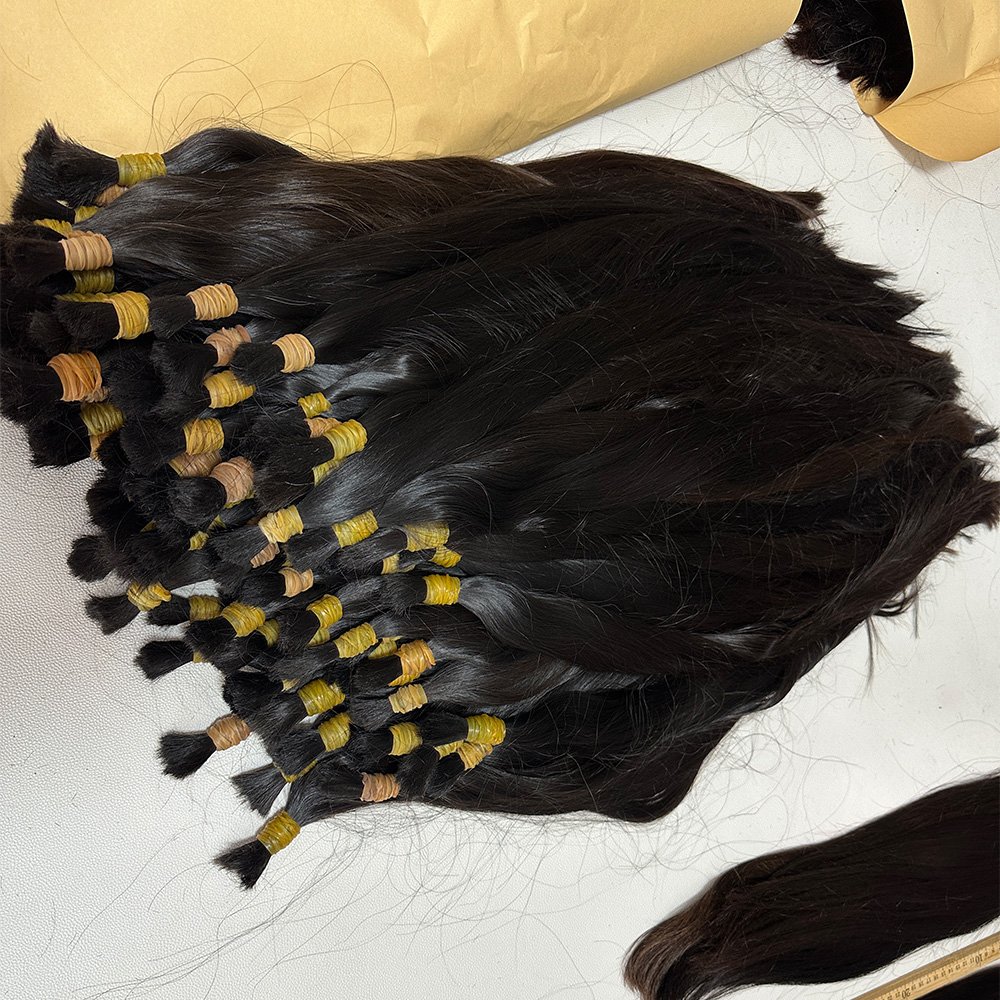
How Is Bulk Human Hair Different From Bundles and Weft Hair?
One of the easiest ways to understand bulk hair is to compare it with the finished hair products you may already know. Bulk human hair is loose hair, while bundles and wefts have already been constructed into a specific format for installation or sale. The hair itself may be human hair in both cases, but the way it is prepared and delivered is different.
A weft, for example, consists of hair that has been attached to a stitched or bonded track. This allows a stylist to install a larger section of hair at once. A tape-in extension has adhesive tape attached to the hair, while a K-tip extension has a keratin tip prepared for strand-by-strand application. Clip-ins have clips attached to the weft so the customer can put them on and remove them more easily. Bulk hair does not come with these finished components.
That difference is especially important for manufacturers and hair brands. If a business buys finished extensions, the supplier determines much of the product’s construction. If the business buys bulk hair wholesale, it can have more control over how the hair is turned into a finished product. The same loose hair can potentially be used to create wefts, custom extensions, braiding hair, or other products depending on the manufacturing process.
Bulk hair can also be useful when a buyer wants a particular combination of length, texture, color, and construction that is not available as a standard extension. Instead of searching through dozens of finished products, the buyer can source the hair and have it made according to the intended application.
There is also a difference between bulk hair and traditional “bundles” as the term is commonly used in the hair market. Bundles are generally prepared into wefts and sold as ready-made pieces. Bulk hair remains loose. This makes bulk hair particularly attractive to manufacturers, stylists who create custom products, and businesses that want to develop their own extension collections.
However, bulk hair is not automatically better than weft hair or bundles. Each format has a different purpose. Someone who simply wants a ready-to-install extension may prefer a finished weft or tape-in product. A manufacturer that needs flexibility may prefer loose hair.
The right choice depends on what you plan to do with the hair. If you are buying for personal use, finished extensions may be more convenient. If you are developing products, customizing extensions, or purchasing material for production, bulk human hair wholesale may give you much more flexibility.
What Is Bulk Hair Used For?
The flexibility of bulk hair is one of the main reasons it remains important in the professional hair industry. Because the hair is supplied loose, it can be used as a starting material for several different products and applications. The exact use depends on the hair’s characteristics and the manufacturing or styling process that follows.
One common application is custom hair extensions. A manufacturer can take loose hair and turn it into a specific extension format, such as a weft or another customized product. This can be useful for brands that want to develop their own products rather than simply resell a standard extension from another company. Businesses can choose specifications such as length, texture, color, weight, and packaging based on their customers.
Bulk hair is also used in professional salon work. Experienced stylists may use loose hair for customized extension work, braiding, or other applications where a pre-made extension does not provide enough flexibility. In these situations, the stylist has more control over the amount and placement of the hair.
Another important market is hair manufacturing. Companies producing extensions, wigs, braiding products, or other human hair items may purchase loose hair as production material. For these buyers, factors such as consistent supply, sorting, length distribution, and quality control become particularly important.
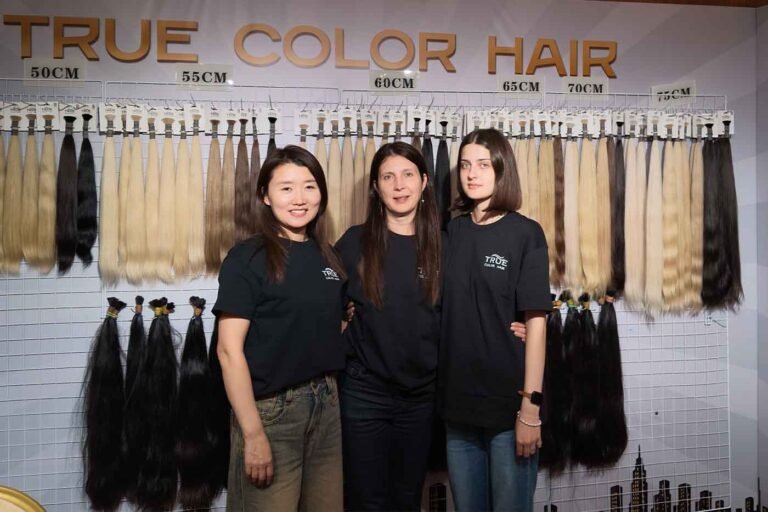
Chinese bulk hair is one option available to international buyers who source directly from China. Chinese hair is often associated with naturally straight or relatively smooth textures, although the actual characteristics can vary depending on the source and preparation of the hair. Buyers should evaluate the specific product rather than assuming every batch of Chinese hair will have exactly the same characteristics.
Bulk hair can also be used for custom or private-label products. A growing hair brand may purchase loose hair, have it manufactured into its preferred extension style, and then sell the finished product under its own brand. This approach can provide more control over product specifications and branding than simply purchasing generic finished extensions.
The key point is that bulk hair is not necessarily the final product. Think of it more as a flexible material that can be transformed into something else. That is why it is especially relevant to businesses rather than only individual consumers.
If you are considering bulk hair for hair brands, bulk hair for salons, or manufacturing, start by deciding what you want to make. Once the final product is clear, it becomes much easier to determine the right hair type, length, texture, processing level, and quantity to purchase.
Raw Hair, Remy Hair, and Bulk Hair: What Is the Difference?
Another common source of confusion is the difference between “bulk hair,” “raw hair,” and “Remy hair.” These terms describe different aspects of human hair, so they should not be treated as three competing categories. Bulk describes how the hair is supplied, while raw and Remy generally describe characteristics related to the hair’s condition, sourcing, or alignment.
Raw bulk hair usually refers to loose hair that has undergone little or no chemical processing, although the exact definition can vary between suppliers. If a supplier describes hair as raw, buyers should ask what processing has actually been performed. Cleaning, sorting, steaming, coloring, or other treatments may affect whether a particular product meets the buyer’s definition of raw hair.
Remy hair generally refers to hair where the cuticles are maintained in the same general direction. Keeping the hair direction organized