What Is the Difference Between Bulk Hair and Bundles?
If you’ve ever placed a wrong hair order because you mixed up these two terms, you’re not alone. We see new salon owners and resellers mix up bulk hair and bundles, and miss the actual difference between them, at least a dozen times a month in our warehouse, and it almost always leads to wasted time, rush shipping fees, or unhappy clients.
This isn’t textbook jargon, either. The difference impacts what you can make with the hair, how much you pay, and how long your clients will be happy with their install. We’re breaking it down like we would for a new stylist hanging out in our shipping room, no fancy marketing lingo.
The core difference no product listing spells out
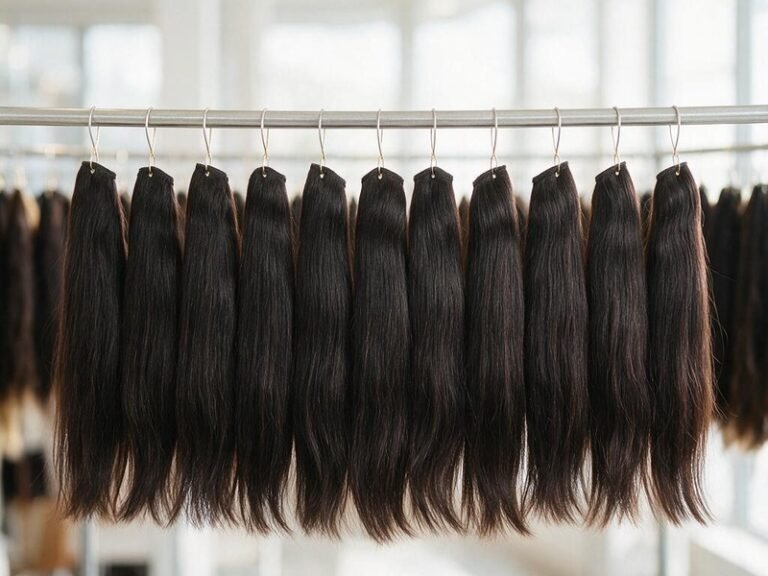
Let’s cut to the chase. The only fundamental difference is construction. Bundles are stitched onto a weft — that thin, sturdy fabric track running the full length of the hair, holding strands in place so they don’t shed excessively during install or wear. Most standard bundles weigh 95-100g each, no matter the length, and are pre-folded and packed individually right off the factory line.
Bulk hair has zero weft, zero stitching, zero tracks. It’s just loose, root-aligned human hair, packed in sealed bags by weight, with no pre-cut or pre-measured pieces. A lot of first-time buyers assume “bulk” just means a large order size, and that’s where the confusion starts. You can buy 100 bundles at a bulk discount, but that doesn’t make them bulk hair. When we talk about bulk as a product, we mean that loose, unwefted format — most often used for bulk hair for braiding, but also for building custom extension lines.
Why format changes what you can actually do with the hair
Bundles are ready to use straight out of the pack for sew-ins, quick weaves, and traditional wig making. You don’t need any extra prep — just cut the weft to the size you need, sew or glue it down, and you’re done. It’s the fastest option for standard install services, which is why it’s been the go-to for salons focused on weaves for decades. We carry a full range of machine and hand-tied wefts for exactly these use cases, because they cut install time by a full hour on average for a full head.
Bulk hair, by contrast, is flexible. Because there’s no stiff weft to hide, you can braid directly with it for knotless braids, boho braids, or loc extensions without bulky tracks peeking through. You can also run it through a wefting machine to make your own bundles, apply keratin tips for k-tip installs, or cut strips for custom tape-ins. We wrote a full breakdown of the common uses for bulk human hair if you’re curious about less common applications, but the short version is: bulk is raw material, bundles are a finished, ready-to-install product.
Mix them up, and you’ll waste a lot of time. Try to braid with bundles, and you’ll have to cut away the weft and pull individual strands free, which wastes 15-20% of the hair per pack and leaves short, frayed pieces that make braids fuzz up within two weeks. Try to do a sew-in with loose bulk hair, and you’ll spend 3+ extra hours trying to secure strands that slip and shed the second your client brushes their hair.
Price, weight, and MOQs that hit your bottom line
Since bundles require extra factory labor to stitch the weft, trim stray strands, and pack individual units, they cost 10-15% more per gram than the exact same quality of hair sold in bulk format. The MOQ for wholesale bundles is also much lower — usually one piece per length and texture, so you can test a couple of 18-inch straight bundles for your salon without dropping a huge chunk of change.
Bulk hair is almost always sold in 1kg (2.2 pound) increments per length and texture, which works out to roughly 10 equivalent 100g bundle units. The per-gram cost is lower, but the upfront MOQ is higher, because factories don’t want to split 1kg batches into tiny bags for small test orders. That lower price only pays off if you actually need the unwefted format, though. If you buy a kilo of bulk because it’s cheaper, but you only do sew-in installs, you’ll spend more time and money wefting it yourself than you would have spent just ordering pre-made bundles.
A quick set of checks to tell them apart at a glance, no matter what the listing says:
- Stitched fabric track along one edge? That’s a bundle
- Loose, aligned strands with zero stitching? That’s bulk hair
- Sold as individual ~100g retail packs? Almost always bundles
- Sold by the kilogram in plain sealed bags? Almost always bulk
One myth we bust every week: the format doesn’t dictate quality. We pull bulk and wefted bundles from the exact same batches of raw virgin hair, processed the same way, with the same cuticle alignment. A bundle isn’t “better” hair than bulk — it’s just processed into a different finished form.
The ordering mistakes we see every single week
The most common misstep is small braiding salons ordering bundles to cut up for braid work, because they’re scared off by the 1kg MOQ for bulk. Honestly, we get it — dropping a few hundred dollars on a full kilo of 24-inch curly hair feels like a big commitment when you’re just starting out. But if you’re cutting up 10 bundles a month for braids, you’re throwing away 2 bundles worth of hair and paying extra for the weft you’re just going to destroy. That adds up to hundreds of dollars a quarter in wasted product.
The second common mistake is new brand owners ordering bulk hair when they actually need ready-to-ship bundles for pop-up sales, then realizing they have no way to weft, label, and pack the hair in time for their event. If you’re sourcing bulk hair for your own brand, it’s a fantastic, cost-effective option — but you need to plan for the extra labor to turn that loose hair into finished products your customers can use right out of the package.
We also see buyers overpay for “premium luxury bundles” that come from the exact same raw hair stock as our bulk options, with a 30% markup just for fancy packaging and a branded tag. Don’t fall for that. Ask your supplier for the cuticle alignment, hair origin, and processing details, not just the marketing name on the pack.
Quick answers to the questions we get most
Can I turn bulk hair into bundles myself?
Technically yes, if you have a tabletop wefting machine and a few hours of practice to get consistent, non-shedding tracks. For most solo stylists or small salons, though, the labor cost doesn’t add up unless you’re making more than 50 bundles a month for your own product line. Factory stitched wefts are more durable, lay flatter, and have far less shedding than most DIY wefts, even with practice.
Are bundles always better for sew-ins?
For 99% of clients, yes. Pre-wefted bundles lay flat against the scalp, don’t require extra prep, and hold up to 8-10 weeks of wear with proper care. The only exception is super specialty no-weft install methods, which are rare in most US salons and require far more installation time than most clients are willing to pay for.
If I buy 50 bundles at a wholesale discount, is that bulk hair?
Nope. That’s just a large order of bundles. Bulk refers exclusively to the unwefted, loose hair format, not the size of your order. We get this question at least once a week over email, so don’t feel silly if you’ve made that assumption before.
At the end of the day, there’s no “better” option between the two — it all depends on what services you offer, how much prep labor you’re willing to put in, and what your clients expect from their install. If you’re still not sure which format is right for your next order, you can browse our full selection of wholesale hair extensions, or reach out to our team with details about the services you offer, and we’ll point you in the right direction. No pushy sales pitches, just honest advice from people who pack and ship this hair every day.
Send Us Your Hair Inquiry
Need bulk pricing, samples, or a private-label quote? Fill in the form and our team will get back to you within one business day.