Raw Hair vs Virgin Hair: What Do These Terms Actually Mean?
If you have been shopping for human hair extensions, you have probably seen the words “raw” and “virgin” used everywhere. At first glance, they can sound almost identical. Both are associated with natural-looking hair, but they describe different things, and the terminology is not always used consistently across the industry. Understanding the difference between raw hair vs virgin hair starts with one simple idea: neither word should be treated as a universal quality grade.
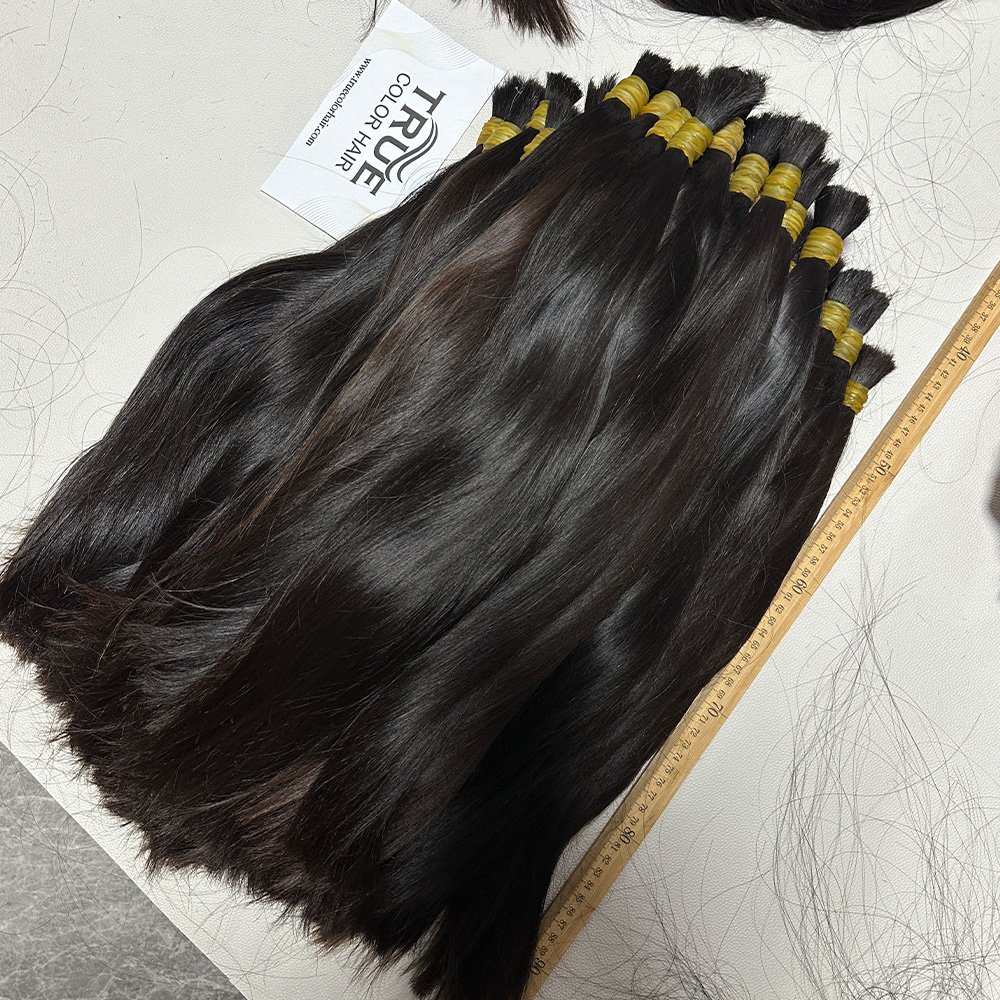
Raw hair is generally described as human hair that has undergone little or no chemical processing and retains many of its natural characteristics. It is often supplied in a loose form, such as a ponytail or bundle of loose strands, rather than as a finished extension. This is why raw bulk hair is commonly used by manufacturers and brands that want to turn loose hair into their own extension products.
Virgin hair, on the other hand, is commonly used to describe human hair that has not been chemically altered. In practice, however, the exact meaning can vary between suppliers. A product described as virgin may still have been washed, sorted, mechanically prepared, or otherwise handled during manufacturing. The important question is whether the hair has been chemically treated, and what the supplier means by “virgin.”
This is where buyers can get confused. “Raw” often focuses on how minimally the hair has been processed and how much of its natural character has been preserved. “Virgin” generally focuses on the absence of chemical processing. The two descriptions can overlap, but they are not automatically interchangeable. A supplier should be able to explain exactly how the hair was collected, cleaned, sorted, and processed.
For anyone buying raw human hair for a brand, salon, or manufacturing business, that explanation matters more than a label. Look for clear product information, ask questions about sourcing and treatment, and request a sample when possible. A transparent supplier will not rely on the word “raw” or “virgin” alone to describe quality.
How Raw Hair and Virgin Hair Are Processed
The biggest practical difference between raw and virgin hair often comes down to processing. Hair does not arrive at a factory ready to sell simply because it is human hair. It needs to be collected, cleaned, sorted, dried, measured, packaged, and sometimes prepared for a specific extension format. These steps do not necessarily mean the hair has been chemically processed.
With raw hair, buyers generally expect the natural characteristics of the original hair to be preserved as much as possible. That can include natural texture, natural color variation, and the original feel of the strands. Depending on the supplier, raw hair may be sorted according to length and texture while remaining free from chemical treatments. Because definitions vary, it is still important to ask what “raw” means for that particular product.
Virgin hair is typically associated with hair that has not been chemically processed, but the same caution applies. Virgin hair may still go through physical preparation and manufacturing steps. Washing, drying, sorting, and organizing the hair do not automatically make it chemically processed. The distinction is between normal preparation and treatments that materially change the hair, such as bleaching, permanent coloring, or chemical texturizing.
Cuticle handling is another detail worth asking about. When hair is collected and kept in the same direction, the cuticles can remain aligned from root to tip. Buyers looking for cuticle aligned hair should ask how the hair was collected and sorted rather than assuming that every raw or virgin product has perfect alignment.
For a business, consistency is just as important as the first sample. If you plan to reorder, ask whether the supplier can maintain similar specifications across batches. This is especially relevant when buying bulk human hair for manufacturing. If you need ready-made products rather than loose material, compare the supplier’s finished weft hair options with the raw material you are considering. The right choice depends on whether you need a manufacturing starting point or an extension that is already finished.
Raw Hair vs Virgin Hair for Hair Extensions
For consumers, salons, and hair brands, the most useful question is not simply which type is “better.” It is which type fits the final application. Raw hair can be attractive to manufacturers because it offers flexibility. Loose hair can be turned into different extension formats, allowing a business to control the final construction, color, length, and styling direction. That makes raw hair particularly relevant for custom production.
Virgin hair can also be an excellent option when the buyer wants human hair that has not been chemically processed. The final performance, however, depends on the actual hair and how it is manufactured. A virgin label does not automatically tell you the density, texture, cuticle condition, length consistency, or quality of the finished extension.
This distinction becomes clearer when you compare loose hair with finished products. tape-in hair extensions are manufactured for a specific installation method, while K-tip hair extensions use a keratin tip for strand-by-strand application. Neither format is simply another name for raw or virgin hair. Instead, raw or virgin describes the material and processing history, while tape-in, K-tip, and weft describe the finished construction.
Color is another area where the difference matters. Unprocessed or minimally processed hair may give a manufacturer more control over the starting point, but the suitability for bleaching or coloring depends on the actual hair and its history. If a supplier claims that a particular hair can reach a very light shade, ask whether that specific product has been tested and what technique is recommended. Avoid assuming that every raw or virgin product will behave identically.
For buyers comparing products, a sample is often more useful than marketing language. Examine the texture, ends, movement, smell, and overall feel. If possible, wash and style a sample according to the way you expect to use it. For a broader introduction to loose hair, you can also read What Is Bulk Hair to understand how bulk hair differs from finished extension products.
Which Should You Choose: Raw or Virgin Hair?
There is no universal winner in the raw hair vs virgin hair debate. The better choice depends on your goals, your production process, and the level of control you want over the final product. If you are a manufacturer or hair brand creating custom extensions, raw bulk hair can be useful because it gives you a flexible starting material. If you are looking for human hair that has not been chemically processed and want a finished product or a clearly defined raw material, virgin hair may be a suitable option—provided the supplier clearly explains what the label means.
If you are buying wholesale, start by writing down your specifications. Decide on the length range, texture, natural color, quantity, intended extension format, and whether coloring or bleaching will be part of the process. Then ask potential suppliers how their hair is collected and prepared. A reliable bulk hair supplier should be comfortable answering practical questions rather than simply telling you that the hair is “100% raw” or “100% virgin.”
It is also smart to compare a few samples before making a larger commitment. Check whether the hair matches the description, whether the texture is consistent, and whether the ends and overall condition meet your expectations. If you are building a brand, repeat-order consistency should be part of the evaluation from the beginning. A beautiful first sample is useful, but reliable supply is what supports a long-term product line.
Before ordering, you can review the supplier’s FAQ for common questions about products, orders, and shipping. You can also learn more about the company through its About Us page. These pages do not replace product testing, but they can help you understand the supplier’s approach and available services.
Ultimately, the safest way to shop for raw or virgin hair is to look beyond the terminology. Ask what has actually been done to the hair, request clear specifications, and evaluate a sample under realistic conditions. “Raw” and “virgin” can both describe valuable human hair products, but the real quality comes from the hair itself, the way it is handled, and the consistency of the supplier behind it.