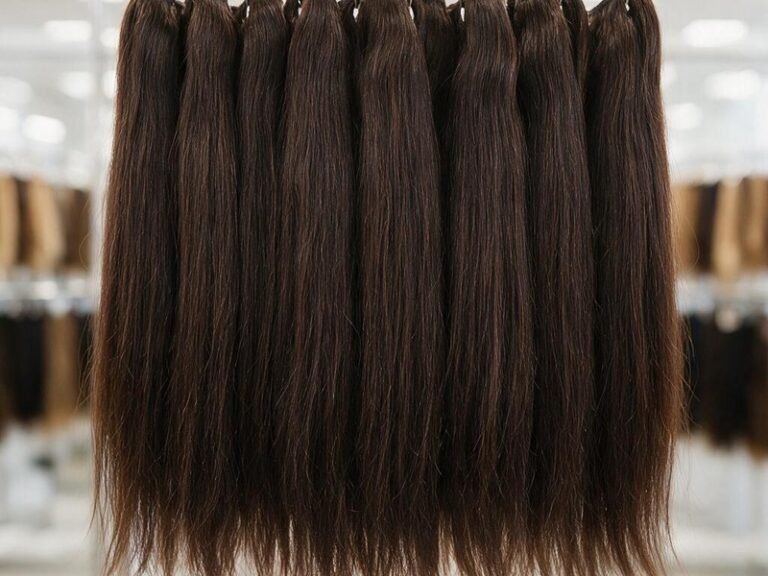
Hand-Tied vs Machine Wefts: Which Is Better for Fine Hair
For fine hair, hand-tied wefts—hair sewn into a thin track—are usually best because they’re lighter and put less tension on fragile strands. Machine wefts, stitched by machine into a thicker band, can work if a client wants heavier fullness and has enough hair to anchor the track.
What makes hand-tied wefts kinder to fine hair?
The thin, flexible track lies flatter and feels less bulky at the root. A short row often weighs 25 to 35 grams, so fine hair doesn’t have to support a heavy strip. A clean track also shows fewer short hairs when the client pulls her hair back. The downside is cost: hand-tied usually runs 20 to 35 percent more per 100 grams, and most tracks shouldn’t be cut unless sealed. That money is worth it for fragile edges or a sensitive scalp.
Are machine wefts ever okay for fine hair?
Machine wefts use a firmer, thicker band that’s sturdy and easy to stock. They can usually be cut between stitches, which makes widths and layering easier. On fine hair, the doubled thread can create a visible ridge in updos or straight styles. I’d use them only for medium-fine density and noticeable volume, not sparse or breakage-prone hair. If you do, use fewer tracks and keep the bead or braid foundation loose.
How much hair should you put on a fine-haired client?
Density is how much hair is packed in the weft and how full the style looks. Fine-haired clients need less weight than you’d think; overloading causes pulling and that blocky triangle shape. A partial install is usually 50 to 75 grams, while a natural full look is 100 to 150 grams. Past 20 inches, add 25 to 50 grams because long bundles get narrower at the ends. If wefts are made from bulk hair, request a small knot and cuticle-aligned hair, meaning cuticles run one way to prevent tangling.
Which weft gives buyers better cost and lead time?
Machine wefts are cheaper and faster to stock, so they fit rush orders or clients who change color often. Hand-tied custom colors or lengths often take two to three weeks, with a higher minimum order quantity, or MOQ, around 500 grams per color. Before a custom run, check the bulk hair requirements; short strands or mixed cuticles show in a thin track. Thick machine stitching can hide some inconsistency, but don’t accept rough hair. For fine hair, pay the higher price rather than field tangling complaints later.
What installation mistakes cause breakage?
Most problems come from tension: too many beads, a tight braid, or stitches on fragile perimeter hair. Use a secure anchor, keep rows off the hairline, and move wefts up every six to ten weeks. Never stack two heavy machine tracks on one row, and keep oils away from the stitches. If the hair is too fine for a weft, our K-tip vs I-tip guide covers keratin-bonded K-tips and bead-secured I-tips. Browse weft hair options, but match the method to the client’s density first.
Quick questions from buyers
Can hand-tied wefts be cut?
Most shouldn’t be cut because the hand stitches can unravel after shampooing. Fold or turn the end unless the supplier sells a sealed, cuttable track. Machine wefts can usually be cut between stitches.
How many bundles do I need for fine hair?
A natural full install usually takes 100 to 150 grams; partial fullness is closer to 50 to 75 grams. With 100-gram bundles, that’s often one to two bundles depending on length. Over 20 inches, add a half bundle to keep the ends dense.
If you’re ready to compare stock weights and colors, shop all hair extensions and check gram counts before ordering. Send us a note for MOQ, color matching, or lead-time help, and we’ll guide you to the right option.
Send Us Your Hair Inquiry
Need bulk pricing, samples, or a private-label quote? Fill in the form and our team will get back to you within one business day.