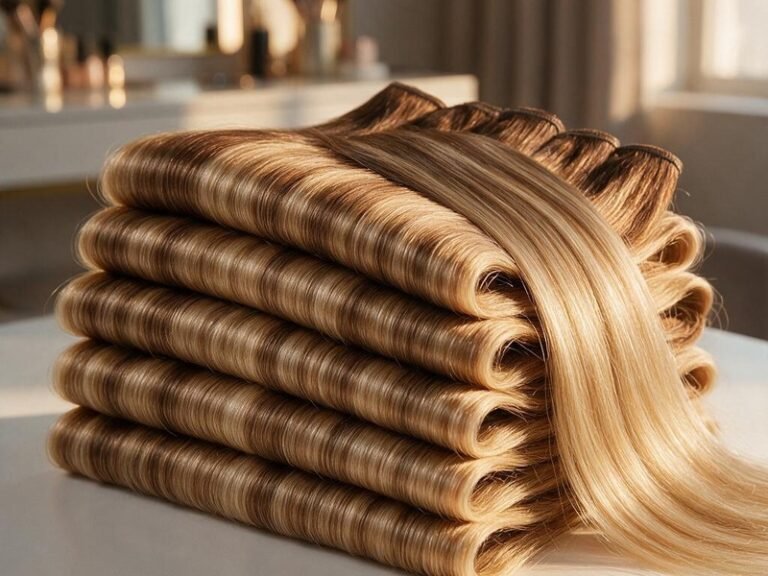
Best Lace Front Wig: What to Check Before Your First Bulk Order
The best lace front wig for a first bulk order is a sample-tested unit with solid hair quality, natural lace, right density, and low shedding—not the cheapest quote. Order samples first, wash and style them yourself, and only reorder once the construction matches your clients. Here’s what we tell buyers to check before a full run.
What hair quality are you actually paying for?
Every supplier says “100% human hair,” but that doesn’t tell you much. Virgin hair is unprocessed; Remy or cuticle aligned hair means cuticles run one direction, reducing tangles. Ask which type you’re getting; the gap can run $30 to $80 per unit and shows after washing. Processed hair can look great new but tangle after three or four washes, especially curly hair. Sample each texture, shampoo twice, and run your fingers through it wet.
Is the lace front wig cap built for your customers?
A lace front wig has a sheer 13×4 lace front hairline with stitched wefts across the back. A 13×6 lace gives deeper parting and a more natural hairline, but it costs more and can feel warmer. Check HD or transparent lace, bleached knots, straps, combs, and crown stretch. Bleached knots look natural but can shed faster if overdone, so heavier isn’t better. If clients want easy installation, compare the construction with wear and go wigs before ordering glueless stock.
What density and length should your first order include?
Density is hair sewn into the cap, listed as 150%, 180%, or 200%; higher means fuller hair and more grams. A 14-inch 180% wig may use 200 to 240 grams, while 22 inches can need 300 grams or more, which explains the price jump. For a first order, I’d choose 150% or 180% in straight and body wave; add 200% only for bold fullness. Stock mostly 18 to 24 inches, with a few 10 to 16 inch units. Curly hair looks shorter dry, so order two inches longer when testing deep wave 13×6 styles.
Which sample tests should you do before reordering?
- Wash and condition twice, then air dry to check tangling.
- Comb from ends upward; a few shed strands are normal, clumps aren’t.
- Inspect knots and lace after tinting; thin lace can tear if rough.
- Try it on a mannequin for 48 hours to check stretch and hot spots.
- Restyle at 300 to 350°F to see how the hair holds curl.
How do lace front wig MOQs, lead times, and pricing work?
MOQ means minimum order quantity, the fewest units a factory will accept. Stock units may start at 5 to 10 pieces and ship in 7 to 15 business days; custom caps or labels often need 30 to 50 pieces and 25 to 45 days. A cheap wig isn’t a deal if thick lace or shedding causes returns; mid-tier units cost more than auction listings. Ask for current-batch photos, not marketing samples, and confirm who pays for defects. Check the FAQ page for stock and defect rules, and read the About Us page so you know who’s handling your order.
Should my first bulk order include only one style?
No. Start with two or three styles in your best lengths and densities to test demand without tying up cash. Most buyers do better with straight, body wave, and one curly option than fifteen color variations.
How can I tell good lace from bad?
Good lace is thin enough to disappear after tinting but strong enough that knots don’t pop while plucking. Ask for HD or transparent lace and test how it takes makeup or lace tint. Thick, shiny, plastic-like lace is harder to install and more likely to cause returns.
Once samples pass wash, fit, and heat tests, place a conservative reorder and restock winners fast. When you’re ready, shop all hair extensions or message us your sample list, and we’ll help you build a sensible first bulk order.
Send Us Your Hair Inquiry
Need bulk pricing, samples, or a private-label quote? Fill in the form and our team will get back to you within one business day.