Indian Temple Hair vs Vietnamese Hair: Sourcing Tradeoffs for Vendors
If you’re a US hair vendor or salon owner stocking 100% human hair, you’ve probably debated Indian temple hair vs Vietnamese hair a dozen times. We get this question at least 10 times a week from new and repeat buyers trying to balance cost, texture match, and consistent supply. I’m breaking down the real on-the-ground tradeoffs we see in our warehouse, no marketing fluff.
Price point breakdown: real per-bundle costs
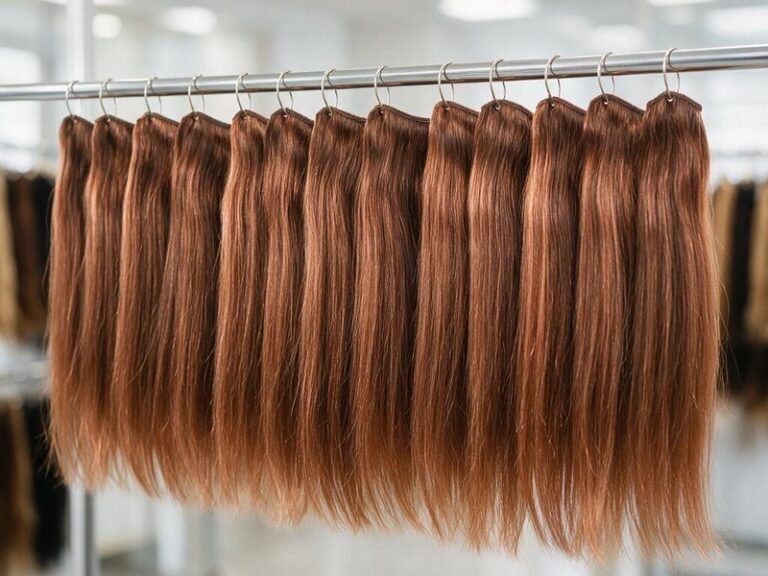
For a standard 20-inch straight virgin weft bundle, Indian temple hair runs $28-$35 per unit at MOQ 50, while Vietnamese hair clocks in at $38-$47 for the same length and weight (100g). The gap comes down to labor: Indian temple hair is sorted in large, low-overhead facilities in southern India, while Vietnamese raw hair is often hand-sorted in smaller, family-run workshops. If you’re buying bulk for braiding or custom weft making, the per-gram gap narrows slightly, but Vietnamese hair still sits 15-20% higher across the board. We see new vendors often sticker-shock at Vietnamese pricing until they feel the texture side by side.
Texture match: which works better for your client base?
Indian temple hair has a natural slight wave that falls somewhere between 1b and 2a, which blends well with most Black, Latinx, and South Asian client hair types. The catch is that curl pattern can vary batch to batch—we’ve had shipments where 10% of bundles have a looser wave than the rest, which is a pain if you’re selling matched sets. Vietnamese hair is straighter, silkier, and more uniform across batches, with a natural 1a to 1b texture that’s a go-to for clients with fine to medium straight hair. It also holds heat styles longer without frizzing, which is a big sell for salon clients who wear blowouts regularly.
Indian temple hair vs Vietnamese hair: quick sourcing tradeoffs
- Indian temple hair MOQ: 30 bundles for mixed lengths, 10 bundles for single-length stock
- Vietnamese hair MOQ: 50 bundles for mixed lengths, 20 for single-length; custom colors require 100+ unit minimums
- Indian temple hair lead time: 3-5 business days for in-stock virgin, 10-14 days for custom processing
- Vietnamese hair lead time: 5-7 business days for in-stock raw, 14-21 days for custom coloring or texturing
- Indian temple hair tangle rate: ~5-8% of bundles in a batch (mostly due to shorter finer strands)
- Vietnamese hair tangle rate: ~1-2% of bundles in a batch, thanks to thicker, more uniform cuticle alignment
How long each lasts (and what clients complain about)
With proper care, Indian temple hair lasts 6-9 months for regular wear, while Vietnamese hair can hit 12-18 months before it starts to shed or fray at the ends. The thicker cuticle on Vietnamese hair is the main difference—it stands up to heat, coloring, and daily brushing way better than finer Indian strands. We hear vendors complain most about Indian temple hair splitting after a single bleaching session, which is why it’s not the best pick if you sell a lot of custom light colors. If you’re weighing other Southeast Asian options too, our guide to Cambodian, Burmese, and Vietnamese hair covers even more texture and durability nuances. Vietnamese hair takes bleach and dye more evenly, too, so you’ll have fewer returns from clients who wanted a custom color match.
Which hair you should stock (based on your business)
If you’re a braider or sell mostly affordable bundle sets for everyday wear, Indian temple hair is a solid, low-cost pick that won’t eat into your margins. It’s also the better choice if you move high volume of bulk hair for braiding and need consistent low MOQs and fast restocks. If you’re a high-end salon or luxury hair vendor catering to clients who wear extensions 6+ months out of the year, Vietnamese hair is worth the extra cost for fewer returns and better client loyalty. We usually tell new vendors to start with a small test order of both to feel the difference before committing to a full stock.
Is Indian temple hair really 100% human hair?
Yes, authentic Indian temple hair is collected from voluntary donations at Hindu temples in southern India, so it’s 100% unprocessed human hair when it leaves the temple. The catch is that some suppliers mix in synthetic or low-quality filler hair to cut costs, so always verify your supplier’s sourcing process.
Can I order mixed length bundles of both hair types?
Most suppliers, including us, offer mixed length bundles for both hair types, though MOQs vary by origin and texture. If you have questions about custom order minimums or processing times, check our FAQ page for the most up-to-date details.
At the end of the day, the right pick comes down to your client base, budget, and how much volume you move each month. If you want to test a small batch before committing to a full restock, reach out to our team or browse our product line to find what fits your shop.
Send Us Your Hair Inquiry
Need bulk pricing, samples, or a private-label quote? Fill in the form and our team will get back to you within one business day.