Best Headband Wigs Human Hair: A B2B Buying Guide for Hair Businesses
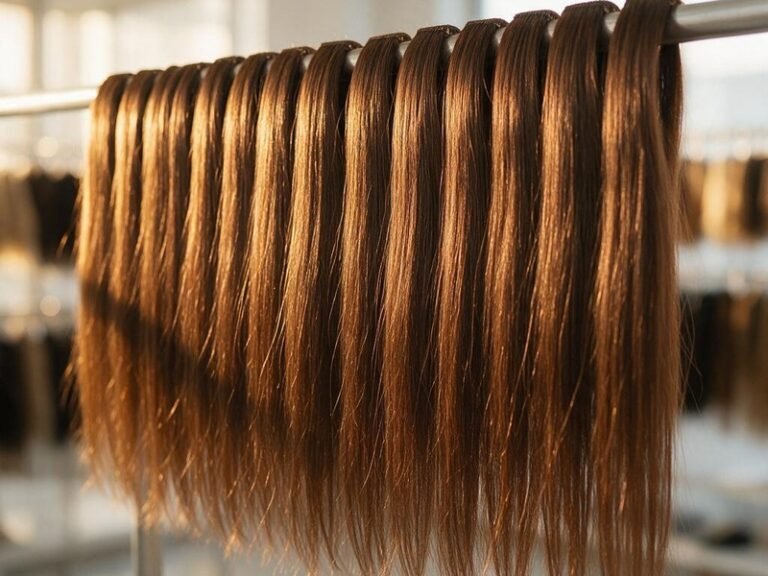
The best headband wigs human hair are glueless caps secured by an attached headband, with sewn-in human-hair tracks, combs, and adjustable straps. They’re worth stocking because clients install them in minutes, but in our warehouse, cheap units show up as shedding, tangling, poor fit, and returns.
What exactly is a human hair headband wig?
A fabric or satin band is sewn across the front instead of lace; it covers the hairline while the wig hair falls over it.
Most are glueless—no glue or tape needed—and secure with combs, straps, or a drawstring.
Most bodies use machine-sewn weft hair, or stitched human-hair tracks, making them cheaper than lace wigs.
The downside is no natural lace hairline and little parting freedom.
Clients want quick, low-maintenance protection, not an undetectable hairline.
What makes the best headband wigs human hair?
Start with the hair.
Remy hair means intact cuticles mostly run one direction; virgin hair is not colored, permed, or otherwise processed.
Cuticle aligned means strands point the same way root to tip, reducing tangling after washing.
Avoid “human hair blend” listings, because those can contain synthetic or low-quality fiber mixed in.
A good sample sheds a few strands at first comb, not clumps; ends should feel soft, not dry or coated.
What density and cap details should businesses stock?
Density is hair amount on the cap, shown as a percentage; 150% looks natural, 180% fuller, and 200% heavy.
I’d start with 14–18 inch units at 150–180%, plus a few 20–24 inch 180% pieces.
An 18-inch 180% wig often weighs 210–240 grams, so compare weights, not just photos.
Look for breathable netting, soft wide band, three combs, and adjustable strap or drawstring.
Stock black and natural brown first; highlights and fashion colors move slowly unless clients request them.
What do wholesale headband wigs cost, and what are MOQs?
- Expect $45–$75 for short units, $80–$120 for mid-length Remy, and $120–$180 for longer 180% virgin hair.
- These are per-unit wholesale estimates; blonde shades, custom packaging, and length add cost.
- Stock MOQs often start at 5–10 pieces, while private-label or custom-color orders usually need 30–50.
- Ready stock can ship in 3–7 days; production orders commonly take 15–30 working days.
- Saving $10 on a thin band or shed-heavy cap can cost you repeat business.
How do you pick a vendor for repeat orders?
Don’t choose a supplier from one glamour photo.
Order a sample in the length and density you’ll stock, and request wet-and-dry videos plus cap and stitching shots.
A good vendor explains origin, processing, density, stock status, and defect policy instead of repeating “best quality.”
If braided styles fit your shelf, our braided headband wig guide covers that niche’s ordering risks.
For broader sourcing, this guide on choosing a vendor walks through samples, communication, and payment red flags.
Are headband wigs good for resale?
Yes, especially for clients wanting quick glueless wear, protective styling, and no lace maintenance.
They cost less and fit beginners easily, but they don’t create a natural exposed hairline.
Market them as headband styles, not undetectable lace units.
Can clients color or heat-style them?
Genuine virgin or Remy hair can be heat-styled and often colored, but stock-dyed or processed units lift unpredictably.
Use low or medium heat with protectant, and keep hot tools off the cap and band.
For coloring, test a hidden strand first or order a virgin unit made for custom color.
When ready, shop all hair extensions and compare caps, lengths, and densities, or share your monthly volume.
For sample or MOQ questions, check the seller FAQ page before ordering.
Send Us Your Hair Inquiry
Need bulk pricing, samples, or a private-label quote? Fill in the form and our team will get back to you within one business day.