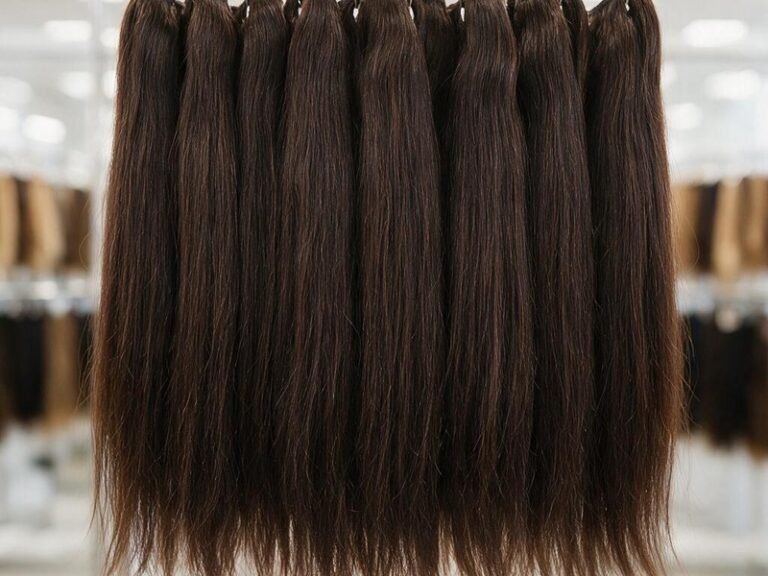
What Is a Full Lace Wig: What Beginners Should Know
A full lace wig is a wig built on a full cap of lace, with each hair hand-tied across the entire base instead of only at the front. That means you can part it anywhere and pull it into an updo while the base still reads as scalp. Here’s what beginners ordering for a salon or store should know before buying.
What a full lace wig actually is
A full lace wig uses a thin, flesh-toned lace cap that covers the whole head, with strands knotted in by hand, usually one or two hairs per knot. When the lace is glued flat and tinted to match the scalp, it practically disappears. Most caps have adjustable straps in the back plus a few combs inside for grip. A standard 12-inch unit runs about 150 to 200 grams before packaging, depending on density.
How is a full lace wig different from a lace front wig?
A lace front wig has lace only across the front hairline and part of the crown; the rest is thicker mesh or wefted fabric. That makes lace fronts cheaper and sturdier, but a true high ponytail will expose the back. Full lace goes all the way around, so up-dos look realistic from every angle. If clients mostly wear hair down, a lace front often saves real money, and our 360 wig guide explains the middle-ground option.
Can you really wear it in a high ponytail?
Yes, but only when the install is done right. The lace at the nape and sides has to lie flat with glue or tape, and the knots usually need bleaching or tinting so they don’t show. Tell clients not to sleep in a tight ponytail or soak the bonds constantly, because lifting at the edges is the top complaint we hear. A solid install lasts two to three weeks, and the wig should come off periodically so the scalp can be cleaned.
What to check before you place an order
- Hair type: virgin hair is unprocessed hair from one donor; Remy means the cuticles run the same direction to cut tangling.
- Density: thickness shown as a percentage; 150% is natural, 180% is full, 250%+ is heavy, and buyers asking about 280 density should know it’s a lot of hair.
- Lace color: HD or transparent lace blends easiest; light brown lace needs tinting on deeper skin.
- Cap size: medium fits most, but measure circumference; 21.5 to 22.5 inches is standard for adults.
- Length: curly hair pulls shorter, so order by the straightened measurement.
- Lead time: custom units take 3 to 6 weeks; stock ships faster but sells out in common lengths.
The honest downsides nobody posts about
Full lace is delicate. The lace can tear if a client yanks a comb or scratches, and knots shed over time, especially after repeated bleaching. Installs take real skill too — beginners use too much glue, cut the lace crooked, or skip scalp protector and end up irritated. Expect to pay 30 to 60 percent more than a lace front in the same length and grade. It’s worth it for up-dos or hair-loss clients; for everyone else, it’s often overkill.
Beginner questions we hear all the time
How long does a full lace wig last?
With daily wear and regular washing, a good human-hair unit usually lasts one to two years, longer if it’s rotated with another wig. Remind clients to detangle from the ends up and keep heavy product off the lace. Cheap synthetic units won’t come close.
Do you need glue or tape to wear one?
No — the combs, straps, or a sewn-in elastic band can hold it for short-term wear without adhesive. Glue or tape gives the flattest, most realistic hairline, but it isn’t required. Anyone with sensitive skin should test adhesive first, and our FAQ page covers day-to-day care.
If your clients need real up-do versatility, a full lace wig earns its price and learning curve. Browse all hair extensions to compare stock, or send us your specs and we’ll help you pick the right unit.
Send Us Your Hair Inquiry
Need bulk pricing, samples, or a private-label quote? Fill in the form and our team will get back to you within one business day.