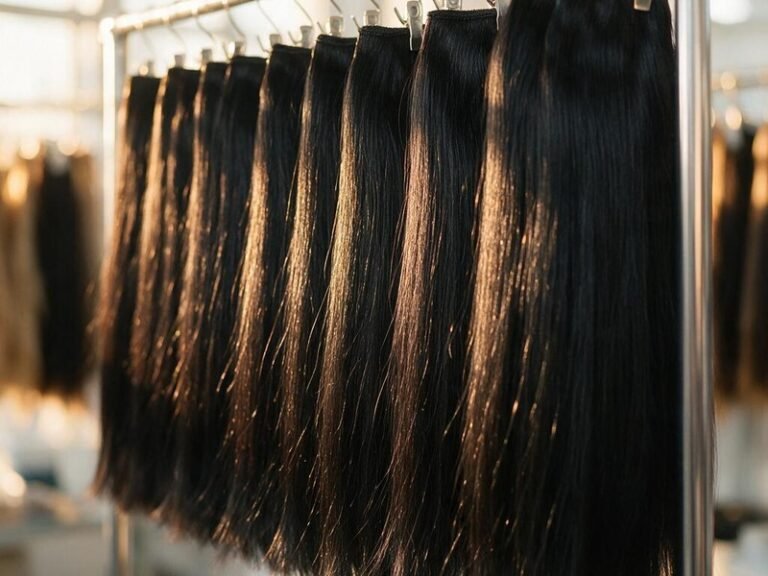
How to Calculate True Cost Per Gram for Wholesale Hair
If you’re comparing wholesale hair only by the bundle price, you’re probably making the same mistake we see new buyers make every week. The real number that protects your margin is true cost per gram, and it has to include more than the factory sticker.
Start with grams, not inches
A 24-inch bundle is not automatically a better deal than an 18-inch bundle, even if the price looks close. Longer hair uses more raw material, but two vendors can both call a bundle “100 grams” while one actually ships 92 grams and the other ships 104 grams. Weigh at least three pieces when the shipment arrives, using a cheap digital scale that reads to the gram. Divide the unit price by actual net hair weight, not the label weight, and don’t include tags, plastic, or cardboard. That first number is your base cost per gram, but it still isn’t the whole story.
Add the costs that actually land on your shelf
True cost per gram means landed cost per gram. If one quote is $28 per bundle EXW and another is $34 per bundle with delivery to your door, the second one can easily be cheaper after freight, insurance, customs, payment fees, and domestic pickup charges. A simple formula is: product cost plus all shipping and import fees plus payment and inspection costs, divided by total usable grams. If you’re comparing shipping terms, DDP shipping for hair can make this much easier because most charges are quoted up front. Just don’t assume DDP is always cheaper; it’s only cleaner. The danger is ignoring freight completely and thinking a low factory price means a low retail cost.
Short hair, long hair, and the weight trap
Here’s where buyers lose money without noticing: shorter bundles often feel fuller, while longer bundles can look wispy if the manufacturer skips weight. A standard machine weft bundle is commonly around 100 grams, but bulk hair for braiding, closures, frontals, and tips may use different pack sizes. K-tips include keratin, tape-ins include tape tabs, and some sellers count that attachment weight in the package number. For those products, ask whether the listed grams are total package weight or pure hair weight. If the keratin or tape is 8% of the pack, your usable hair cost is 8% higher than the basic math suggests.
The quality math buyers miss
Cheap hair can win the spreadsheet and lose in the salon. If 100 grams costs $22 but 15% comes back as complaints, tangling, short hairs, or unusable shed pieces, your effective cost is closer to $25.88 per 85 usable grams before you count returns, shipping replacements, and lost clients. Hair that stays smooth through washes, color services, and heat styling may cost more per labeled gram but cost less per installed gram. This is also why origin and grade matter; if you’re choosing inventory tiers, raw hair vs virgin hair should be priced differently. Don’t compare a raw donor product with a budget steam-processed line using one number.
Before you place the next PO, check these numbers
- Ask for actual net weight per piece, not a range like “about 100 grams.”
- Confirm whether quoted weight includes tape tabs, keratin bonds, bands, tags, or packaging.
- Get freight, customs, insurance, and payment-fee estimates before choosing a vendor.
- Weigh sample bundles from the middle of the box, not just the prettiest top layer.
- Track unusable grams from shedding, mismatched lengths, bad ends, and returns.
- Compare vendors using the same length, texture, color process, and delivery term.
- Leave room for your own handling time; reorders by air usually cost more than planned production.
If you’re browsing wholesale weft hair or other hair extensions, run the same formula on every line item instead of trusting the pack price. For most salon owners, a 300- to 500-gram test order is enough to spot weight and quality issues before committing to a larger run. Give yourself seven to 14 days for checking samples, and more if you need custom colors or textures.
FAQ
What is a good cost per gram for wholesale hair?
There isn’t one universal number because origin, length, texture, color work, and shipping change the answer. A better target is a consistent landed cost per usable gram within each quality tier. If two quotes are far apart, ask why instead of automatically taking the lower one.
Should I include shipping in the cost per gram?
Yes, always include shipping, customs, insurance, payment fees, and any inspection or rework cost. Those expenses are real inventory costs, even if they show up on a different invoice. If you leave them out, you’ll underprice retail packs and think low-margin orders are profitable.
Next time you get quotes, build one simple sheet with price, actual grams, landed fees, and expected unusable weight. That’s the fastest way to know which wholesale hair truly makes money for your business.
Send Us Your Hair Inquiry
Need bulk pricing, samples, or a private-label quote? Fill in the form and our team will get back to you within one business day.