Sourcing Best Tape in Hair Extensions: A Practical Guide for Hair Businesses
The best tape in hair extensions for resale are cuticle-aligned Remy human hair with strong medical-grade tabs, consistent piece weight, and a factory that replaces bad batches. Sourcing them means checking the hair, the adhesive, and reorder consistency—not just a pretty sample. Here’s where buyers get burned.
What actually makes tape-in hair good?
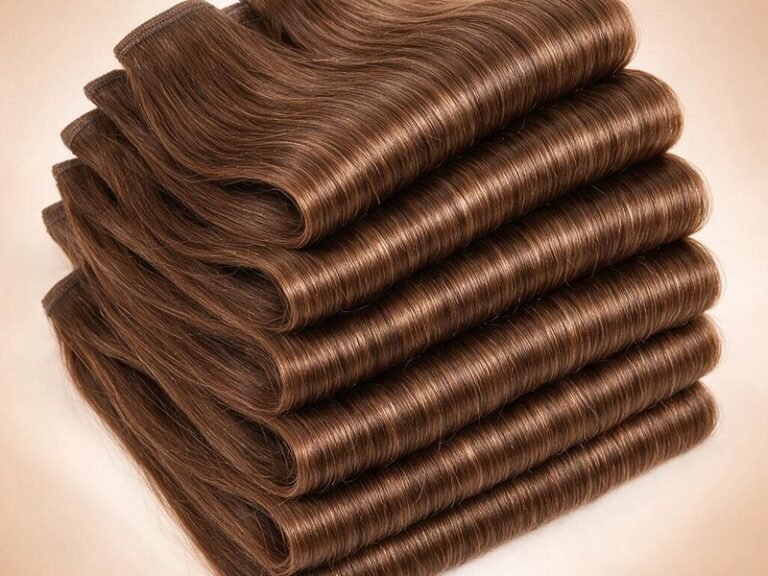
Tape-ins are thin weft sandwiches bonded to small sections of a client’s hair with adhesive tabs. The key term is Remy: human hair kept with roots and ends pointing the same way so the cuticle stays smooth. Cuticle aligned means the same thing—all the little shingles face one way, so it tangles less and colors evenly. If a supplier sells Remy at synthetic prices, ask whether the cuticles are intact or the hair was acid-washed. Stripped hair feels soft early, then mats at the nape after a few washes.
How much should tape in hair extensions cost?
Wholesale tape in hair extensions run $2 to $4 per piece for entry human hair and $5 to $9 for good cuticle-aligned Remy, depending on length. A standard piece is about 4 cm wide and 2 to 2.5 grams; a full install takes 40 to 60 pieces, so price adds up fast. Cheap lines get there by mixing short hairs, using thin tabs, or silicone coating that hides damage until the first shampoo. You can sell it, but tell salons the truth: six to eight weeks instead of months with reinstalls. Spending $1.50 more per piece usually stops the tangling complaints.
The tape tab causes most of your returns
The hair gets the attention, but the tab causes most salon-chair drama. Tabs should be medical-grade acrylic or polyurethane adhesive, about 0.8 cm by 4 cm, with a peel backing that leaves no residue. Weak tape slips after a sweaty workout; aggressive adhesive tears out client hair during removal and kills reorders. We keep a guide on the best tape for tape in extensions because this is the top reason salons switch suppliers. Test each batch: apply two pieces, wait 48 hours, shampoo, and check for lifting.
What to inspect on your first sample order
Before a large order, buy two samples from different batches and compare them. Don’t just finger through the hair; inspect construction. A good supplier won’t mind specific questions. Here’s what we check in our warehouse:
- tab width and even alignment
- weight per piece on a gram scale
- root-to-tip direction, felt both ways
- shedding after ten firm brush strokes
- curl pattern from piece to piece
- whether ends feel full or thin
- lot number on the bag for reorders
MOQs, lead times, and reorder consistency
Minimum order quantities, or MOQs, often start at 50 to 100 pieces per length and color; custom colors may require 200 or more. Stock tape-ins ship in five to ten business days, while custom colored batches run three to five weeks plus transit. Ask whether the factory keeps the same hair source across orders, since a great sample means nothing if batch three is thinner. Browse our tape in hair extensions for stock weights and lengths, then see the FAQ page for current MOQs. If a rep dodges batch consistency or reorder pricing, keep looking.
Tape-in sourcing FAQ
How many tape-in pieces does a client need?
Most clients need 40 to 60 pieces for length and volume; fine hair or light fullness may need 20 to 30. Thick hair or lengths past 22 inches can require 80 or more. Quote the full set, not per piece.
Can I color or tone wholesale tape-ins?
Cuticle-aligned human hair lifts and tones normally, but test one piece first and stay below 40-volume developer. Keep color off the adhesive tab and dry bonds fully after rinsing. If you offer custom blonding, charge for the labor and source hair that can survive it.
When you’re ready to compare options, shop all hair extensions and order samples before a big batch. Install them, wash them, trust your hands.
Send Us Your Hair Inquiry
Need bulk pricing, samples, or a private-label quote? Fill in the form and our team will get back to you within one business day.