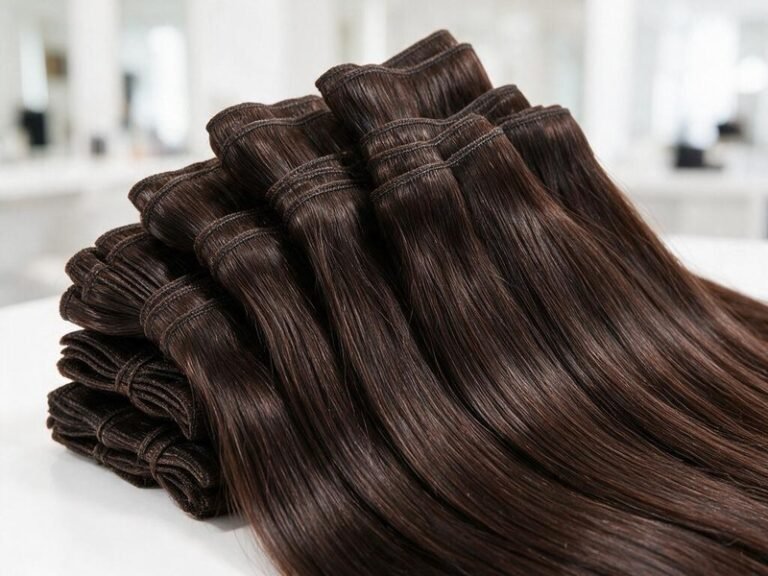
How to Choose a K-Tip Hair Manufacturer
If you’ve ever gotten a batch of k-tips that shed like crazy, had keratin tips melt mid-install, or waited 6 weeks past your promised ship date for stock you already pre-sold to clients, you know picking the wrong k-tip hair manufacturer doesn’t just cost you money—it kills your reputation. We’ve worked out of our Guangzhou warehouse for 12 years, and we see new salon owners and resellers make the same avoidable mistakes every single month when sourcing k-tip stock. This isn’t the generic “check reviews” fluff you’ll see everywhere else; it’s the stuff we wish every buyer knew before they place their first bulk order.
Skip the guys who undercut market rate by 30% or more
Right now, legitimate 100% virgin Remy k-tip hair (1g per strand, 20 inch) runs $28-$35 per bundle of 25 strands at factory wholesale, before shipping. If someone quotes you $18 for that exact same spec? They’re cutting corners, full stop. What corners? Usually it’s a mix of 30-40% synthetic fiber mixed in with fallen non-Remy hair collected from salon floors, keratin tips made with cheap hot-melt glue that crumbles when you heat it for install, or cuticles stripped completely and coated in thick silicone that washes out after 2 shampoos, leaving clients with matted, tangled strands 2 weeks post-appointment. We’ve had buyers send us their bad stock from these cheap suppliers to test, and last quarter 60% of those batches had tip glue that would not bond properly even at the correct 320°F iron temperature—you can imagine how many angry client refunds those vendors had to issue. Honestly, it’s tempting to chase the lowest possible per-unit cost, but that $10 per bundle savings disappears fast when you have to redo 8 client installs for free because the hair tangles or the tips slip out after a week.
Test their keratin tip formula before you place a big order
A lot of buyers fixate only on the hair quality and completely ignore the keratin tip, which is half the product. The best k-tip keratin is formulated to melt smooth at 300-330°F, bond tight to natural hair without slipping, and break down cleanly with proper keratin remover 3-4 months later—no sticky residue left on the client’s hair, no bits of glue stuck that you have to pick out for an hour during removal. Bad tips? They either melt too fast and drip on a client’s scalp during install, or they’re so hard you have to crank your iron up to 400°F to get them to melt, which damages both the extension hair and your client’s natural hair.
How do you test this without buying hundreds of dollars of stock? Order samples first, and don’t just run your fingers over the hair strands to check softness. Melt a tip with your actual install iron, press it between two pieces of scrap cotton fabric, see if it sets flexible or brittle. Brittle tips will snap off when clients brush their hair, leading to random strands falling out days after install. We put together a guide to ordering hair samples if you’re not sure what red flags to look for when your test pack arrives.
Ask for actual cuticle alignment specs, not just buzzwords
Every manufacturer will tell you they sell “cuticle intact Remy hair,” but 7 out of 10 batches we test from random third-party vendors have cuticles running in mixed directions, which is why they tangle so fast even if they feel soft out of the package. What’s a real, concrete answer you want to hear? That they run every batch through a 3-step alignment check before tipping, that they don’t acid-wash strands to strip cuticles, and that they don’t use more than a 0.5% silicone coating on the hair to add temporary shine. If they dance around that question, or send you a copy-pasted marketing blurb instead of a direct answer? Walk away.
A quick note for folks who cater mostly to fine-haired clients: you’ll want a manufacturer that can make lighter-weight 0.8g strands instead of only the standard 1g, because heavier tips put too much tension on fine hair and cause traction breakage around the hairline. We break down that weight requirement in more detail in our guide to k-tip extensions for fine hair, if that’s your core client base.
Match their MOQ and lead times to your actual business size
A lot of new buyers get frustrated because they order a $20 sample pack, love the quality, then find out the factory has a 5kg MOQ for custom colors or custom tip sizes, which works out to roughly 180 bundles of 25 strands—way more stock than a small salon or new reseller can move when they’re first starting out. Legitimate factories that work with small to mid-sized US buyers usually have an MOQ of 0.5kg per color for stock k-tips, with lead times of 5-7 business days for in-stock shades, and 12-18 business days for custom color matches. If a manufacturer quotes you a 3-day lead time on every possible shade and length? They’re drop shipping from another supplier, not making the k-tips in-house, which means they have zero quality control over what gets sent to you or your clients. If you’re just starting to build your stock, you can browse standard k-tip hair shades and weights first to get a sense of what specs are realistic for small batch orders.
- 0.5kg MOQ, 5-7 day lead time: Ideal for small salons and solo stylists, works out to ~18 bundles per color, no need to tie up thousands in dead stock
- 2kg+ MOQ, 3-4 week lead time: Better for established resellers moving 50+ bundles a month, usually gets you 10-15% off per-unit pricing
- No MOQ, 1-2 day ship time: Almost always a reseller, not a manufacturer, expect 10-20% markup and inconsistent batch quality order to order
Vet their problem-solving process before you pay
Anyone who tells you their factory never sends a wrong shade, never has a bad batch, never misses a ship date is lying. We’ve been doing this long enough to know that even with 3 separate quality checks per batch, once in a blue moon a batch of 22 inch gets labeled as 24, or a dark ash blonde comes out half a shade too warm, or a shipment gets held up in customs longer than expected. The difference between a good k-tip hair manufacturer and a total nightmare is how they fix those issues. A good partner will send replacement stock for wrong or defective batches without making you jump through 10 hoops, will credit your account for shipping delays that cost you pre-booked client appointments, and won’t ghost you the second your payment clears.
Before you place a big order, ask one simple, direct question: “If I receive a batch that doesn’t match the sample I tested, what’s your process for making it right?” If their answer is “all sales are final,” or they start making excuses about how that never happens so you don’t need to worry, run. You can find our own defect and return policy spelled out plain and simple on our FAQ page, no fine print, no hoops to jump through.
Quick answers to the questions we get every week
Do I need to work directly with a China-based factory to get good pricing?
No, not always. A lot of US-based suppliers work directly with overseas factories (like we do) to keep popular shades in stock stateside, which cuts down on shipping time and customs headaches for small buyers who don’t want to deal with importing large orders on their own. The catch? If a US supplier won’t share clear hair specs, won’t send samples, or dodges questions about where their hair is sourced, they’re likely marking up low-quality hair by 50% or more to turn a quick profit.
How much more should I pay for virgin vs. Remy k-tips?
Right now, expect to pay 15-20% more for 100% unprocessed virgin k-tips vs. high-quality cuticle-aligned Remy. If someone charges you double for “virgin” hair, they’re gouging you—there isn’t that big of a cost difference at the factory level. Virgin hair holds up better for clients who use heat regularly or want to lighten their extensions, but Remy is a perfectly solid, more affordable option for most salon clients. Once you lock in a manufacturer you trust, you can branch out into complementary stock like tape-ins, wefts, and bulk hair for braiding without going through the whole vetting process again.
What’s the biggest red flag to watch for?
Any manufacturer that pressures you to place a huge order on your first call, or offers you a “one time only discount” if you pay in full within 24 hours. Legitimate factories don’t need to use high-pressure sales tactics to get business—their repeat order rate does the talking for them.
Picking a k-tip manufacturer doesn’t have to be a months-long stressful process, but it does require you to look past flashy Instagram ads and super-low price tags to test the actual product and ask the boring, practical questions that protect your business. If you’re ready to test stock for your salon or shop, you can browse our full range to see specs and pricing upfront, no hidden fees, no high-pressure sales pitches.
Send Us Your Hair Inquiry
Need bulk pricing, samples, or a private-label quote? Fill in the form and our team will get back to you within one business day.