Single Drawn Bulk Hair: Margin Math For Budget Product Lines
If you’re building a budget braiding line, single drawn bulk hair usually gives you the cleanest entry price without dropping below the quality customers expect from human hair. The catch is that the margin math changes fast once length, shedding, returns, and packing enter the picture. Here’s how we’d look at it from the supplier side before you place a container or even a first mixed order.
What “single drawn” actually means for your cost
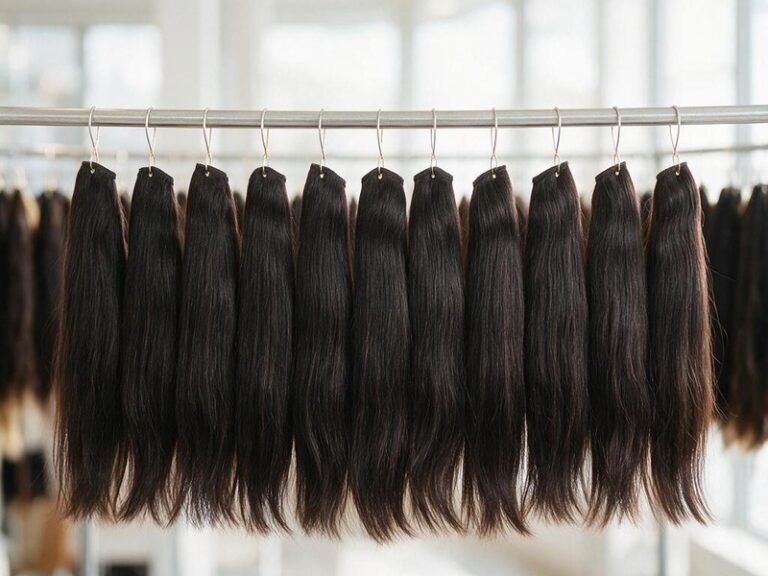
Single drawn hair comes from one donor ponytail and keeps more natural shorter hairs mixed in with the longer strands, so the ends feel thinner than double drawn. That’s not automatically bad. It’s exactly why the factory price can be lower, especially in 18–28 inch lengths where double drawn gets expensive.
For a budget line, you’re paying for usable braiding hair, not that perfectly thick shelf appearance used in premium weft displays. Most bulk orders are weighed in grams, with common packs around 100g and factory MOQs often starting at 1,000 grams per texture or length. If a 20-inch single drawn kilo costs less per gram than a comparable double drawn kilo, you can open a lower retail tier while keeping cash free for more popular lengths.
Just don’t compare quotes by pack price alone. Ask whether the quote is per 100g, per bundle, by the kilo, and whether the hair is packed loose in a bale or separated into branded bundles; our bulk hair packing guide explains why that affects labor later.
A simple margin example with real tradeoffs
Say landed wholesale cost for 100g of 22-inch single drawn bulk hair works out to $18 after processing, freight, and basic packaging. If you sell that pack for $39, gross profit is $21, or about 54% gross margin, before payment fees, shipping, and your own handling time.
If a double drawn equivalent lands at $29 and retails for $55, gross profit is $26, but margin drops to about 47% and the customer entry price jumps $16. Budget buyers often care more about the $39 price point than maximum end fullness, especially for boho braids, knotless styles, and short-term protective looks.
The tradeoff comes in complaints. Single drawn ends can look skimpy when someone spreads the hair out for content, and braiders may need extra packs for very full looks. If that creates one return in every 25 orders, a $7 return cost plus lost shipping eats roughly $0.28 from every pack’s profit, so your $21 becomes closer to $20.72 before you even count support time.
Where budget lines quietly lose money
The product cost is obvious. The hidden costs are what usually make a cheap line unprofitable. Short hairs create more flyaways during braiding, excessive factory dust means extra washing time, and inconsistent texture means your braider customers can’t trust reorders.
We see buyers request the lowest possible price, then ask for replacements because the hair tangles after one shampoo. That saves money on the invoice and loses money on the back end. A better middle ground is usually clean, steamed single drawn bulk hair with controlled short hairs, not the absolute cheapest floor-grade hair a broker offers.
Length mix matters too. A budget line doesn’t need every inch from 10 to 30. Start with the sellers, usually 18, 20, 22, and 24 inches, in two or three textures, then use open-to-buy dollars for replenishment instead of slow SKUs. If you want the broader retail formula, this retail margin math post walks through markup by product type.
Specs worth checking before you order
- Weight: confirm 100g per pack or exact kilo totals before comparing quotes.
- Hair type: ask for remy or non-remy in writing; they are not the same price.
- Length tolerance: pulled-straight measurement is standard, not curly-length guessing.
- Short-hair ratio: ask the factory what percentage is significantly shorter than the labeled length.
- Texture hold: request a sample washed and air-dried before committing to a bulk order.
- Packing: bales cost less to receive, but retail-ready bags save your labor time.
- Lead time: common stock may move in 7–15 days; custom labels often need 25–40 days.
Should single drawn be your only tier?
Probably not. It works well as the entry offer for braiders who need human hair at a sensible price, but some clients will pay more for thickness from root to end. Keep one premium double drawn option for those customers instead of trying to make budget hair do a premium job.
You can merchandise the difference clearly: single drawn for natural density and value, double drawn for fuller ends and luxury installs. That same tiering can carry into other categories if customers ask for methods beyond braids; our bulk hair for braiding selection is the natural starting point, while weft hair extensions fit sew-in buyers.
If you’re still deciding where the quality line should sit, this comparison of single vs double drawn is useful. The goal isn’t to buy the cheapest hair you can find. It’s to buy the cheapest hair that won’t create refunds, bad reviews, or angry Sunday texts from braiders at a appointment.
Is single drawn bulk hair good for boho braids?
Yes, usually. The natural taper blends well with braided styles and keeps the price approachable for clients who want some human-hair softness without paying for premium fullness. Just tell customers how many packs most stylists use, because thinner ends may require an extra pack for very full looks.
What is a reasonable target margin for budget bulk hair?
Many resellers aim for 50% to 60% gross margin on a budget pack, but your real target should account for returns, shipping, payment fees, and repackaging. A 55% margin can beat a 65% margin if the cheaper product generates complaints every week.
Pull sample weights, wash them, and have one trusted braider test the hair before you lock in a full budget line. Then start with a tight length range and reorder only what actually moves.
Send Us Your Hair Inquiry
Need bulk pricing, samples, or a private-label quote? Fill in the form and our team will get back to you within one business day.