Sew-In Edge Prep: Avoiding Tension Damage for Salon Clients
If a client leaves your chair with a flawless sew-in but tender edges, that install was not a win. Good sew-in edge prep starts before the needle comes out: assess the hairline, choose the right foundation, and control how much weight the natural hair has to carry.
We see plenty of salon buyers focus on bundle length and curl pattern, then treat the braid-down like an afterthought. That is usually where trouble starts.
Read the hairline before you quote the style
Before anyone picks a bundle, look at the actual edges: density, breakage, scalp color, tiny new growth, and whether the client wears tight ponytails, wigs, or previous sew-ins. Thinning temples, little bumps along the hairline, or a client who keeps saying “I can handle it tight” are warning signs. Ask about recent installs, shedding during takedown, and any scalp burning from braiders or adhesives. If you want a fuller script, these salon consultation questions can help you catch problems before they become salon problems. A traditional full sew-in may not be the right service that day, and saying that honestly is better than chasing a refund later.
The braid-down should support, not strangle
Most tension damage happens during the foundation, not from the weft itself. Keep perimeter braids smaller and lighter, avoid braiding directly over fragile baby hairs, and leave enough natural hair out around the hairline if the style allows it. Your anchor braids need to be secure, but they should not lift the scalp or create visible pull lines. If the client’s eyes change shape when the first braid is being formed, that is too tight. A net install can spread weight across more surface area, especially for clients with fine edges or patchy crown density, but the net still needs a relaxed perimeter.
Match bundle weight to the client’s hair
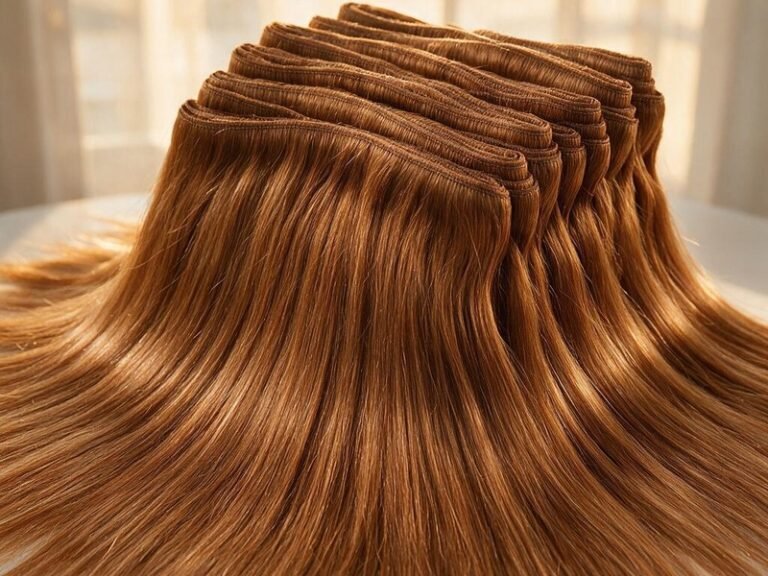
Long hair feels great in the chair, but 28 to 30 inches of dense bundles adds real pull at the root. For a standard sew-in, many clients do well with two to three bundles from 100 to 300 grams total depending on length, fullness, and leave-out; clients with fine hairlines should avoid stacking extra hair near the front. When you source weft hair, pay attention to weft thickness as much as strand quality, because bulky machine wefts can create lumps and tighter folding. A lighter frontal setup may need more styling time but less anchoring than a heavy full head. If clients mainly need length without a traditional braid foundation, you can compare other methods on the shop all hair extensions page before deciding.
Install habits that keep the perimeter calm
- Do not sew through the same tiny section of natural hair repeatedly.
- Keep stitches close enough to secure the weft, not tight enough to pinch the scalp.
- Skip pulling wefts upward around the temples to fake a flatter finish.
- Cut wefts between tracks instead of folding thick bulky ends.
- Leave the very front edge softer for clients who pull hair into ponytails.
- Tell the client that mild firmness is normal; throbbing or sleepless pain is not.
Aftercare and takedown matter just as much
A careful install can still cause damage if the client keeps it in for four months, oils the braids without cleansing, or rips through shed hair at takedown. Set a realistic maintenance window, usually 6 to 10 weeks depending on growth rate, styling, and how the scalp looks. Show clients how to shampoo without scrubbing the tracks aggressively and how to dry the braid foundation completely, because damp braids can cause itching and irritation. During takedown, cut thread only, lubricate the hair if needed, and detangle from the ends before unbraiding. For buyers testing hair quality before a salon launch, our notes on building a sample testing kit can keep your decisions based on performance, not pretty packaging.
How tight is too tight for a sew-in?
If the client has immediate scalp pain, headaches, raised bumps, or cannot touch the perimeter without discomfort, the braids or stitches are too tight. A secure install should feel neat and firm, but the scalp should not look pulled or pale along the hairline.
Can a client with thin edges still wear a sew-in?
Sometimes, but the service needs adjustment: lighter bundles, no frontal tension, a net foundation, and possibly a partial install instead of a full sew-in. If there is active breakage, scalp inflammation, or very weak perimeter hair, wait and offer a lower-tension style until the hairline recovers.
Protecting edges is not one dramatic step; it is a chain of small choices from consultation through takedown. If you need reliable hair for your next service, compare weights and textures carefully instead of buying the fullest bundle on the page.
If you’d like to explore options or have questions, the Bulk Hair page is a good place to start.
Send Us Your Hair Inquiry
Need bulk pricing, samples, or a private-label quote? Fill in the form and our team will get back to you within one business day.