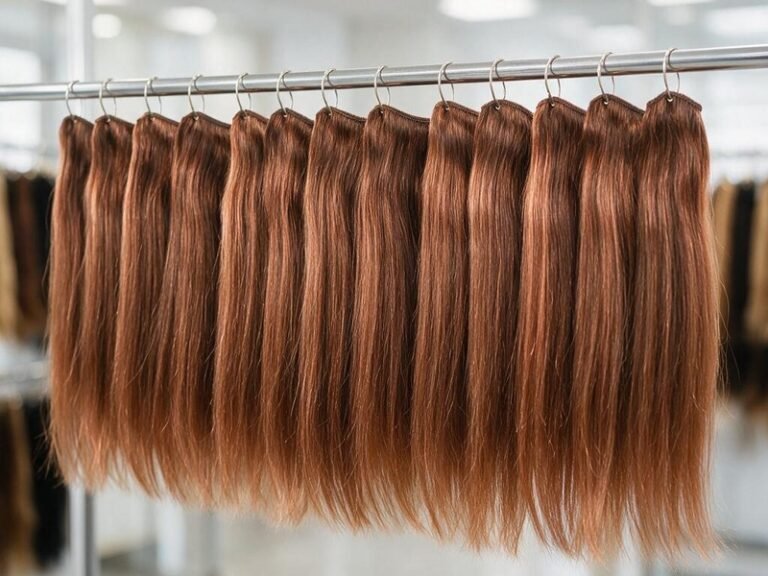
Remy vs Non-Remy Hair: How to Explain the Difference to Buyers
If you’ve ever stood in your salon or stared down a DM from a customer convinced all “100% human hair” is the same, you know how confusing the Remy vs non-Remy hair conversation can get. We’ve watched new vendors lose repeat customers because they oversold non-Remy as premium, or priced Remy so high they priced themselves out of their core market. This isn’t textbook jargon—it’s the stuff we sort through in our warehouse every single day when we pull orders for braiders, salon owners, and resellers across the US.
First, stop overcomplicating the cuticle explanation
Most explanations you’ll read online make this sound like rocket science. It’s not. Every strand of human hair has tiny, overlapping cuticle layers that run in one direction, from root to tip, just like shingles on a roof. Remy hair is collected and sorted so every single strand in a bundle keeps that same root-to-tip direction. We don’t have to sand down those cuticles to stop tangling, because they all lay the same way.
Non-Remy hair is the opposite. It’s usually collected from salon floor sweepings, comb waste, or mass hair donations where roots and tips get tossed together with no sorting. If you tried to sell that hair as-is, it would tangle into a matted mess the second it got wet, because cuticles are catching on each other going every direction. To fix that, factories dip non-Remy bundles in an acid bath to strip almost all the cuticle off, then spray on a thick silicone coating to make the hair feel soft to the touch. If you’re still sorting out how different Remy quality levels line up with price points, our virgin Remy hair grade guide breaks down what you can actually expect at each tier, no marketing fluff.
What non-Remy hair is actually good for (no shade)
Let’s be clear: non-Remy is not “bad” hair. It serves a real purpose for a lot of clients, and writing it off entirely will leave money on the table. It’s usually 30-40% cheaper per bundle than comparable length Remy, because sorting cuticles by hand adds significant labor time and waste to the production process.
Non-Remy works great for clients who want a short-term style. Think vacation braids, one-time event updos, prom looks that will get taken down after 2-3 weeks. We work with tons of braiders who stock affordable bulk hair for braiding in non-Remy for budget clients who don’t plan to keep their style in long enough to wear through that initial silicone coating. The only real problem with non-Remy is when sellers market it as Remy to jack up prices. That coating washes out after 2-3 shampoos, and once it’s gone, the hair tangles, sheds, and feels rough. Clients don’t get mad about buying a budget product—they get mad when they pay premium prices for a budget product.
The Remy vs non-Remy script we use that never sounds salesy
You don’t need to give clients a biology lesson to make this click. Ditch the jargon, and lead with what actually matters to them: how long the style will last, how much upkeep it needs, and what it costs. These are the talking points we share with all our new wholesale accounts to use with their own buyers:
- Start with use case, not labels. Ask if they want a style for a specific short event, or something they can wash, heat style, and rewear for 3+ months. That lets you match them to the right hair before you even mention price.
- Be honest about initial feel. Non-Remy will feel just as soft as Remy when it’s brand new. Don’t pretend otherwise—clients will run their fingers across both displays and call your bluff immediately.
- Frame cost around value, not sticker price. Hand-sorting Remy adds roughly two hours of labor per kilo of finished hair, which is why it costs more. But it lasts 3-4x longer than non-Remy with normal care, so the cost per wear is almost always lower for long-term styles.
If customers are asking about lightening their install, we have a full guide covering if Remy bulk hair can be bleached you can share directly, so you don’t have to field every technical care question off the top of your head.
The most common lie we see sellers get busted for
Here’s the dirty secret almost no cheap supplier will tell you: it’s trivial to pass non-Remy off as Remy to someone who only touches the hair for 10 seconds in a shop. That fresh silicone coating feels incredible. We’ve had dozens of salon owners send us bundles they bought from random overseas sellers marked “100% virgin Remy” that matted up on their client within a week of install. When we test them? The cuticles are completely stripped, no alignment at all, just thick silicone caking every strand.
That trick costs clients money, and it costs you your reputation. If you’re offering long-wear installs that stay in for 6-8 weeks or more—sew-ins, tape-ins, k-tips—you cannot cut corners with non-Remy. As the silicone wears off, stripped hair will matte against your client’s natural growth, cause edge breakage, and leave you dealing with angry refund requests. For those long-term installs, our weft hair extensions are all cuticle-aligned Remy, because we know sew-in clients expect 3+ months of wear without constant detangling.
Quick answers to the questions you’ll get every week
Can customers tell the difference by touch alone?
Short answer: no. As we mentioned earlier, fresh non-Remy with a full silicone coat can feel even silkier than lower-grade Remy. The real difference shows up after 2-3 washes with regular sulfate-free shampoo. Remy will stay smooth, shed minimally, and comb through easily from root to tip. Non-Remy will start to catch on combs, form tiny tight knots at the nape of the neck, and shed heavily as the coating rinses away.
Is Remy always 100% virgin hair?
Nope. Remy is a label that only refers to cuticle alignment, not whether the hair has been color treated or textured. You can find dyed, permed, or tightly curled Remy hair, though unprocessed non-Remy is extremely rare. Most virgin human hair is sold as Remy, because it makes zero financial sense to collect high-quality unprocessed hair and toss it in an unsorted pile for non-Remy stock.
How much more should I charge for Remy styles?
It depends on your local market, but most of the salon owners we work with mark Remy installs up 35-50% over comparable non-Remy options. The best way to frame that price difference is cost per wear, not total sticker price. For example, a $180 non-Remy sew-in that lasts 3 weeks works out to roughly $8.50 a day, while a $280 Remy sew-in that lasts 12 weeks works out to about $3.30 a day. That framing lands way better than just saying “Remy is nicer.”
If you have more specific questions about ordering, care, or MOQs for your shop, our wholesale hair FAQ covers most of the common questions we get from new accounts.
At the end of the day, this isn’t about pushing the most expensive product on every person who walks through your door. It’s about being honest about what each product does, who it’s for, and what they can expect when they take it home. You don’t have to stock only Remy to run a successful hair business, but you do have to label your stock accurately. Misrepresenting non-Remy as premium might make you a quick extra $50 on a single sale, but it will cost you a repeat customer who would have spent hundreds with you over the next year. If you’re ready to stock both Remy and value-priced non-Remy options to cover every client budget, you can browse our full selection any time to find what fits your shop’s needs.
Send Us Your Hair Inquiry
Need bulk pricing, samples, or a private-label quote? Fill in the form and our team will get back to you within one business day.