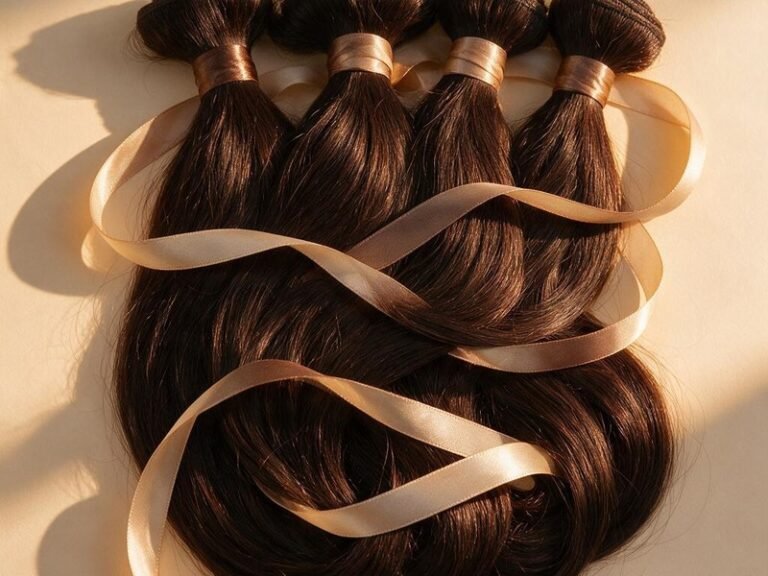
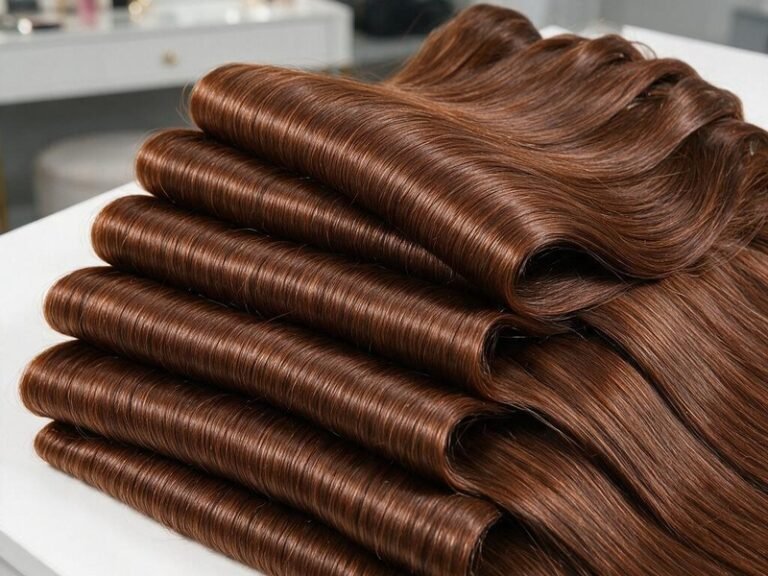
Remy Hair vs Raw Hair: What’s the Difference?
We get the Remy hair vs raw hair question at least 10 times a week from new salon owners, braiders, and resellers placing their first wholesale order. A lot of sellers online throw both terms around like they’re interchangeable, but the gap between them shows up fast in tangling, how long installs last, and what your end clients will actually pay for. We’ve pulled thousands of bundles in our warehouse over the last 8 years, so we’re going to skip the marketing fluff and tell you what actually separates the two.
Let’s start with Remy hair: what it actually is (not the Instagram version)
Remy hair’s defining trait is simple: all the cuticles on every strand face the same direction, from root to tip. That alignment cuts down on friction and tangling, which is why Remy is a step up from random, mixed-direction non-Remy hair found in cheap beauty supply store bundles. But here’s the part most listings leave out: 90% of the Remy hair sold wholesale is lightly processed. After hair is collected from salon cutoffs and regional donor pools, it gets a gentle acid bath to smooth raised cuticles, then a light silicone coating to add that slippery, “silky” feel people associate with new extensions.
Mid-grade Remy lasts 6-12 months with regular care, can be safely dyed 1-2 shades darker or lighter, and comes in extremely consistent textures — if you order 10 bundles of 22 inch body wave, every single one will match. Wholesale, you’re looking at $25-$40 for a standard 100g, 20 inch bundle, with 2-3 day lead times on in-stock orders. The cheapest Remy on the market (under $20 a bundle) cuts corners: cuticles aren’t fully aligned, the silicone coating washes out after 2-3 shampoos, and tangling starts almost immediately. If you’re sourcing for braiding clients specifically, we put together a full breakdown of Remy bulk hair wholesale specs a few months back if you want granular MOQ and texture details.
Raw hair is unprocessed, but that doesn’t mean perfect
Raw hair is collected directly from single donors, with zero chemical processing, zero acid baths, and zero silicone coatings when it arrives at our factory. Cuticles are fully intact and naturally aligned, which is why raw hair has such a long lifespan — 2-3 years of regular wear and re-installs, if cared for correctly. It can be bleached up to a pale blonde without turning to mushy, dry straw, and it holds curl and style through humidity, rain, and weekly washes way better than processed Remy. Wholesale, that same 100g, 20 inch bundle runs $55-$80, because sourcing and processing is far more labor intensive.
Raw hair has real downsides, too, which no hype-heavy reseller will tell you about. Because it comes from individual donors, texture is never 100% uniform. You might order three “natural straight” bundles from the same batch and find one has a soft, loose wave at the ends. It requires a quick clarifying wash before the first install to remove natural donor residue, and clients used to the super-silky coated feel of cheap Remy sometimes think raw hair feels “rough” right out of the pack. A lot of buyers mix raw hair up with virgin hair, too — we cleared that up in our raw vs virgin breakdown if you want to untangle that specific mix-up.
The price gap isn’t just brand markup
We see new buyers all the time who assume raw hair is marked up 2x just for a fancy label, but that’s not how the math works. Mass-market Remy is made from pooled hair collected from hundreds of salons and individual cutoffs across entire regions, so supply is steady and easy to source. Processing is fast, too: once hair arrives at the factory, we sort for cuticle direction, do the light cuticle smooth, add the temporary slip coating, pack, and ship in 3-5 days.
Raw hair requires direct donor outreach, careful sorting to match texture and color across batches, and a full manual inspection to remove debris, nits, or broken strands — a process that takes 2-3 weeks per batch, with labor costs almost 3x higher per gram than Remy. We don’t mark raw hair up more than Remy per unit; it just costs us more to make it right. To make the tradeoffs clear at a glance, here are the real, on-the-floor numbers we work with every day:
- Remy 20” 100g bundle: $25-$40 wholesale, 6-12 month lifespan, 2-3 day lead time for stock orders
- Raw 20” 100g bundle: $55-$80 wholesale, 2-3 year lifespan, 1-2 week lead time for in-stock batches, 3 weeks for custom orders
- Tangling risk: Remy has low-to-moderate risk after 2 months of regular wear, raw has near-zero tangling if washed and conditioned correctly
The costliest mistake we see new buyers make is chasing the cheapest possible Remy to save a few bucks per bundle, then getting flooded with client complaints 3 weeks post-install when the coating washes off and the hair mats so bad it can’t be combed out. We’ve had buyers lose 40% of their regular client base over that exact call.
Who should buy which, anyway?
There’s no universal “better” option — it all comes down to who you’re serving and what price point your business operates at. If you run a high-volume salon doing $150 sew-ins for college students, sell budget-friendly clip-ins at local pop-ups, or offer quick braid styles that clients keep in for 4 weeks or less, mid-grade Remy is your sweet spot. It’s consistent, looks great right out of the pack, requires zero extra prep, and your cost per install lines up with what your customers are ready to spend. Most of our salon clients doing high-volume sew-ins stock up on our weft hair extensions in Remy for exactly that use case.
If you cater to premium clients who pay $400+ for installs, come back every 3 months for maintenance, and expect to re-use their hair across multiple appointments, raw hair is worth every extra dollar. Braiders who offer long-term knotless styles that clients keep in for 8+ weeks will also want raw bulk hair for braiding, because Remy will start to loc up at the roots if left in for that long. A lot of our long-term clients stock a 70/30 mix: 70% Remy for everyday, high-turnover appointments, 30% raw for their premium tier, so they don’t tie up too much cash in slow-moving high-end inventory.
The marketing lies you’ll see about both
Scroll any hair reseller TikTok or Instagram page, and you’ll see the same bogus claims pop up over and over. First: “100% raw Remy hair” — that’s not a real product. Remy refers to cuticle alignment, but almost all commercial Remy is processed, so if a seller is slapping both words on a $20 bundle, they’re just trying to game search algorithms. Second: “Remy hair is garbage.” That’s not true, either. We sell hundreds of pounds of Remy a month to braiders and salon owners who have near-zero return rates, because they’re buying a solid mid-tier grade, not the cheapest possible factory seconds.
Third: “All real raw hair is Indian temple hair.” Most of the raw hair we source for US clients is from Vietnamese and Cambodian donors, because the strand thickness holds color and styles better for the textures our clients sell. A lot of “temple hair” sold online is pooled, processed Remy, not single-donor raw. Don’t pay extra for a buzzword that doesn’t mean anything.
Quick answers to the questions we get every week
Can I color Remy hair the same way I color raw hair?
You can lift Remy 1-2 shades safely, as long as you use a gentle developer and deep condition after processing. Anything more than that will leave hair dry and brittle, since the cuticle layer is already slightly smoothed during processing. Raw hair can be lifted 4-5 shades, even to platinum, as long as you use a protein filler to prevent breakage.
How do I tell if I got scammed on “raw” hair?
The easiest at-home test is to wash a small test weft with clarifying shampoo three times right when you get your order. If it feels ultra-slippery and silky before washing, then turns rough and tangles immediately after the shampoo washes out, it’s silicone-coated Remy sold as raw. Real raw hair has a slight natural texture even when wet, and won’t mat up when you run a fine-tooth comb through it from root to tip. If you have more questions about testing hair quality, minimum orders, or shipping timelines, our frequently asked questions page covers most of what first-time wholesale buyers need to know.
Do I need to stock both types?
Nope. If you’re just starting out, pick one option that matches your core client’s budget first. You can always add the other tier once you have regular, predictable cash flow coming in. We’ve seen buyers build six-figure resale businesses selling only Remy, and others do the same selling only raw — there’s no mandatory inventory mix to be successful.
At the end of the day, the worst buying decision you can make is overpaying for a product you don’t need, or underpaying for a product that will ruin your hard-earned reputation. We don’t push raw or Remy on anyone who reaches out — we just ask what your price point is, how long your clients expect their installs to last, and help you pick stock that will keep people coming back. If you’re ready to browse in-stock options, you can sort by grade, texture, and length on our shop page, or shoot our team a message if you’re not sure where to start.
Send Us Your Hair Inquiry
Need bulk pricing, samples, or a private-label quote? Fill in the form and our team will get back to you within one business day.