How to Train Salon Staff to Sell Premium Hair Extensions
We talk to hundreds of salon owners every month, and the biggest gap we see between salons that successfully sell premium hair extensions and those that don’t almost never comes down to hair quality. It comes down to staff comfort. You can stock the softest, longest-lasting cuticle-intact hair on the market, but if your stylists freeze up when it’s time to talk price, or default to the cheapest budget option to avoid awkward conversations, you’re leaving thousands on the table every month.
Ditch the generic sales scripts before you do anything else
If your first instinct is to print out a three-page script of talking points and make every staff member memorize it word for word, hit pause. We’ve seen salon owners send us 10-page sales packets full of jargon about cuticle alignment, hair grades, and factory sourcing, only to report back that their staff still weren’t making sales. Clients can spot a recitation from a mile away, and it makes them immediately put their guard up. They don’t come to your salon to be sold to; they come to get advice from someone they trust to make their hair look good. The last thing you want is for a stylist to sound like a call center rep reading off a prompt when a client asks a simple question about tangling or longevity.
Let your staff test the hair themselves, no strings attached
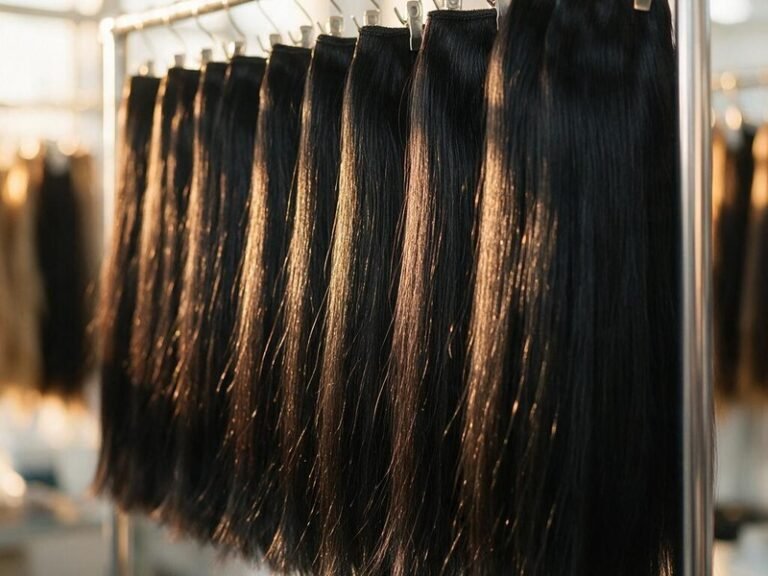
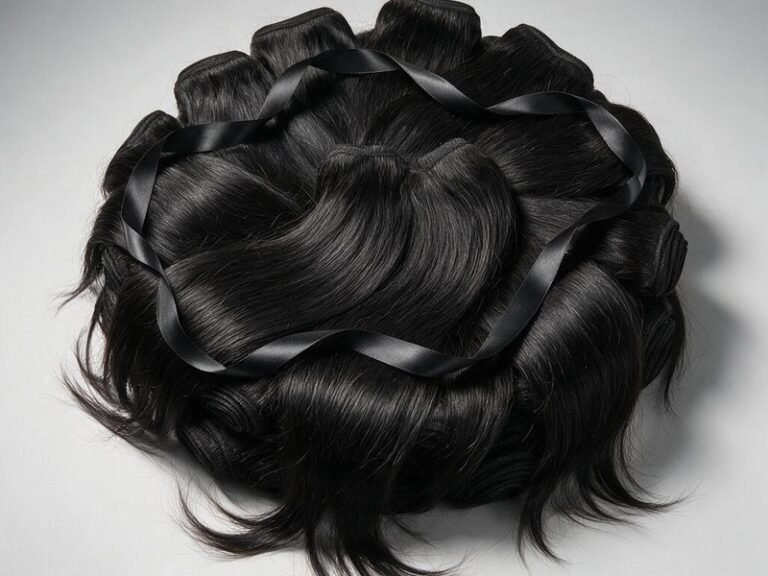
You can’t expect someone to authentically recommend a $200+ extension add-on if they’ve only ever touched the stiff, plastic-coated cheap hair that mats after two washes. This is the step almost every salon skips because they don’t want to “waste” inventory on samples, but it’s the highest-return move you can make. Give each stylist a free 18-inch, 100-gram sample of your core premium stock to take home for two weeks. Tell them to wash it, heat style it at 400 degrees, sleep on it, even swim in it if they want—do all the normal things clients do that destroy low-quality hair. Have them handle machine and hand-tied wefts, k-tips, and tape-ins so they can feel the difference in density, how thick the ends are, how the cuticle lays flat when you run your fingers down the strand.
This will cost you a little up front—usually $150-$200 per stylist in sample stock, depending on the textures you carry. But we’ve seen salons make that investment back in their first week of consistent sales, because nothing sells a product better than personal experience. If a stylist knows from first-hand use that the premium hair doesn’t turn into a matted mess after a weekend trip to the beach, they won’t sound like they’re lying when they tell a client that. And if a stylist genuinely doesn’t like a product? Let them say that. Don’t force them to push something they wouldn’t put in their own hair. That honesty is what keeps clients coming back.
Teach staff to talk about problems, not product specs
Most stylists accidentally tank extension sales by leading with jargon no regular client cares about. No one sitting in your chair is impressed by “12A grade double-drawn Remy hair” because they have no frame of reference for what that actually means for their daily routine. Train your team to listen first, then tie the product to a specific pain point the client already mentioned. If a client complains that their last set of extensions shed all over their work blazers, your stylist doesn’t need to explain cuticle alignment. They just need to say, “I had that same issue with the cheap hair we used to carry, too—this stuff barely sheds, even when you brush it wet.”
To make this clear, here’s the difference between lines that fall flat and lines that actually land:
- Flat, spec-heavy line: “These extensions are 100% virgin cuticle-aligned human hair.”
- Client-focused line: “These hold a curl through 90-degree humidity, don’t shed all over your shirt, and you can go 8 weeks between move-ups instead of 4.”
You don’t need to turn your stylists into hair science experts. They just need to be able to lay out the clear tradeoffs between budget and premium options, no pressure. The budget hair works great for a one-time wedding or event, but it will tangle faster, can’t handle repeated heat styling, and only lasts 4-6 weeks. The premium option costs more up front, but it lasts 8-12 months with proper care, so it ends up being cheaper per wear. Staff don’t even need to memorize every post-install care rule—they can pull up the tape-in aftercare basics to walk clients through steps at the end of their appointment, no cramming required.
Keep incentives simple, no convoluted commission tiers
We’ve seen salon owners roll out these wild, multi-level commission structures where staff only get a bonus if they hit $5,000 in add-on sales a month, or jump through three other hoops to qualify. Unsurprisingly, those plans never work. If the bar is set too high, or the rules are too confusing, staff won’t even bother trying. Keep it dead simple: for every premium extension service a stylist sells, give them an extra 10% commission on that add-on, no fine print, no rolling minimums. We know one small salon outside of Detroit that gives a $25 cash bonus on the spot, stuffed right in the stylist’s tip envelope, every time they sell a full premium install. Their extension add-on sales jumped 42% in two months, no extra training required.
The key here is to avoid pushing staff to only sell the highest-priced option. If you pay a bigger commission for full hand-tied installs than partial services, stylists will try to talk clients who only need a little extra volume into a service they can’t afford, and that kills trust fast. For first-time extension clients, tape-in hair extensions are usually the lowest-friction entry point—lower install cost, less time in the chair, easy maintenance—so staff don’t have to convince someone to drop $1,200 on their first visit. Match the commission structure to reward good client matches, not just big ticket sales.
Skip the all-day training marathons, do 10-minute weekly huddles
Forcing your team to come in on a Saturday for a four-hour training session is a waste of everyone’s time. Staff will be tired, they’ll scroll their phones through half of it, and they’ll forget 90% of what you say by Monday morning. Instead, run a 10-minute huddle 15 minutes before the salon opens every Monday. Pick one common client objection per week, and work through real, natural responses as a group. One week you might cover “these extensions are too expensive,” the next “my last set damaged my natural hair,” the next “can I just bring hair I bought online?” No cringey forced role-play, just casual conversation about what works.
If you get stumped on a specific question about hair sourcing, dye compatibility, or expected shedding rates, you can pull answers straight from the common supplier FAQ instead of guessing on the spot. After four weeks of these short huddles, your team will have natural, confident answers to 90% of the questions clients throw at them, no memorization required. Make sure to leave space for stylists to share what’s already working for them, too. If one stylist has a line that consistently gets clients curious about premium hair, let them share it with the rest of the team—there’s no need to reinvent the wheel.
Quick answers to the questions we get most
What if my staff is worried about sounding pushy?
That’s the number one concern we hear from stylists, and it’s totally valid. No one wants to be the person upselling a client who already said they’re on a tight budget. The fix is to frame extension mentions as helpful heads-ups, not sales pitches. If a client comes in asking for a bright blonde color that will require regular heat styling, it’s not pushy to say, “Hey, if you’ve been thinking about adding length with this new color, just so you know, the premium hair we stock holds up to bleach and heat way better than the cheaper options we used to carry—want to feel a sample?” That’s useful information, not a hard sell.
How long until staff feel comfortable selling premium hair extensions?
Most teams hit their stride in 3-4 weeks, especially if they’ve tested the hair themselves and gone through a handful of those weekly practice huddles. Don’t get frustrated if the first two weeks feel slow; people need time to adjust to new talking points, especially if they’ve spent years only offering cut and color services. You’ll know things are clicking when clients start asking about the premium extensions before the stylist even brings them up, because they’ve heard other clients raving about them.
Do I need to stock every extension type to be successful?
Not at all. You only need 2-3 core options that work for most of your client base—usually a weft option for thick, coarse hair, a tape-in option for fine hair, and a k-tip option for clients who want long-term, low-maintenance wear. Don’t tie up thousands of dollars in niche textures or lengths you’ll only sell once a quarter. Start small, add more options as your sales pick up, and pay attention to what your regular clients actually ask for.
At the end of the day, selling premium hair extensions isn’t about turning your stylists into slick salespeople. It’s about giving them the tools to talk honestly about what works, what doesn’t, and what fits each client’s budget and hair goals. If you’re ready to grab sample packs for your team or restock your core premium inventory, you can browse our full selection to find textures and lengths that match your client base. We’re always here to answer questions about stock, lead times, or what other salons in your area are having success with, too.
Send Us Your Hair Inquiry
Need bulk pricing, samples, or a private-label quote? Fill in the form and our team will get back to you within one business day.