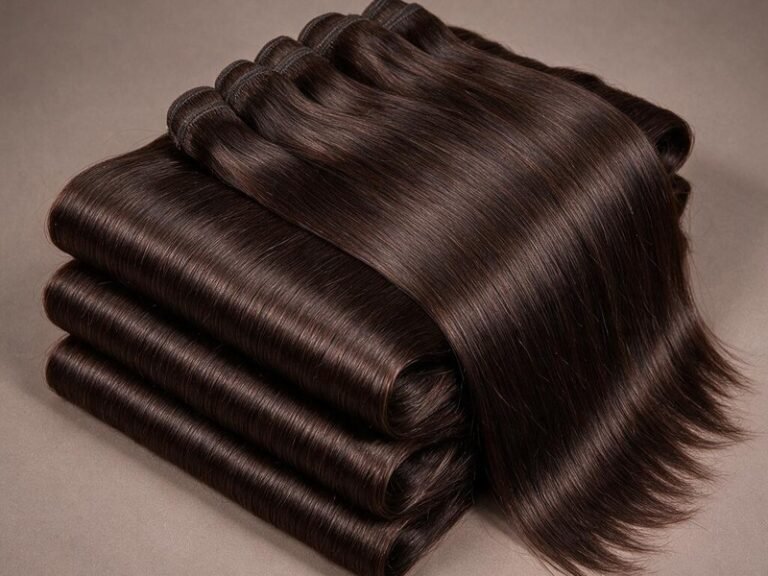
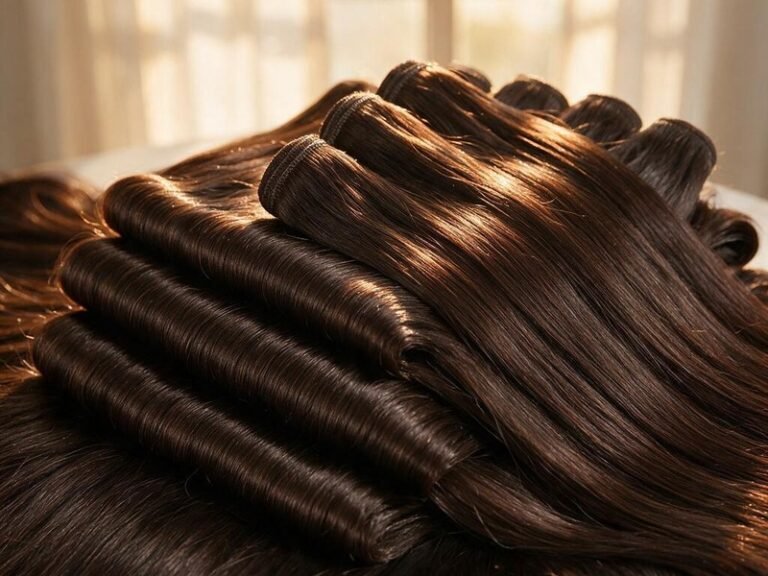
How to Choose Chinese Human Hair for Extensions
If you’ve ever ordered a batch of Chinese human hair for extensions that looked silky in sample photos only to turn into a matted, tangly mess after one client wash, you’re not alone. We’ve seen new and veteran salon owners and resellers waste thousands on mislabeled stock, cut corners that backfire, and pick grades that don’t match what their clients want. This isn’t about chasing “the best hair on the market”—it’s about picking stock that fits your price point, holds up to your services, and doesn’t leave you fielding angry refund requests.
First, stop fixating on meaningless grade numbers
We’ve had buyers come to us after getting burned by suppliers selling “12A virgin hair” that turned out to be non-remy coated in silicone, and widespread misinformation makes it hard to separate fact from marketing. We put together our full breakdown of common Chinese hair myths if you want to deep dive on basics, but the short version is there is no universal grading system. Any supplier that leads with “we sell 15A hair” is selling a marketing label, not a measurable quality standard.
Real quality differences come down to cuticle alignment, processing method, and strand consistency—not a random number on a tag. Non-remy hair, with stripped or misaligned cuticles, costs $18-$28 per 100g wholesale, works for short-term event styles lasting 1-2 months. Cuticle-aligned remy, with 90%+ of cuticles facing the same direction, runs $40-$65 per 100g, lasts 6-12 months with proper care, and is the workhorse for most salon services.
Match the hair type to the services you actually offer
Too many buyers overspend on hair built for services they don’t provide, or cheap out on hair that can’t hold up to the installs they do daily. If you’re a braider building looks clients wear 6-8 weeks before switching styles, you don’t need premium double-drawn virgin hair. Affordable single-drawn bulk hair for braiding holds up perfectly, and you won’t eat into profits paying for features clients will never notice.
If you specialize in sew-in installs with custom color, reach for cuticle-aligned machine weft hair that stands up to washing and heat for 3+ months of wear. If your menu is heavy on semi-permanent installs that stay 8-10 weeks, tape-in extensions made with intact cuticles cut down on root matting and slash adjustment appointment time in half.
Check weight and length measurements before you compare prices
Nothing burns me up more than seeing a new reseller brag about scoring $20 bundles, only to realize they got scammed on weight or length. Standard wholesale bundle weight for straight and wavy Chinese human hair is 100 grams. Curly textures usually land 95-100 grams, since curl adds volume without extra weight. If a supplier sells 80g bundles for $22, that’s 27.5 cents per gram—more expensive than a 100g bundle for $26, which is 26 cents per gram. No deal at all.
Length is another common trick. Have you ever wondered why some “20 inch” curly bundles look 4 inches shorter than others once installed? It’s usually this trick. For curly and wavy hair, legitimate suppliers measure length when hair is pulled completely straight, not in its natural curly state. If a supplier says their 20” curly is measured by shrunken curl length, you’ll get hair 4-6 inches shorter than you expect when pulled straight for install.
You also don’t need to pay extra for “super double drawn” hair unless your clients specifically pay for ultra-thick, no-layer ends. Most super double drawn stock is just regular double drawn (70-80% of strands the full labeled length, thick root to tip) marked up 20-25% for a fancy label. Single drawn hair, with more mixed short strands and natural end tapering, is a great pick for clients wanting a softer, more natural look for 15% less.
Before you compare costs, confirm three things with any supplier:
- Exact gram weight per bundle, for every length and texture you order
- How they measure curly/wavy length (straight pull is the only fair standard)
- Cuticle alignment percentage (90%+ is the sweet spot for most salon work)
Test samples like your clients will actually wear them
Ordering a sample, feeling how soft it is out of the package, and calling it good is how you end up with 50 bundles of garbage. That out-of-the-package silkiness? Cheap suppliers often coat hair in heavy silicone spray that feels amazing for two washes, then wears off to reveal dry, tangled, flipped-cuticle hair underneath. In our warehouse, we test every batch this exact way before it ships out, because we’ve seen too many buyers get burned by that silicone trick.
When you get a sample, treat it exactly how your clients will. Wash it three times with clarifying shampoo, no conditioner, no leave-in, let it air dry. Brush it from ends to root like a client who forgot their detangler would. If it mats so bad you can’t get a brush through after three washes, pass. Run a small section through a 400F flat iron. If it melts, smells like burning plastic, or singes off instantly, it’s mixed with synthetic fibers. If you offer color services, do a test lift on the sample. If you regularly lift extensions to level 10 or higher, it’s worth reviewing how bleaching impacts extension hair to pick stock that stands up to your process.
You don’t need a 500-bundle first order, but be wary of suppliers advertising “wholesale pricing” for 1-bundle orders. Most legitimate factory-direct suppliers have a first-order MOQ of 8-12 bundles, enough to test a few textures without big risk. If a supplier promises same-day shipping on every texture, length, and color, that hair is likely sitting in a third-party warehouse coated in silicone, with zero quality checks between factory and your door. Standard lead time for made-to-order stock matched to your specs is 7-10 days, which is totally normal.
Quick answers to the questions we get every week
Is Chinese human hair for extensions worse than Indian or Brazilian hair?
This is one of the most persistent myths in the extension space. Most “Brazilian” or “Peruvian” hair sold in US salons is Chinese human hair processed to different curl patterns. Chinese hair has a thicker, more resilient cuticle than finer Indian hair, holding curl, heat, and color better when processed right. The bad rap comes from cheap, mass-produced non-remy stock on fast fashion sites, not carefully processed, cuticle-aligned stock from reputable suppliers.
How much should I expect to pay for good quality stock?
For cuticle-aligned remy Chinese human hair, wholesale prices land $40-$65 per 100g bundle, depending on length. Lengths 24” and up cost more, since long, intact raw hair is harder to source in bulk. If you’re paying less than $30 per 100g, you’re almost certainly getting non-remy, silicone-coated hair that tangles after a couple washes. If you’re paying over $70 per 100g, you’re paying for brand markup, not better hair.
Do I need to buy virgin hair for my clients?
Virgin, unprocessed hair is a solid pick if you regularly do heavy pastel or platinum work requiring level 10+ lifts, but it’s usually 30% more expensive than high-quality processed remy. For 90% of salon services—standard color, sew-ins, tape-ins, braided styles lasting 2-3 months—processed remy works just as well, and you can pass savings to clients without sacrificing quality.
At the end of the day, picking the right Chinese human hair for extensions isn’t about finding some mythical perfect grade. It’s about matching stock to the work you do, verifying small details scammers cut corners on, and testing before you place a big order. If you have questions about what fits your client base, our team is happy to walk you through options, share sample pricing, and talk lead times so you don’t waste money on hair that underdelivers.
Send Us Your Hair Inquiry
Need bulk pricing, samples, or a private-label quote? Fill in the form and our team will get back to you within one business day.