Chinese Hair for Hair Extensions: What Buyers Should Know
If you’ve ordered hair extensions in the last decade, you’ve almost certainly sold or installed Chinese hair, even if the label said something fancier. We’ve run our warehouse and factory partnerships in China for 12 years, and we see new buyers make the same expensive mistakes over and over because they buy into marketing hype instead of knowing what’s actually in the bundle.
This isn’t a sales pitch—it’s the straight talk we give our regular salon and vendor clients when they call asking why their last order shed so bad they had to issue full refunds to half their client list.
First off: Not all “Chinese hair” is the same
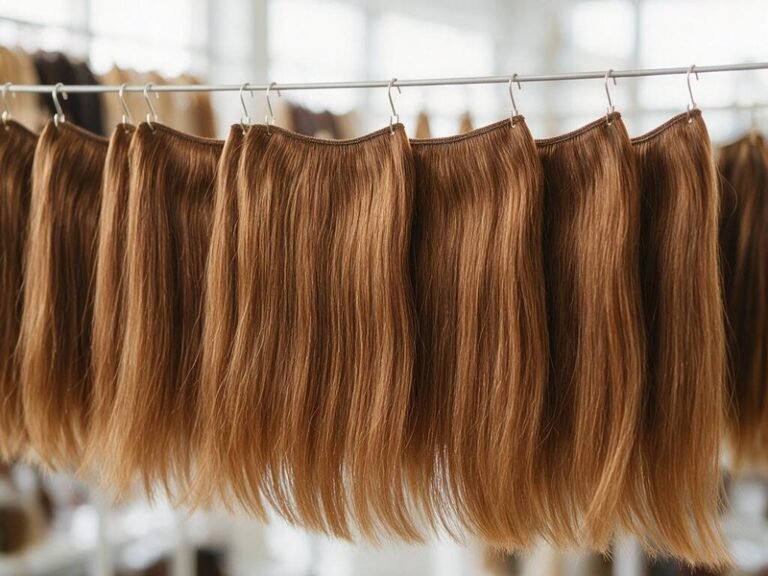
Most buyers hear “Chinese hair” and picture a single, monolithic product, but that’s like saying all wine from France is the same quality. There’s the ultra-cheap stuff sold on random wholesale marketplaces for $10 a bundle, which is usually a mix of fallen hair swept from salon floors, synthetic filler, and harshly stripped strands coated in thick silicone to feel soft out of the bag. There’s mid-tier, which is most of what’s sold in US beauty supply stores: sorted, gently processed, aligned cuticles, built to last 3-6 months with regular wear. Then there’s premium cuticle-intact hair, collected directly from paid donors, sorted by hand to keep all cuticles facing the same direction, and processed slowly to avoid damage.
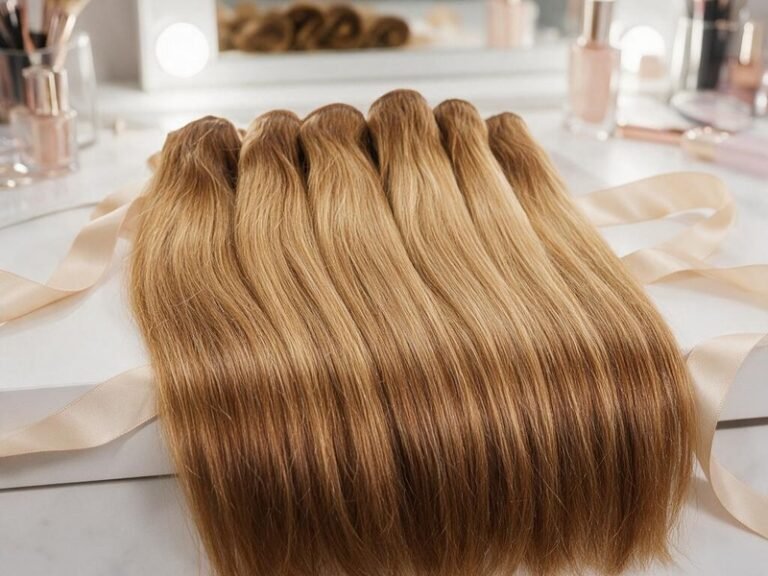
It’s also the reason straight Chinese hair extensions hold up so well for everyday wear when sourced right—the natural strand thickness is consistent from root to tip, so it doesn’t thin out to wispy ends the way some finer donor hair does after a few months of heat styling. A lot of sellers rebrand this exact hair as “Brazilian” or “Malaysian” to mark prices up 200% or more, and there’s no cheap at-home test to prove hair origin, so don’t pay extra for a fancy origin label that doesn’t mean anything.
Short version: The country of origin doesn’t determine quality. The sourcing, sorting, and processing do.
What Chinese hair actually costs at every quality tier
We get it, everyone wants to hit the best possible margin on their stock, but there are hard floors on what good quality hair costs to produce, and if a listing is priced below that floor, you’re going to get garbage. Think that $15 18-inch bundle you found is a steal? Let’s use 100g, 18-inch bundles as a baseline, since that’s the most common stock order we see from salon owners.
If you’re paying under $28 per bundle, you’re getting the silicone-coated, mixed-filler stuff we mentioned earlier. It will feel incredible the first time you run your fingers through it, but after two clarifying shampoos, the silicone washes off, the tangles set in, and you’ll be dealing with client complaints before the first month is up. Mid-tier stock, the sweet spot for most everyday salon clients who want installs that last 3-6 months, runs $42-$65 per bundle for that same 100g 18-inch length. It’s double drawn, so the ends are thick, not wispy, and processed slowly enough to avoid excessive breakage.
Premium cuticle-intact Chinese hair, which lasts 12+ months with proper care, runs $80-$110 for the same 100g 18-inch bundle. The catch? Most factories require a 50-bundle MOQ for this grade, because it takes far longer to sort and process than mid-tier stock. Lead times are longer too: stock mid-tier usually ships in 2-3 business days, while custom colored or textured premium orders take 12-18 days, because cutting corners on processing to rush an order ruins the hair before it even gets to you.
One honest downside no one mentions: Natural Chinese hair is almost always very straight, dark level 2 or 3 brown/black. If you want platinum 613 blonde or tight 4c curly textures, the hair has to go through more intensive processing, which cuts its expected lifespan by 30-40% no matter how good the factory is. Anyone who tells you otherwise is lying to make a sale.
Common ordering mistakes that cost you hundreds in returns
We see these every single week, even from buyers with years of industry experience. Most are easy to avoid once you know to look for them:
- Assuming all bundles are 100g. Longer strands cost more to source, so a lot of cut-rate factories will sell 20-inch+ bundles at 90g or even 85g to hit a lower price point, leaving you 10-15% short of the hair you need for a full install. We weigh every bundle before it leaves our warehouse, but many suppliers don’t.
- Skipping sample orders to save $20 on shipping. We’ve had buyers place $2,000 orders sight unseen because a supplier posted a pretty Instagram reel, only to open the box and find hair that matted after one wash. A $25 sample is the cheapest business insurance you can buy.
- Ordering the wrong hair type for the service. If you’re stocking up for braiding services, don’t assume generic “human hair blend” listed for rock bottom prices is 100% human hair—most of those cheap options are 70% synthetic, and your clients will know the second they feel heat from a blowdryer. We sort all our bulk hair for braiding by hand to make sure there’s no synthetic filler, because we’ve heard too many stories of stylists wasting 6 hours on a braid install that felt like plastic.
What to actually test when you get a sample
Most buyers run their fingers down a dry sample, feel how soft it is, and immediately place a full order. That’s a mistake. That soft feel is almost always a silicone coating applied at the factory to cover up rough, misaligned cuticles.
Run these three quick tests instead, and you’ll catch 90% of bad hair before you waste money on a bulk order. If you only do one test, I’d suggest the clarifying shampoo wash, because it’s impossible to fake how the hair performs once the coating is gone. First, wash the sample with a cheap clarifying shampoo, no conditioner, in warm water. If it tangles immediately or feels rough and straw-like after rinsing, that’s the silicone washing off, and it will mat the second your client sweats or showers. Second, do a quick pull test: Grab 10-15 strands from the middle of the bundle, pull gently. If more than 1 or 2 strands snap, the hair was over-processed during bleaching and will break off when your client uses a curling iron or flat iron. Third, run a fine-tooth comb from the top of the weft to the ends three times. It’s normal for 2-3 strands to come loose; if you get a handful of hair on the comb, the weft is sewn too loose and will shed nonstop after install.
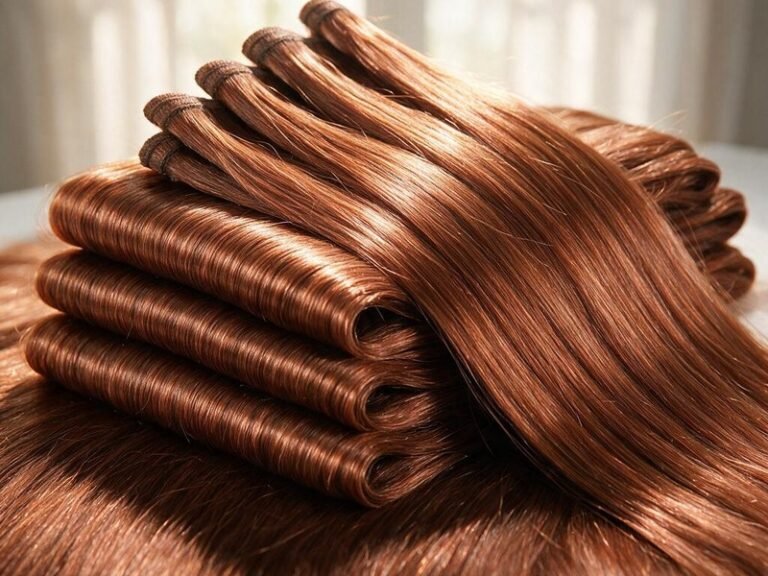
This is extra important if you’re ordering machine weft hair for sew-in installs, because a poorly constructed weft can’t be fixed once it’s sewn onto a client’s head—you’ll have to take the whole install out and start over, wasting hours of your time and ruining a client’s trust.
Quick answers to the questions we get every week
We answer dozens of buyer emails a week, and the same three questions come up constantly.
Is Chinese hair ethically sourced?
Most of the horror stories you read online about unethically sourced hair come from the unregulated, ultra-cheap end of the market, where suppliers cut every possible corner to hit rock-bottom prices. Reputable factories work directly with hair collection points in rural communities, where women grow their hair long for years specifically to sell, the same way people sell hair in India, Eastern Europe, and right here in the US. We work with collection points that pay donors 30-40% above the local market rate for unprocessed, undamaged hair, and we visit those sites twice a year to confirm no one is being pressured to sell. No supply chain is perfect, but if a supplier can’t tell you exactly where their hair comes from when you ask, walk away.
Can Chinese hair be colored to match blonde client shades?
It can, but you have to adjust your process. Chinese hair has a thicker cuticle layer than finer Russian or European hair, so it takes longer to lift without breaking. A lot of stylists use the same 40-volume developer and 30-minute processing time they use for finer donor hair and end up with brassy, breakage-prone strands that feel like straw. We put together a full breakdown of how to adjust processing for different cuticle types when we covered Russian hair coloring best practices, and most of those low-and-slow rules apply when lifting dark Chinese hair too—stick to lower volume developer, take extra time on the lift, and deep condition between processing steps to avoid breakage.
What’s the biggest red flag to watch for in a supplier?
If they make promises that sound too good to be true, run. If they claim their 613 blonde Chinese hair lasts two years and costs $20 a bundle? That’s impossible. Another big red flag: They refuse to send a single sample unless you place a $500 minimum order first. Reputable suppliers want you to test the hair before you buy in bulk, because we don’t want to deal with returns and bad reviews any more than you want to deal with angry clients.
You don’t have to overcomplicate buying Chinese hair. Skip the fancy origin labels, test every sample before you order in bulk, and work with suppliers who are upfront about tradeoffs instead of promising you the world for pennies on the dollar. If you’re ready to browse stock that’s been through the same quality checks we use for our oldest salon clients, you can shop all hair extensions here, or shoot us an email if you have questions about custom colors, textures, or MOQs for your shop.
Send Us Your Hair Inquiry
Need bulk pricing, samples, or a private-label quote? Fill in the form and our team will get back to you within one business day.