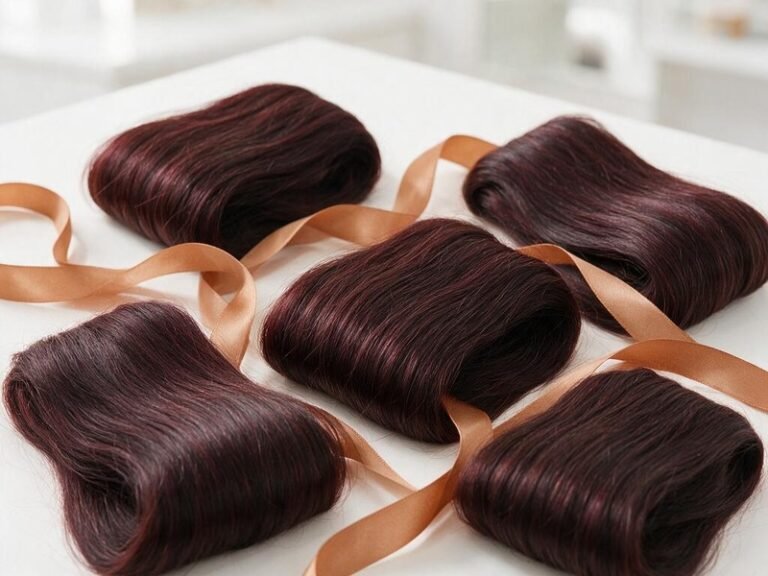
How Does Bleaching Affect Human Hair Extensions?
If you’ve ever had a client beg for a platinum blonde install off a batch of dark virgin bundles, you already know bleaching isn’t some one-size-fits-all magic trick. We’ve spent 11 years pulling test strands in our warehouse, troubleshooting botched bleach jobs for salon owners and braiders across the US, and watching otherwise great hair turn to straw because someone skipped the basics of how the chemical process actually works. This isn’t a scare piece to talk you out of lightening hair—it’s the straight, unvarnished truth of what changes, what breaks, and what you can realistically expect when you lift even the highest quality human hair extensions.
What bleaching actually does to the hair shaft
Let’s skip the high school chemistry lecture, yeah? Bleach works by breaking down natural melanin in the hair cortex that gives it color, and to reach that cortex, it has to lift the overlapping cuticle scales that sit like shingles on every strand’s outer layer. That lifting isn’t temporary. Even if you tone and deep condition until your arm hurts, those cuticles never lay completely flat again the way they did on unprocessed virgin hair. We run test lifts on every batch we stock, and we consistently see even a 2-level lift leaves cuticles slightly raised, which is why bleached hair tangles faster, feels drier, and doesn’t hold shine as long as unbleached hair.
Push that to a 6+ level lift for platinum? You’re breaking down a percentage of the hair’s natural protein bonds too, not just melanin. That’s when you get that mushy, stretchy wet-strand feel, or crunchy, frizzy texture that won’t hold a curl no matter how much product you use. And for anyone who thinks remy hair is immune? Nope. Remy just means cuticles all face the same direction, not that they’re indestructible.
How bleaching changes how extensions look and wear
We see buyers get frustrated all the time because they expect bleached hair to perform exactly like the unprocessed dark hair they tested when they placed their order. It won’t. We’ve tracked wear time across thousands of orders, and the numbers are consistent across hair types, as long as you start with high-quality unprocessed virgin hair:
- 1-2 level lift (dark brown to light warm brown): 10-14 months of typical wear, almost no noticeable texture change with correct processing
- 3-4 level lift (light brown to dark golden blonde): 6-10 months of wear, minor dryness manageable with weekly deep conditioning
- 5+ level lift (pale blonde/platinum): 3-6 months of wear, requires regular protein treatments to avoid breakage and tangling
Porosity spikes across every lift level, too. Bleached hair soaks up water, product, and dye way faster than unprocessed hair, which means you can end up with uneven tone if you’re used to working with unprocessed stock, and it dries out fast if clients skip weekly deep conditioning. Shedding can pick up as well, especially if you bleach hair that’s already been processed once before, which is why picking hair built for lightening saves so much headache down the line. Elasticity changes, too: bleached hair snaps easier if you pull too hard when detangling, especially when wet, so you have to be gentler with installs and takedowns. We had a braider in Atlanta last year who tried to bleach cheap non-remy bulk hair to 613 for knotless braids, and half the strands snapped mid-braid, mid-install. Total nightmare for her, and the client who’d been in the chair for three hours.
Not all hair types react the same way to bleach
You already know this if you’ve ever tried to lift a batch of mixed-origin hair and gotten random strands that turn orange while others go pale blonde. Cuticle thickness, prior processing, and even storage and shipping conditions all change how hair reacts to lightener. For example, thick, coarse Chinese virgin hair with intact cuticles can usually handle a 4-5 level lift without major structural damage if you use the right volume developer and don’t rush the process. We covered longevity basics for that hair type in our guide to how long Chinese human hair lasts, and the biggest takeaway is that unprocessed, single-donor stock always holds up better to chemical work than mixed, factory-collected hair that’s been sitting for years.
Thinner, finer hair, even if virgin, lifts faster but breaks easier, so you can’t leave bleach on it as long. And if you’re working with hair that’s already been dyed dark at the factory? Don’t try to lift it to platinum. Metallic salts in a lot of those cheap factory dyes react with bleach to turn hair green or gummy, no matter how many bond builders you add. We’ve seen hair literally dissolve in the bleach bowl because buyers tried to lighten pre-dyed stock sold as “virgin blonde ready” by random trading companies. If you’re stocking bulk hair for braiding to pre-lighten for custom color clients, always order a 50g test bundle first to run a strand test before buying a full 10lb order. It’s the cheapest insurance you’ll ever buy. Same goes for machine weft hair for sew-in installs: test a small snip from the weft edge first, since factory silicone coatings can make bleach lift unevenly if you don’t wash them off first.
Common mistakes that make bleach damage way worse
Most of the horror stories we hear about bleached hair turning to straw aren’t from the bleach itself—they’re from avoidable mistakes when people rush, or use techniques that work on natural grown-out hair but flop on extensions. First, using 40 volume developer on every lift to “go faster.” But 40 vol swells the cuticle so aggressively it can strip 30% more protein in one session than 20 vol, even with bond builder. For most warm blonde lifts, 20 vol is enough if you give it time to process.
Second, overlapping bleach on already lightened hair. If touching up roots, never pull bleach all the way down to previously lightened ends unless you want mushy strands. Those ends are already porous—they don’t need a second round of full-strength bleach. Third, skipping a pH balancer after rinsing. A lot of stylists rinse bleach out, slather on deep conditioner, and call it done. But bleach is highly alkaline, so if you don’t close the cuticle with an acidic toner or pH spray first, that conditioner just sits on raised cuticles that stay open, causing tangles and frizz for the install’s whole lifespan.
Bleached hair isn’t bad hair—it’s just different
Short answer? No. A lot of buyers act like any bleached hair is automatically low quality, but that’s not true. It just performs differently. If you’re upfront with clients about care requirements—no scalding hot showers, regular leave-in conditioner, silk pillowcases, no yanking through tangles—bleached extensions can look incredible for their full expected lifespan. The trouble starts when you or your clients expect platinum hair to behave exactly like unprocessed dark brown hair, or when you cut corners by bleaching cheap, processed hair that was never built to withstand chemical work.
If you offer tape in hair extensions in custom blonde shades, for example, bleaching high-quality virgin stock gives a far more natural, blendable result than buying cheap pre-lightened 613 stock processed with zero bond protection at the factory. You just have to adjust your pricing, client education, and processing technique to account for the changes bleach causes.
Quick questions we get all the time
Will bleaching hair extensions make them shed more?
It can, if you’re rough during processing, or bleach all the way up to the weft or bond on pre-made extensions. Bleach weakens weft thread and breaks down keratin bonds if you get lightener too close to attachment points. If you’re bleaching wefts, leave a 1/8 inch gap at the sewn top edge, and you’ll cut shed by 70% or more.
Can I repair bleached hair back to its original state?
No, no matter how many bond builders or deep treatments you use. You can fill cuticle gaps, temporarily smooth frizz, and add protein to cut breakage, but you can never reverse the structural changes bleach causes. That’s why setting realistic client expectations up front is so critical, instead of promising a year of wear out of a platinum install.
Is pre-bleached 613 hair worse than bleaching it myself?
It depends. A lot of factory 613 hair is processed fast with high-volume developer and no bond protection to cut costs, which is why it feels crunchy right out of the bag. Pre-lightened hair from a supplier that does slow, multi-session lifts with bond builders can perform just as well as in-salon bleached hair, but you can rarely tell the difference from a product photo. Test strands are non-negotiable.
At the end of the day, bleaching is just a tool. It’s not a trick to make cheap hair look expensive, and it’s not something to fear if you know what to expect. We always tell new buyers to start small, test every batch, and be honest with clients about what bleached hair can and can’t do. If you’re ready to stock up on unprocessed hair that holds up to lightening, our full inventory is available to browse any time, and our team is always happy to answer questions about lift potential on specific batches before you order.
Send Us Your Hair Inquiry
Need bulk pricing, samples, or a private-label quote? Fill in the form and our team will get back to you within one business day.