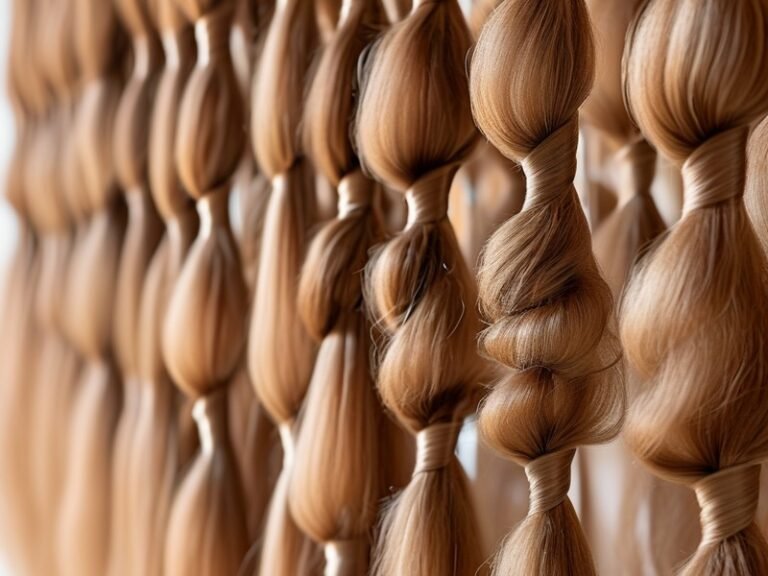
Buying Human Hair Bundles Body Wave in Bulk: Quality Checks That Matter
Buying human hair bundles body wave in bulk works only if the texture stays soft, the curls stay consistent, and the bundles survive more than one install. The checks that matter most are hair origin, cuticle direction, steam processing, bundle weight, weft quality, wave return after washing, and supplier consistency across dye lots.
Body wave is one of the highest-risk textures to buy blind because it looks beautiful in sample photos but can become straight, frizzy, stringy, or overly shiny after washing. This guide gives B2B buyers a practical inspection plan before placing a full wholesale order.
What Should Body Wave Human Hair Bundles Actually Feel Like?
Good body wave should feel smooth but not silky in a plastic-coated way. It should have a soft S-pattern, moderate shine, visible elasticity, and enough body to hold the wave after shampooing, air drying, and normal styling. The term virgin hair means hair that has not been chemically processed, relaxed, dyed, or coated before collection, though some body-wave texture is still set with steam.
Remy hair means the cuticles are mostly kept facing the same direction, while cuticle aligned hair is a stricter description where strands run root to tip with little or no mixing. Raw hair usually refers to unprocessed donor hair with minimal steam or texture treatment. For body wave, raw hair can vary a lot between batches, while controlled steam-processed virgin hair often gives you more uniform retail consistency.
Run your fingers from root to tip, then tip to root. Root-to-tip should feel smooth. Tip-to-root can have slight resistance because cuticles naturally move one way, but it should not feel rough, gummy, tangled, or straw-like. If both directions feel unnaturally slick, the hair may have been coated with silicone to hide low quality.
A trustworthy bulk order should also have a natural, realistic luster. Very high shine under indoor light often signals heavy coating, synthetic blend risk, or overly processed hair. After one or two washes, coated hair can turn dry, and that is when complaints begin for salons, braiders, wig makers, and online resellers.
Which Quality Checks Matter Most Before a Bulk Order?
Do not approve a wholesale body wave program from one photo set or one perfect sample bundle. Ask the supplier to send random production samples, preferably from the exact length range and grade you plan to buy. A 14-inch sample can look fuller and healthier than a 28-inch bundle from the same line because longer hair has gone through more handling and has older ends.
- Cuticle direction: Check tangling by running damp hair from weft to ends repeatedly. Minor resistance is normal; instant matting is not.
- Bundle weight: Confirm each bundle is the advertised weight, commonly 95 to 100 grams for standard Asian-market bundles or 100 grams and up for many US-facing wholesale bundles.
- Weft construction: Inspect stitching, reinforcement, thickness, loose threads, and shedding when pulled gently.
- Wave return: Shampoo and air dry the sample without heavy product, then compare the pattern to the unwashed bundle.
- Color consistency: Compare natural color under daylight, especially if you sell matching closures, frontals, wig units, or multi-bundle sets.
- Heat and dye response: Test a small section with low heat and, if your customers color hair, a controlled lift test.
- Reorder stability: Ask whether future batches use the same source, steam method, length ratio, and quality-control standard.
The most important test is washing. Coatings can make poor hair feel impressive for a few days, but shampoo reveals the real condition. Wash one sample with a gentle sulfate-free shampoo, condition only from mid-strand to ends, rinse thoroughly, and let it air dry. A dependable body wave should relax slightly but return to a clear S-pattern without becoming a loose straight texture.
Also inspect the bundle from top to bottom. Short fibers mixed into long bundles create thick roots and thin ends, which buyers often describe as “stringy” or “not full.” Ask for length-pull measurements from root to end, not a measurement along the curled pattern. Body wave length should be measured when the hair is pulled straight, especially when customers expect 18, 22, 26, or 30 inches.
How Do You Check Shedding, Wefts, and Bundle Weight?
A weft is the stitched track at the top of a bundle where the hair is secured. Some shedding can happen when a weft is cut during an install, which is the process of attaching bundles by sew-in, wig construction, or another professional method. Excessive shedding before cutting, however, usually points to weak stitching, poor machine tension, loose hair in the weft, or rushed factory finishing.
Hold the weft firmly and run your other hand down the length ten times. A few stray hairs are normal, especially on a fresh bundle, but repeated clumps are not. Brush the ends, shake the bundle lightly, and inspect the table or floor afterward. Do the same after washing because weak wefts can shed more once wet.
Weigh every bundle on a small gram scale. A bundle labeled 100 grams should be close to that weight after drying, not 88 grams with a thick cardboard tag and heavy ribbon making up the difference. If you are building retail sets, underweight bundles cause two problems: customers need more hair, and your stated value becomes hard to defend.
Check whether the weft is flat enough to lay comfortably. Bulky, lumpy wefts can make sew-ins feel stiff and create visible tracks in thin leave-out. Reinforced wefts can reduce shedding, but very thick or rubbery reinforcement may be harder to sew and more noticeable in wig caps. Ask whether the factory recommends cutting the wefts or sewing around them, and share that instruction with your customers.
For matching pieces, inspect the closure and frontal separately. A closure is a smaller lace or silk piece, usually 4×4 inches, used to close a sewn-in style; a frontal is a larger ear-to-ear piece used across the front hairline. Their wave pattern, shine, thickness, and hair direction should match the bundles closely, not just the color on paper.
Is Virgin, Remy, Raw, or Cuticle Aligned Hair Best for Body Wave?
There is no single best label for every business model. If your customers want predictable body wave that looks the same in every reorder, controlled virgin cuticle aligned hair is often easier to merchandise. If they want raw, natural texture and accept more batch variation, raw body wave may fit, but you need stronger supplier communication and more realistic customer education.
Be careful with the word Remy by itself. Remy describes cuticle direction, not automatically premium quality, donor age, longevity, or ethical collection. A factory can call hair Remy even when cuticles are partially stripped, mixed, or treated heavily. Ask direct questions: Are cuticles intact? Are hairs root-direction controlled? Is the wave set by steam or chemicals? How many wash tests are performed?
Body wave usually needs some form of texture setting unless the natural donor hair already has the desired bend. Steam setting is common and can be acceptable when done carefully. The risk is over-processing, especially in long lengths or hair intended for repeated coloring. If the sample has a strong chemical smell, dry ends, excessive frizz after washing, or a wave that completely drops, treat that as a warning.
For color-ready lines, test lifting before committing. Healthy virgin hair should lift more predictably than heavily processed hair, but body wave can loosen when exposed to strong lightener. Tell hairstylists to expect some texture relaxation after chemical services and deep processing. If your market regularly asks for blondes, consider buying hair already professionally colored rather than asking customers to lift dark natural body wave at home.
How Do You Evaluate Density, Length, and Fullness?
Density means how much hair is packed into a bundle, closure, frontal, or wig unit. In bundles, buyers usually judge fullness by grams, weft width, end thickness, and the ratio of long hairs. Two bundles can both say 100 grams and still look very different if one has more short fibers, more conditioner weight, or a narrower effective spread.
Body wave naturally looks fuller than straight hair because the bend creates volume. That can hide thin ends in photos, so always inspect straightened length and end fullness. Pull a measured section from the weft and smooth it along a ruler or tape measure. The longest hairs should reach the labeled length, with enough longer hairs throughout to prevent a wispy finish.
For a typical sew-in, many US customers use about three bundles for shorter lengths and three to four bundles for longer or fuller styles, depending on head size and desired volume. Frontal installs may still require multiple bundles behind the frontal. Those numbers vary, so avoid promising a universal bundle count. Instead, give your sales team clear guidance by length, desired fullness, and whether the hair is for a sew-in or custom wig.
If you sell wigs, density is measured as a percentage, such as 150%, 180%, or 200%, but those numbers are not standardized across every supplier. A factory’s 180% can look like another factory’s 150%. Approve a physical density sample, cap size, lace type, knot work, and gram weight before using density claims as a major selling point.
What MOQ, Lead Time, and Reorder Terms Should B2B Buyers Confirm?
Wholesale suppliers often set an MOQ, or minimum order quantity, based on length mix, texture, label type, and whether the hair is in stock or made to order. Body wave may have a lower MOQ for stock hair and a higher MOQ for custom labels, special lengths, matching closures, custom packaging, or factory-direct container orders.
Ask for the exact lead time before payment, not just a general shipping estimate. Stock bundles may move in a few business days, while production orders can take weeks, especially during peak months or around Chinese holidays. Build extra time into your launch calendar because quality inspection, length sorting, packaging, and international transit all add days.
Confirm whether the quoted price includes hair only or also tags, bundle wraps, packaging, closure matching, quality reports, and shipping terms. Cheap bundle prices can become expensive once you add replacement orders, customer refunds, mismatched closures, and excessive dryness. Compare suppliers by total landed cost and reorder consistency, not by the lowest price per ounce.
Before reordering, define the acceptance standard in writing. Include weight tolerance, length tolerance, natural color range, wave pattern, weft type, smell, moisture level, allowed short-hair ratio, closure match, and packaging. If a supplier refuses to discuss these details or only answers with broad grade names, that is a risky partner for repeat sales.
How Can You Spot Coated Hair, Synthetic Blends, or Bad Processing?
Coated hair often feels unusually slippery and looks very shiny before washing. After shampoo, it can become dry, tangled, dull, or hard to comb. A simple wash test is more useful than rubbing the hair between your fingers because some silicone coatings are designed to feel convincing in the showroom.
Synthetic blend hair may react unnaturally to heat. When tested carefully with a low-temperature curling or flat iron on a small section, human hair should respond more like natural hair, while synthetic fibers may melt, shrink, clump, or produce a plastic smell. Do not damage an entire sample; cut a small hidden section and test safely.
Bad chemical processing shows up as dryness, split ends, springy tangles, weak strands, a strong lingering odor, or a wave pattern that disappears after one wash. Hair that stretches when wet and does not return, or breaks with little tension, may be over-processed. Ends are especially telling because they are the oldest part of the strand and usually show damage first.
Color can also reveal processing. Natural virgin hair is rarely perfectly uniform from bundle to bundle; slight brown, dark brown, or near-black variation is normal. Extremely identical jet-black color with a harsh shine may mean the hair was dyed to make mixed inventory look consistent. If you market virgin hair, ask whether natural-color bundles have been treated with any color deposit.
What Care Instructions Reduce Returns and Protect Resale Value?
Even strong body wave bundles need realistic care. Customers should detangle before washing, use a gentle sulfate-free shampoo, condition from mid-strand to ends, rinse thoroughly, and air dry when possible. Heavy oils on the roots or weft can cause buildup, while sleeping on damp hair can encourage tangling.
At night, a loose braid, silk bonnet, or silk pillowcase helps protect the pattern. Customers should avoid constant high heat and use a heat protectant when curling or flat-ironing. If body wave is repeatedly straightened, the pattern may stay looser until the next wash and conditioning set.
For sew-ins, remind clients not to sew through the weft in a way that cuts or pierces it excessively unless the weft is designed for that method. Sealed or reinforced wefts can help, but harsh cutting always creates short ends near the track. Professional installation and proper removal reduce avoidable shedding complaints.
Include care cards with every order and train support staff to distinguish poor maintenance from factory defects. Tangling from neglect, chemical over-processing by the client, or cutting the weft is not the same as matted hair straight out of packaging. Clear instructions protect both your brand and your supplier relationship.
Buyer Questions for Your Supplier Before Payment
A good supplier should answer sourcing questions without making the conversation sound like grade-label marketing. Ask whether the hair is 100% human hair, whether cuticles are intact and aligned, whether the body wave is steam set, and whether the hair can be safely dyed within realistic limits. Also ask how the factory controls wave consistency across 14-inch to 30-inch bundles.
Request photos or video under natural light, wet-hair footage, wash-test footage, close-ups of the weft, and weight shots on a scale. These do not replace your own inspection, but they reveal how transparently the supplier operates. If every video uses heavy filters, bright ring lights, or only shows the hair in motion, ask for plainer factory footage.
Ask what happens if an order arrives underweight, mismatched, smelling strongly, shedding excessively, or outside the agreed texture range. Responsible suppliers usually have a clear claim window and may require photos, batch numbers, unwashed hair, and packaging evidence. Do not assume returns are accepted on used, colored, cut, or installed hair.
Start with a paid sample or small trial order, then test the exact reorder process. The first sample can be hand-selected; the reorder shows how the factory treats your actual business. Once the second or third batch matches your approved standard, you can plan larger inventory buys with fewer surprises.
Frequently Asked Questions
How many grams should a wholesale body wave bundle weigh?
Many US-facing wholesale bundles weigh around 100 grams each, but some factories sell 95-gram, 100-gram, or heavier bundles depending on the product line. Always confirm gram weight in writing and weigh random pieces when the shipment arrives because tags, packaging, and moisture should not be counted as hair weight.
Will body wave stay wavy after washing and straightening?
Good body wave should return to a soft S-pattern after washing and air drying, though it usually relaxes a little over time. Repeated flat-ironing can loosen the pattern, and chemical lightening may soften it further, so customers should wash, condition, and air dry to restore the wave instead of expecting heat-styled hair to remain curled.
If you want help comparing body wave samples or planning a trial wholesale order, send us your target lengths, bundle weight, MOQ, and matching closure or frontal needs. We can help you build a consistent body wave inventory with realistic quality standards and fewer reorder surprises.
If you want the full background before you order, our guide on Buying Body Wave Bundles Black in Bulk: Quality Checks That Matter walks through it in plain terms.
Send Us Your Hair Inquiry
Need bulk pricing, samples, or a private-label quote? Fill in the form and our team will get back to you within one business day.