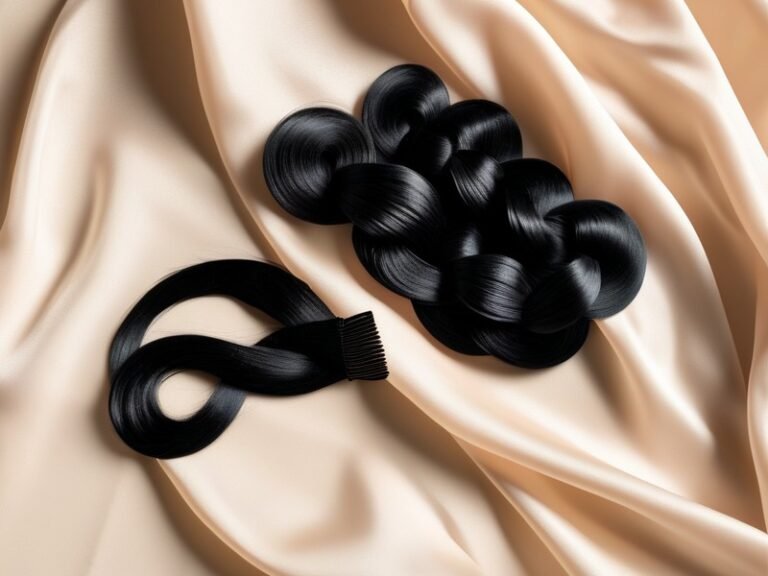
Brazilian Deep Wave Bundles 40: Wholesale Sourcing Mistakes to Avoid
Yes, 40-inch Brazilian deep wave bundles can sell well, but they are one of the easiest lengths to source wrong. At that length, weight, curl pull, donor quality, weft strength, and realistic factory claims matter more than the pretty sample photo.
Virgin hair means hair that has not been perm, color, bleach, or silicone treated; Remy means cuticles generally face the same direction; raw hair usually means less processed donor hair; and cuticle aligned means the hair strands run root to tip with less tangling. A weft is the stitched track sewn across the top of bundle hair.
What Should You Realistically Expect From 40-Inch Deep Wave Bundles?
A true 40-inch bundle is measured straight, before the hair is styled into a deep wave. Once the hair is curved into curls, the visual drop will be shorter, often appearing closer to the mid-back or waist area depending on head placement and how tight the pattern is set.
Standard single bundles often run around 95 to 100 grams. At 40 inches, that same weight is spread across much more length, so ends can look thin if the factory did not use good donor hair or blended shorter hairs into the bundle. Many serious salon buyers prefer 100-gram bundles with clear specs, then choose three to four bundles for a fuller install. An install is the method used to attach extensions, such as sew-in, glue-in, or custom unit work.
Do not judge 40-inch hair by a 14-inch sample. Long hair has gone through more washing, combing, and processing exposure, so weak material shows up faster as dry ends, looping, shedding, or curl loosening. Ask for length, weight, material, steam-process method, moisture level, and close video of the ends before placing a large order.
Deep wave is not the same pattern at every factory. Some make it close to a loose romantic wave; others make it tighter and near-curly. Get a physical sample or pattern ring first, especially if your clients expect a specific look for vacation styles, glossy middle parts, or full sew-ins.
How Do You Verify True 40-Inch Length and Curl Pattern?
The biggest sourcing mistake is trusting a photo where the model holds the bundle near the floor. Ask the supplier to lay the hair flat, gently pull a weft from top to end without stretching the curl, and show the measuring tape in one continuous video. Then ask for a second measurement after light steaming or washing, because some factories set the pattern with heavy surface products.
For curly and wavy hair, length claims can be confusing. Industry practice usually measures the hair straight, but your customers may judge the finished curly drop. Explain that in your listing to avoid returns: “40 inches is measured straight; installed deep wave appears shorter.” That one sentence saves chargebacks.
Check the curl return, not just the first shake. Run fingers through a sample, mist it with water, let it air dry, and see whether the pattern comes back evenly. A poor 40-inch deep wave bundle can look thick in product photos but become stringy, frizzy, or uneven after one wash.
Also inspect top-to-bottom proportion. Pull a small section sideways and compare the root, middle, and ends. Long bundles naturally have some taper, but they should not turn into wispy fringe at the bottom. If the ends are dramatically thinner, the hair may contain too many short fibers mixed into a long-looking weft.
Mistake 1: Buying by “Grade” Instead of Actual Hair Quality
Grade labels such as 8A, 10A, or 12A are not a universal standard. Two suppliers can call very different hair “10A Brazilian,” and the label alone tells you nothing about donor source, cuticle direction, processing, hair age, or return behavior.
For 40-inch deep wave, buy by verifiable specs. Ask whether the hair is virgin, Remy, cuticle aligned, raw, or non-Remy processed hair. Those terms are not interchangeable. Non-Remy can look glossy at first because of silicone coating, but long lengths may tangle once the coating washes out.
Request a pre-shipment video showing the exact bundle: bundle weight on a scale, measuring tape, weft stitching, top density, end thickness, dry combing, and wet curl recovery. If a supplier only sends lifestyle photos or refuses close inspection, that is a red flag.
Expect true premium long hair to cost more than 18-inch or 22-inch stock. Long donor hair is limited, and 40 inches takes more sorting and quality control. A price that looks surprisingly low usually means mixed lengths, processed filler, thin ends, synthetic blend risk, or a bundle that is not actually 40 inches.
Mistake 2: Ignoring Bundle Weight and Fullness
At 40 inches, grams are just as important as inches. A 90-gram bundle and a 100-gram bundle can both be labeled “40 inches,” but the difference is obvious in a full sewn-in style. Thin bundles create unhappy clients and more support tickets for your business.
Confirm whether the quoted weight is before or after conditioning. Hair can hold moisture, and some suppliers may ship heavy bundles that lose noticeable weight after drying. Reputable factories usually give a stable dry-weight range, such as 95 to 100 grams per bundle, and allow normal small tolerances.
For a full 40-inch deep wave look, many clients need three to four bundles, sometimes more if they want very thick ends or are pairing hair with a small closure or frontal. A closure is a lace or silk piece used to close a sewn-in, while a frontal covers the hairline from ear to ear.
If you sell bundle deals, do not force a one-size “three bundles make every style full” claim. Longer hair spreads grams over more inches. Offer honest set recommendations based on desired fullness, leave-out, head size, and whether the hair will be used in a sew-in or wig.
Mistake 3: Choosing the Wrong Curl Tightness for Your Customer Base
“Brazilian deep wave” can mean different textures by market. Some US clients want soft, glossy, beach-adjacent waves; others want a defined deep pattern that swells beautifully when wet. If your supplier’s idea of deep wave does not match your customers, returns will hurt even if the hair quality is good.
Test the pattern under three conditions: dry from the package, after finger detangling, and after air drying from wet. Good steam-set human hair should keep a consistent wave without becoming crispy or needing heavy gel. Avoid patterns that rely on strong perfumed conditioner to look defined.
Think about maintenance expectations too. Deep wave needs moisture and gentle handling; 40-inch deep wave needs even more patience. Clients who want low-maintenance hair may do better with body wave, straight, or shorter curly lengths. Set that expectation before purchase instead of apologizing later.
Also consider blending with natural hair. Deep wave can work for many textures, but curl pattern, leave-out routine, heat use, and product buildup change the finished look. If you serve braiders and wig makers, give them consistent factory batches so they can plan custom units without texture surprises.
Mistake 4: Not Checking Wefts, Shedding, and Long-Hair Stress Points
Long bundles create more pulling weight during installation and styling. A weak weft that survives short hair may fail at 40 inches, especially if the stylist stitches through the track instead of around it, brushes aggressively, or builds a heavy wig.
Inspect the stitching line. It should look even, with secure threads, no obvious gaps, no loose pile, and no large raw cut edges that shed immediately. Reinforced or double-weft options can add security, but they may also feel bulkier, so choose based on your salon or resale market.
Ask for a shedding test on video: hold the bundle securely at the weft, gently comb from ends upward, and show how much hair comes out. A few loose strands are normal in new human hair; clumps or repeated shedding are not. Be cautious if the supplier avoids brushing the ends or only shows the hair hanging untouched.
Remember that cutting the weft can increase shedding unless the stylist seals or reinforces cut ends. Share simple care instructions with buyers: sew around the weft, avoid cutting through tracks unnecessarily, detangle from ends up, and do not rub long curly hair into a rough towel.
Mistake 5: Confusing Low MOQ Deals With Reliable Wholesale Stock
A low MOQ, or minimum order quantity, can help you test a supplier, but it is not the same as reliable wholesale capacity. Some vendors show beautiful 40-inch stock for small sample orders, then cannot match texture, weight, color, or shipment speed when you order 100 bundles for a sale.
Start with a paid sample order of one to three bundles, inspect them, wash them, and possibly have a trusted stylist install or make a unit. Once the hair passes, ask how many 40-inch deep wave bundles are available in the same batch and how quickly the factory can replenish. Long lengths often have lower stock than common 16-to-26-inch sizes.
Ask practical production questions before a promotion:
- What is the sample MOQ and the repeat-order MOQ?
- What is the normal lead time for 30, 100, and 300 bundles?
- Are all bundles 95 to 100 grams, or can weight vary?
- Will bulk orders match the same curl pattern and color tone?
- How are out-of-stock lengths handled if a set is incomplete?
- What packaging, labeling, and custom bundle-band options are available?
- Who pays for replacement if a bundle arrives short, moldy, mislabeled, or damaged?
Bulk hair means loose hair without a weft, commonly used for braiding or custom wefting; do not accidentally order bulk when your customers need bundle wefts. Also distinguish 40-inch sew-in bundles from tape-in sandwiches or k-tip keratin bonds, which are different extension products and usually not sold in the same lengths or weights.
Mistake 6: Weak Color, Bleaching, and Customization Expectations
Many buyers ask whether 40-inch deep wave can lift to blonde or take custom color. The honest answer is: sometimes, but long hair has more risk. Even genuine virgin hair can become dry at the ends if bleached aggressively, and curly patterns may loosen after strong chemical processing.
If your clients regularly ask for honey blonde, highlighted, or custom-colored units, source hair that the factory confirms can lift. Ask for controlled test evidence or buy a sample and do a strand test before committing to a large colored order. Do not assume every natural-black bundle will safely reach a light shade.
Darker colors are generally lower risk, but dye can still change feel and curl definition. For wholesale, it is often safer to offer natural black 40-inch bundles first, then add tested colored styles once you know the factory’s hair can handle them.
Density usually describes how full a wig is, not the grams in a bundle. A 180% density wig may use multiple bundles and a closure or frontal, so do not mix wig density percentages with bundle weight when comparing quotes.
Mistake 7: Poor Packaging, Moisture, and Shipping Planning
Long bundles tangle more easily if they are folded badly, crushed, sealed wet, or packed with too little protection. A 40-inch deep wave bundle should be organized carefully, usually secured at the weft and packaged so the ends are not rubbing loose inside the bag.
Moisture is a real issue during international shipping. Hair that is sealed too damp can develop a musty smell, especially in hot weather or delayed customs. Ask whether bundles are fully dried before packing and whether each package has proper airflow or protective wrapping.
Shipping cost matters on long hair because orders take more carton space even when the actual weight is modest. Compare door-to-door costs, delivery timelines, customs documentation, and insurance, not just factory price. A cheap bundle can become expensive if packages arrive late during a launch.
Plan lead times realistically. Stock orders may move faster, but custom labels, custom packaging, colored hair, or high-volume 40-inch orders can take longer. Give your own salon or retail customers a delivery window that protects you, especially around holiday and prom seasons.
What Should Your Wholesale QC Checklist Include?
Before accepting a batch, check every detail your customer would notice. You want a repeatable process, not a supplier relationship based only on chat messages. Good factories respect organized buyers because clear checks reduce disputes on both sides.
Confirm the label details: 40-inch straight measurement, deep wave pattern code, natural color, bundle gram weight, weft type, and quantity. Then inspect for smell, excessive silicone, mold spots, lice or insect concerns, gray hairs, short filler, split clumps, crooked wefts, loose threads, and mismatched ends.
Wash or wet-test a sample from each new production batch when possible. Note how much the hair sheds, whether the wave returns, whether it tangles while wet, and whether the ends feel harsh after drying. Human hair can have slight variation, but batches should still be close enough to sell as one product.
Keep records by batch. Save the supplier name, order date, texture code, weight, length, photos, washing notes, and customer feedback. This helps you identify whether a problem came from production, installation, aftercare, or shipping, and it makes reordering much easier.
How Can Buyers Protect Margins Without Sacrificing Quality?
The goal is not to find the cheapest 40-inch bundle. The goal is to find hair your clients can wear, wash, and trust without forcing you to handle constant replacements. Long premium hair should have a higher retail price and a clear positioning strategy.
Test two or three supplier tiers instead of assuming the most expensive is always best. Order matching 40-inch deep wave samples, compare grams, wefts, end fullness, curl return after washing, smell, shedding, and customer-perceived softness. Then calculate landed cost, not unit cost alone.
Protect margin with smart bundles. Pair 40-inch hair with matching closures or frontals, wig-making services, care products, or installation packages when those fit your business. Just be honest that a very full long style may need more hair than a shorter everyday sew-in.
Do not oversell “no tangling” or “no shedding.” Even quality human hair can tangle from product buildup, harsh brushing, dryness, chlorine, or cutting the weft. Use honest language: minimal shedding, cuticle-aligned material, proper care required, pattern shortens when curly.
Frequently Asked Questions
Is 40-inch deep wave hair actually 40 inches when curly?
Usually, the stated 40 inches is measured when the strand is pulled straight, not by the hanging length of the curl. Once the hair is in a deep wave pattern, it will appear shorter. Ask your supplier for both straight-length measurement and a video of the curly drop.
How many 40-inch bundles do clients need for a full install?
Most clients start with three to four bundles, depending on bundle weight, desired fullness, head size, and whether they use a closure or frontal. Because 100 grams is spread over 40 inches, clients wanting thick ends may need four bundles or a custom-wig approach.
Can Brazilian deep wave bundles be washed without losing the curl?
Quality steam-set human hair should keep its deep wave after gentle washing and air drying, though some slight loosening can happen over time, especially with heat or color processing. Heavy silicone-coated or poorly processed hair may turn frizzy, stringy, or lose definition much faster.
Send us your target grams, texture preference, order volume, and market type, and we can help you compare realistic 40-inch deep wave options before you commit. Start with samples, test the hair like your clients would wear it, then scale only after the batch quality is consistent.
If you want the full background before you order, our guide on Human Hair Bundles with Closure: Wholesale Sourcing Mistakes to Avoid walks through it in plain terms.
Send Us Your Hair Inquiry
Need bulk pricing, samples, or a private-label quote? Fill in the form and our team will get back to you within one business day.