Brown Wigs Lace Hd: What Wholesale Buyers Need to Know
Brown HD lace wigs are human-hair wigs built on thin HD lace, and wholesale buyers should judge them by shade accuracy, cap construction, density, and actual lace quality—not the lowest sample. Pick stock colors first, test one unit, and add custom brown shades only after reorders prove demand.
What does “HD” actually mean on a brown wig?
HD lace is a thin Swiss-style lace made to disappear against the scalp when applied properly. A brown HD lace wig uses that cap with shades like dark brown #2, medium brown #4, light brown #6, or highlights such as P4/27. Here’s the catch: good hair can come with fake or low-grade HD lace. True HD is thinner and softer than transparent lace, but it tears more easily during plucking or bleaching. Test one sample against skin and inspect the edge before ordering bulk.
Which brown shades and lace sizes should you stock?
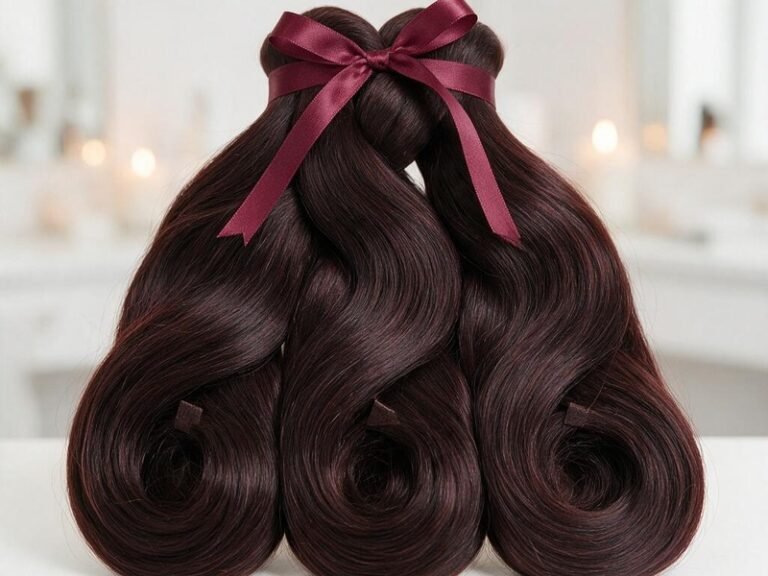
Most new buyers order too many colors. For a starter run, I’d use about 60% #2 and #4, 30% brown balayage or honey highlights, and 10% lighter chestnut. A lace frontal runs ear to ear for more parting room; a closure is a smaller piece for a fixed part. Stock mostly 13×4 frontals, offer 5×5 closures for easier installs, and add 13×6 only for deep-part styles. Lengths 14–22 inches sell fastest; offer matching weft hair for thickness without a second wig.
What should brown HD lace wigs cost wholesale?
Price follows hair grade, length, density, and lace size more than the label “HD.” Density is how much hair fills the cap, usually 150%, 180%, or 200%. Expect roughly $45–$75 for a short 150% unit, $80–$130 for 18–22 inch 180% hair, and $140+ for long 200% units. Cuticle aligned hair means strands run root to tip together, reducing tangles and raising cost. If a price is far lower, expect blended hair, thinner lace, or small caps; stock orders often ship in 7–15 days, while custom brown runs need 10–30 units and 25–35 days; see our FAQ page.
The inspection checklist we use before brown wigs ship
- Check roots in daylight because listings can make #4 look redder.
- Inspect lace edges for shine, thick tabs, or uneven stitching.
- Shake and lightly pull wefts to reveal shedding before your customer sees it.
- Measure parting space and cap stretch; a 13×4 label can still run small.
- Smell the interior for heavy dye or chemical odor, a sign of poor rinsing.
- Wash a sample curly unit to confirm the pattern doesn’t loosen or matte.
How do you prevent brown-color and HD-lace returns?
Brown dye can bleed on first wash, especially highlighted units, so advise cool water and color-safe shampoo. HD lace looks natural but isn’t indestructible; rough plucking or pulling ear tabs can tear it. Fair skin may need scalp protector, and deeper skin may need lace tint—“HD” alone doesn’t match every complexion. If you’re comparing cap types, our lace front wigs human hair article covers construction details. Most returns come from shade mismatch or unrealistic lace expectations.
FAQ
Is HD lace really better than transparent lace?
For hairlines, yes. HD lace is thinner and less visible in close-ups, but transparent lace is more durable for beginners and daily wear. Offer both when possible, and market HD as less visible, not untearable.
What density brown wig should I order for resale?
Start with 180% for 16–22 inch straight or body-wave units; buyers want fullness without a costume look. Keep 150% for bobs and breathable caps, as explained in our bob human hair wigs guide. Save 200% for long lengths, deep curls, and clients who ask for heavy hair.
Order samples first, inspect them in daylight and on camera, then buy a small stock test instead of every brown shade. You can shop all hair extensions to compare styles, or send your length, shade, and quantity for a quote.
Send Us Your Hair Inquiry
Need bulk pricing, samples, or a private-label quote? Fill in the form and our team will get back to you within one business day.