Hair Transplant Donor Area: Questions to Ask Before You Order
The short answer: a hair transplant donor area tells you where the usable hair comes from, how dense it is, and whether replacement hair can realistically match the texture, curl, color, and growth direction. Before you place a custom order, get clear photos, measurements, hair history, and the salon or clinic’s expectations so the factory is not guessing.
This guide is for hair professionals, resellers, salon buyers, and replacement specialists sourcing human hair for clients after medical or cosmetic hair procedures. We are not giving medical advice; your client should follow their treating physician’s instructions. The sourcing goal is simpler: match the surviving donor and recipient hair honestly instead of promising a donor area cannot support.
What Is a Hair Transplant Donor Area, and Why Does It Matter for Orders?
In a hair transplant, the donor area is usually the safe zone at the back and sides of the scalp where follicular units are harvested and moved to thinning areas. The most common methods are FUE, where individual follicles are extracted, and FUT or strip surgery, where a narrow strip is removed from the back of the scalp and the wound is closed. Both methods can change how a custom unit, hairpiece, extension application, or camouflage install should be planned.
For ordering, the donor area matters because it sets the limits. A client with thick, stable donor hair may have enough hair to blend with a topper, closure, or frontal. A client with thin donor hair, scarring, repeated surgeries, or active loss may need a different base, lower density, flatter construction, or a unit that does not rely on clips and anchor hair.
A few terms help when speaking with factories. Virgin hair is hair that has not been perm, colored, bleached, or chemically processed. Remy hair means the strands are kept with roots and ends oriented the same way, usually reducing tangling. Raw hair usually describes minimally steamed or processed donor hair, but the term gets overused, so ask for actual texture and processing specs. Cuticle aligned means the cuticles run in the same direction, which is what you want for a natural feel and less matting.
Do not assume “donor hair” from a transplant case is the same hair you would buy in a bundle. Hair used in surgical transplantation comes directly from the client’s own follicles. Wholesale hair used for extensions or non-surgical replacements comes from separate donors and must be matched to the client’s surviving hair. That distinction needs to be clear with both the client and your supplier.
What Questions Should You Ask About the Client’s Donor Hair?
Start with the facts that affect matching, not the final style. Ask where the hair was taken from, when the last procedure happened, whether more procedures are planned, and which areas are still tender or healing. If the client is still in the early post-op stage, your factory cannot make reliable color or density decisions from swollen skin, crusting, or freshly transplanted growth.
- Procedure type and date: FUE, FUT/strip, repair surgery, scar revision, or another treatment. Timing changes both safety and measurement accuracy.
- Donor density: Ask for density ratings or photos showing the back and sides under bright, even light. Fine, sparse donor hair usually calls for lighter density and a more natural base.
- Scar location and width: FUT leaves a linear scar; FUE can leave scattered tiny dots. Ask whether clips, combs, tape, or threading would cross those areas.
- Hair texture and curl: Record straight, wavy, curly, coily, gray, relaxed, color-treated, heat-damaged, or mixed textures. Wet and dry photos can look very different.
- Color mapping: Note the root, mid-shaft, ends, gray percentage, sun-lightened ends, and any salon color formula. A single “#2” or “natural black” is often not enough.
- Current hair length: Measure the donor and top hair in inches. If the client wants 22-inch hair but the sides are 2 inches, blending may require cuts, leave-out, or a full-coverage unit.
- Future plans: Ask if another transplant, medication adjustment, color service, perm, relaxer, or big style change is planned before delivery.
You also want practical lifestyle details: how often the client washes and styles the hair, whether they exercise heavily, use heavy oils, wear protective styles, or expect low-maintenance upkeep. Those answers affect hair type, base selection, attachment method, and density. A client who wants to pull hair tightly into a high ponytail may need different construction than someone who mainly wears it down.
How Do You Match Hair Texture, Color, and Density After a Transplant?
Matching after a transplant is not just picking the closest color ring. Transplanted hair can initially shed, then grow in at a different visible length and texture before it settles. Some clients also have multiple hair zones: stronger hair at the lower back, finer hair near the crown, gray around the temples, and chemically treated hair through the top. The replacement hair should match the whole head, not only one small swatch.
For texture, compare the actual donor hair in its natural air-dried state and after the client’s normal styling. Steam-treated curly patterns can be consistent from a factory, but they may not match every coil pattern. If the client has 4a at the nape, 3c at the sides, and heat-trained hair at the top, decide which zone should dominate or whether a custom blended texture is worth the extra cost and sampling time.
Color needs root-to-end mapping. Ask the salon or client to send photos in natural daylight next to a clean white wall, plus ring-light or indoor photos so you can see shine and gray distribution. Mention gray percentage by area, such as 20 percent gray at the temples but less than 5 percent through the back. If the factory only receives one blurry bathroom photo, color disputes are hard to resolve.
Density means how full the hair looks, usually measured as a percentage on custom units. A common fashion wig may look full at 150 to 200 percent, but a post-transplant camouflage piece often needs a more conservative density so it does not overpower thin surrounding hair. For men’s systems and partial pieces, lighter densities around the hairline and gradual fullness toward the interior usually look more believable. The trade-off is that lower density means fewer fibers crossing the base, so durability can be lower under rough styling.
Which Product Type Is Best for Donor Area Camouflage and Support?
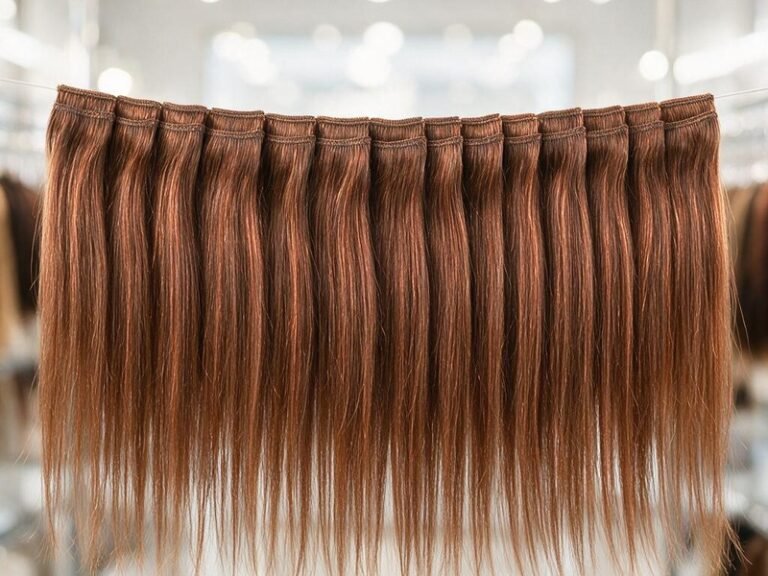
The right product depends on scarring, anchor hair, coverage area, and how long the client wants to wear it. A closure is a small lace or silk base that covers the top or parting area, while a frontal runs from ear to ear and recreates the front hairline. A weft is hair sewn onto a track, and bulk hair is loose hair used for braiding, knotting, or some custom ventilation work.
Tape-in extensions attach small wefts with adhesive tabs and need enough healthy hair to support the tabs. K-tip extensions use small keratin bonds clamped onto sections of natural hair. An install is the full application method, such as sew-in, tape-in, fusion, braided application, wig bonding, or clip attachment. None of these should be applied directly over healing surgical sites or irritated scars without clearance from the treating professional.
If donor hair is sparse but stable, a custom topper or integration piece may blend better than many extension bonds. If there is a linear FUT scar and enough surrounding hair, a strategic sew-in or clip-free design may hide it, but tight styles can expose scarring or stress the edges. If the client has broad scarring or repeated FUE dots, a fuller lace or mono-top base may be more realistic than trying to use weak leave-out.
For braiders and resellers, bulk hair can help create styles that conceal the back and sides, but braid weight matters. Heavy box braids or tight cornrows are a poor choice over fragile donor zones, even if the visual result is full. For men’s replacement or short styles, custom-ventilated hair direction matters more than bundle length; the factory needs to know whether the nape grows upward, downward, sideways, or in a whorl.
What Factory and Supplier Details Prevent Costly Order Mistakes?
Before ordering, confirm whether the supplier can actually do custom curl, color blending, gray percentage, hair direction, density, and base modifications. Some factories stock standard colors and textures but call everything “custom” because they add a label. Ask for sample rings, hair swatches, ventilated corner samples, or photos of similar orders under natural light. Custom work usually carries a higher MOQ than stock bundles, but many B2B suppliers will accept one paid sample before a larger order.
Lead times need room for delays. Stock bundles may ship in days, while custom closures, frontals, men’s units, or mixed-gray density pieces can take several weeks, especially during holiday peaks. If the client has a wedding, surgery follow-up, salon opening, or resale deadline, work backward from that date and add buffer time for color corrections or remake discussions.
Give the factory a complete spec sheet: age range and gender presentation if relevant, cap or base size, hair length in inches, weight in grams, density percentage, curl pattern wet and dry, color by zone, gray percentage, baby hairs, hairline shape, bleached knots or natural knots, bleach bath level if allowed, and any no-go areas. For weft orders, state machine-tied or hand-tied, grams per bundle, and whether cutting the weft is allowed.
Set realistic expectations with the buyer. Human hair has natural variation, especially raw or lightly processed hair. Two bundles from separate donors may not take color exactly the same way, and curly hair tends to draw up, so 18 inches curly may look shorter than 18 inches straight. If exact matching is critical, pay for a sample first. It is cheaper than producing a full custom unit that cannot be resold.
How Should You Inspect Donor Area Photos and Measurements?
Bad photos cause most avoidable remakes. Request clean, dry hair in natural daylight, with the client facing forward and then turning to show the left side, right side, crown, nape, and full back. Add wet-hair photos if curl matching is involved, plus photos in the client’s usual styled finish. Keep the camera close enough to see scalp visibility but far enough that proportions are not distorted.
Measure more than length. Record the width and length of thinning or scarred zones in inches, the distance from the hairline to the brow or ear if relevant, and the amount of available anchor hair around clips or tapes. For custom caps, use circumference, front to nape, ear to ear over the top, and temple to temple around the back. A soft measuring tape works better than estimates from a screen.
Check whether the client’s hair is being worn in a way changes the donor view. Flat-ironed hair can hide density loss, oils can darken color, and bright salon lights can wash out gray. Ask the client not to apply heavy product before photos and not to color or cut the hair between sample approval and final measurements. If they do, the order spec should be updated before production starts.
When in doubt, use a physical hair sample. Mailing a clean, labeled cutting from several zones can help the factory compare texture and color more accurately than photos alone. Label each sample by location, such as left temple, crown, nape, and donor scar edge. This is especially useful for gray blending, gray-white hair, relaxed hair, or multi-textured hair.
What Are the Main Downsides and Risk Trade-Offs Buyers Should Not Ignore?
The biggest risk is treating extension hair like a medical fix. A non-surgical unit, closure, frontal, or set of tape-ins can improve appearance and styling options, but it does not restore follicles or repair scars. Clients with active inflammation, infection, open wounds, or recent surgery need written guidance from their treating professional before any installation that uses adhesive, tension, clips, or braids.
Another risk is overbuilding density. A dense unit can look dramatic online but unnatural next to thin donor hair. It can also feel hot, create more tension, and require stronger attachment. For partial coverage, a medium-density piece with a gradual hairline often gives a more believable result, even if the client initially asks for the fullest option.
Hair quality has trade-offs too. Virgin or raw hair can offer durability and better color uptake, but true matching may be harder because donor batches vary. Processed hair can provide consistent curls and uniform color, but it may be drier, shed more after bleaching, or have a shorter lifespan under daily heat. Cheaper stock may save money upfront, but custom post-transplant clients usually need consistency more than the lowest bundle price.
Installation and maintenance also affect the result. Tape can lift in oilier scalps or humid climates. K-tips can be uncomfortable if placed too close to scars or sparse areas. Sew-ins need a strong foundation and regular take-downs. Lace units need careful cleansing, adhesive removal, and knot care. Explain the maintenance cycle before the sale so the client does not mistake a custom order for a set-it-and-forget-it product.
FAQ
Can hair extension hair be used to cover a hair transplant donor scar?
Yes, depending on scar placement, healing, and the amount of surrounding hair. Wefts, integration pieces, bulk braiding hair, or custom units may camouflage FUT or FUE scarring, but clips, tapes, bonds, or braids should not put pressure on unhealed or irritated tissue. The treating professional should clear the scalp before installation.
How long after a transplant should a client wait before ordering matching hair?
There is no one-size-fits-all waiting period because medical timing belongs to the treating clinician. For accurate matching, many replacement specialists prefer waiting until swelling and early shedding have settled and the new growth pattern is easier to evaluate. If the client needs temporary coverage sooner, choose a low-tension option and confirm that it will not interfere with aftercare.
What is the minimum order quantity for custom donor-matching hair?
MOQs vary by product and factory. Stock bundles often start at one bundle, while custom color blends, gray mixing, special curl patterns, men’s systems, or custom-ventilated pieces may require a sample fee or a higher MOQ. Send the spec sheet before quoting because density, base work, length, gray percentage, and processing can change both price and lead time.
If you are sourcing for a post-transplant client, send photos, measurements, texture notes, and the installation method before requesting a quote. Our team can help you choose a realistic stock or custom human hair match and flag density, scar coverage, or timeline issues before production starts.
If you want the full background before you order, our guide on Frontal Wig Human Hair Black: Questions to Ask Before You Order walks through it in plain terms.
Send Us Your Hair Inquiry
Need bulk pricing, samples, or a private-label quote? Fill in the form and our team will get back to you within one business day.