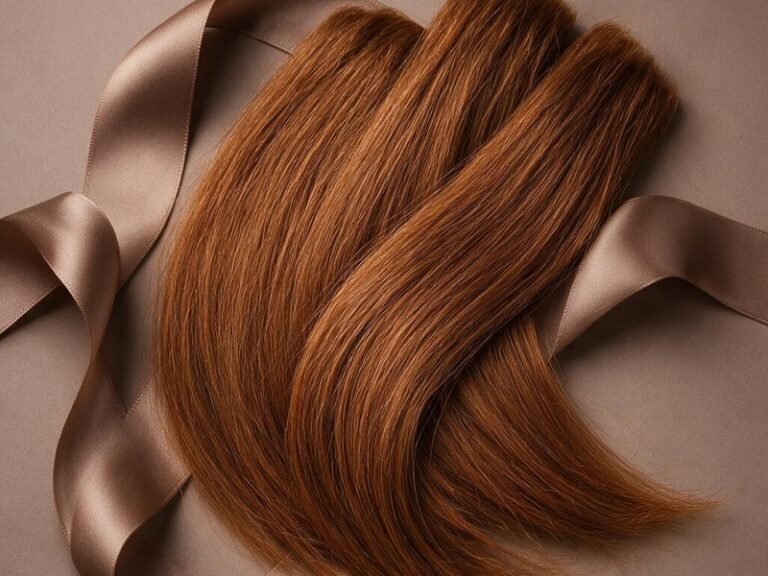
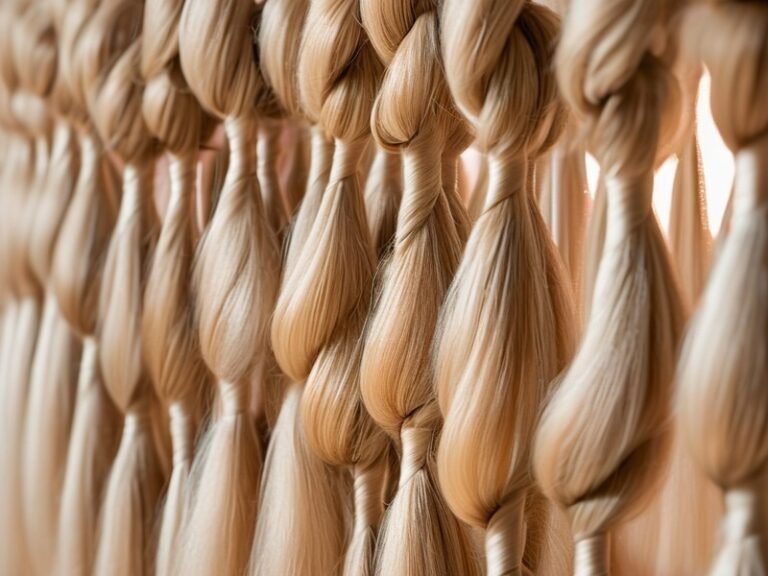
Human Hair Extensions Clip Ins Wholesale: How to Avoid Overpaying
Yes, you can buy human hair extensions clip ins wholesale without paying luxury retail prices, but only if you price the actual hair, weight, construction, and service instead of chasing the lowest quote. A cheap set that tangles after two washes can cost you more in refunds, bad reviews, and lost salon clients than paying a fair factory price upfront.
Clip-in extensions are temporary wefts attached to small pressure-sensitive clips that snap into the client’s natural hair. For B2B buyers, the key is knowing what belongs in a durable set, what upgrades are worth paying for, and which “discounts” are really just hair quality cuts.
What Are Human Hair Clip-In Extensions Made Of?
A standard wholesale clip-in set uses machine-sewn wefts: long stitched tracks of hair with small metal clips sewn or clamped onto the fabric band. A weft is the horizontal hair track used to create extensions. Most buyers stock sets in 7 pieces, 9 pieces, 10 pieces, or 11 pieces, with total finished weights commonly around 100g, 120g, 140g, or 160g depending on length and desired fullness.
You will see several hair terms on supplier lists. Virgin hair means hair that has not been chemically processed, dyed, permed, or relaxed. Remy hair means the cuticles are kept mostly in the same root-to-tip direction, which reduces tangling. Raw hair usually refers to minimally processed donor hair with no artificial silicone coating, while cuticle aligned means the hair cuticles run the same direction for smoother wear and washing. These terms are sometimes misused, so do not buy based on labels alone.
For clip-ins, fully cuticle-aligned Remy hair is usually the sweet match for professional resale. It costs less than premium raw hair but performs better than short-cut or mixed hair loaded with softener. If your market wants salon-ready color, body wave, or highlighted shades, processed Remy can still be good quality as long as the factory controls dyeing, drying, and shedding.
The set also includes clips, thread, reinforced fabric, and packaging. Those parts matter, but they should not dominate the quote. Hair is the expensive part. A supplier who gives you a very low price but will not confirm grams, hair percentage, donor origin, or cuticle process is probably shifting cost somewhere you cannot see.
How Do You Calculate the Real Wholesale Price Per Set?
Start with finished weight, not piece count. A “10-piece set” can still feel thin if the pieces are narrow or the total weight is only 80g. Ask for the finished set weight after clips, labels, and packaging are included, not loose hair weight before manufacturing. That one detail prevents a common pricing trick.
Then compare the same specifications across suppliers: hair grade, length, texture, color, total grams, number of clips, weft width, packaging, MOQ, and delivery terms. A 120g 18-inch natural black Remy clip-in set should be compared to another 120g 18-inch natural black Remy set. Comparing that to a 100g 18-inch “premium” set with unknown hair content tells you almost nothing.
Price per gram is useful, but it is not perfect because longer inches cost more due to longer donor hair availability. A 24-inch set will usually have a much higher cost per gram than a 14-inch set. Very light colors, balayage, piano highlights, body wave, deep wave, and custom packaging also add cost. Ask for a price matrix by length and color instead of accepting one average quote.
Include landed cost, not just factory price. Shipping, payment fees, customs clearance, taxes, inspection, replacement rate, packaging, storage, and delivery time all affect margin. If Supplier A is $2 cheaper per set but has a 5% defect rate and slow replacement response, the apparent savings can disappear quickly.
Which Wholesale Clip-In Specifications Give the Best Value?
Most US salons, beauty supply buyers, and online resellers do not need the most expensive raw hair on the market for clip-ins. They need clean, soft, tangle-resistant hair that holds curls, washes well, and survives normal client use. A well-made Remy cuticle-aligned clip-in set in 100g to 140g usually fits daily volume customers, while 160g or more works for clients who want dramatic fullness or have thicker natural hair.
- Lengths: 14 to 20 inches move fastest for everyday clients. Longer 22 to 28 inch sets can sell well, but they tie up more cash and are easier to damage through rough handling.
- Weight: Compare total finished grams. A 120g set is a common middle option, but fine-haired clients may prefer lighter pieces to reduce pulling.
- Colors: Natural black and dark brown are safer starter inventory. Add blonde, highlighted, and piano shades only after you know return and tangle rates for colored hair.
- Textures: Straight and body wave usually have broad demand. Kinky straight, deep wave, and curly textures can be profitable, but matching customer hair texture requires accurate photos and descriptions.
- Clips: Silicone-backed or rubber-backed metal clips help grip without slipping. Cheap clips can bend, rust, or pull, and replacement clips become a service headache.
- Wefts: Look for clean stitching, minimal shedding when lightly brushed, flexible fabric, and secure clip attachment. Stiff, thick wefts can bulge through fine hair.
- Packaging: Simple protective packaging is enough for wholesale. Custom boxes help branding, but do not overspend until your reorder pattern is proven.
Density means how full the extensions look, and in clip-ins it is mostly driven by total grams, piece widths, and how the hair is distributed. A marketing photo can make a thin set look thick because the model may wear two packs, extra styling, or camera-friendly layering. Ask for flat-lay photos with a ruler and weight on a scale before placing a large order.
For resale, choose specs your customers can understand. “120g, 18-inch, Remy cuticle-aligned, 9-piece clip-in set with secure silicone-backed clips” is easier to sell than a confusing grade number. Grade labels vary between suppliers and are not a universal quality standard.
What Factory Questions Prevent Hidden Markups and Quality Cuts?
A trustworthy supplier should answer production questions without making you feel difficult. Ask whether the hair is 100% human hair, whether it is Remy, whether cuticles are aligned, and whether the set contains synthetic or animal-hair blends. Also ask if the hair is steamed for texture or chemically processed for color. Both can be acceptable, but you need to know what you are selling.
Request sample photos and videos that show brushing, washing, shedding, curl recovery, and the back of the weft. A sample order is worth the cost. Wash it once or twice, let it air dry, brush from ends upward, and check whether the softness disappears after the initial silicone wash feel. Excessive dryness, matting above the weft, short hairs poking through, or curled ends that turn stringy are warning signs.
Ask about MOQ, which means minimum order quantity. Some factories advertise a low MOQ but charge retail-like per-set prices, while others give better pricing only at larger quantities. A fair supplier can explain the price break at 50, 100, 300, or 500 sets. Do not overbuy rare colors just to reach a discount; inventory sitting on a shelf is not savings.
Lead time matters too. Stock colors may ship in 3 to 10 business days, while custom colors, lengths, labels, and packaging can take 2 to 6 weeks depending on factory schedule and order size. Rush fees, holiday delays, and shipping method can change the total cost. If you sell by launch dates, build buffer time instead of paying rush charges every order.
You should also clarify return and defect policy before payment. Human hair products are often final sale after use, but a responsible supplier should handle manufacturing defects such as missing clips, severe sewing failure, wrong length, wrong color, or abnormal shedding confirmed with photos or video. Get the policy in writing and keep a sample from each production batch.
Are Low MOQ Clip-Ins Actually Cheaper?
Sometimes yes, sometimes no. Low MOQ clip-ins help new brands test shades, lengths, and packaging without filling a room with inventory. That can be the smartest way to start, especially if you are learning what your clients want. But the per-set price is usually higher because small orders do not get the same hair purchasing, sewing, and packaging efficiency as batch orders.
The danger is assuming every low quote is a discount. A supplier may lower the price by reducing grams, using thinner wefts, mixing hair from multiple donors, skipping cuticle sorting, or replacing a percentage with lower-quality hair. The packaging can look nearly identical when it arrives, but the hair may tangle, dry out, or shed after the first wash.
A better approach is a two-step order. First, buy samples from two or three suppliers using the same length, color, texture, and finished weight. Test them side by side. Then place a modest production order for best-selling natural shades and lengths before adding custom colors or luxury boxes. Once you have repeat orders, negotiate price breaks, not just on quantity but on consistent reorders and simpler specifications.
Also consider cash flow. A 500-set deal can look cheap per unit, but if half the sets are 26-inch blonde hair that sells slowly, you have paid too much in real business terms. Healthy wholesale buying is not only low factory cost; it is turning inventory quickly with few complaints.
How Do Clip-Ins Compare to Other Extension Purchases?
Clip-ins are temporary and can be removed daily, which makes them attractive to clients who are not ready for semi-permanent install. An install is the professional application of extensions into the hair. Other options include tape-in extensions, which use adhesive wefts applied in sandwich-like sections; k-tip extensions, also called keratin tip extensions, which use small bonded strands attached with heat; closures and frontals, which are lace or silk pieces that close off a weave or create a new hairline; and bulk hair, which is loose hair without a weft, often used for braiding.
Because clip-ins do not require salon removal and can be reused with good care, many buyers use them as an entry product. They also work for special events, volume trials, clients who change color often, and customers who want no adhesive. That can lower purchase resistance, but clients still expect the hair to look natural and last through multiple wears.
Do not confuse clip-in construction quality with install quality. Even a good clip-in set can slip or feel uncomfortable if clips are placed too close to the hairline, pieces are too heavy for fine hair, or the wefts are not spaced correctly. Provide clear application guidance and recommend brushing before washing, gentle sulfate-free shampoo, air drying, and storing the pieces flat or hung in a dry place.
For B2B pricing, clip-ins often give you lower product risk than custom wigs because sizes are simpler and there is no cap-fit variable. Still, color matching and texture expectations can cause returns. Use ring lights carefully in photos because warm lighting can make dark brown look lighter and blonde tones look warmer. Include length charts and tell customers that curly hair is measured pulled straight.
What Should You Avoid When Buying Clip-In Hair Extensions in Bulk?
Avoid suppliers who only sell grade labels and never explain the hair itself. Phrases like “top grade,” “10A,” or “luxury donor” do not mean much without verifiable specs. Ask direct questions about cuticle direction, processing, hair origin, percentage of short hairs, finished weight, dye lot consistency, and how the factory controls shedding.
Avoid buying a full collection before testing. Twenty colors, six textures, and ten lengths look impressive on a website, but that is a lot of working capital for a new buyer. Start with proven shades and lengths, then expand based on sell-through. Reorder data will tell you more than supplier trends or social media pictures.
Avoid judging softness straight from the bag. Heavy silicone or conditioning coating can make low-quality hair feel smooth at first. The real test is after washing and drying. Run your fingers along the weft, give the hair a gentle pull at several points, inspect clip stitching, and check whether the ends are thick or wispy. A set with a strong top but thin ends will not look full after styling.
Avoid ignoring communication quality. If a sales rep cannot explain grams, lead time, color differences, or defect handling before you pay, support usually does not improve after payment. Good suppliers may not speak perfect English, but they should give clear numbers, photos, production updates, and consistent answers.
Finally, do not choose a supplier on one sample alone. Some factories send a polished sample and produce a different bulk standard. Ask whether mass production matches the sample, whether pre-shipment inspection photos are available, and whether you can place a trial production order before committing to a larger program.
Frequently Asked Questions
How many grams should a wholesale clip-in set have?
Many everyday clients use 100g to 140g for length and light volume, while clients with thick hair or a fuller finish often prefer 150g to 200g or more. Always compare finished set weight and weft widths, because a high piece count can still be thin if the total grams are low.
Is Remy hair worth the higher wholesale cost?
Remy hair is usually worth it for professional resale when the cuticles genuinely run in the same direction, because it tends to tangle less and wash better than non-Remy mixed hair. The problem is that Remy is often used as a marketing word, so verify quality with samples, washed-hair tests, and clear supplier specifications.
What is a reasonable MOQ for wholesale clip-in human hair?
MOQs vary widely: some suppliers accept 10 to 50 sets for trial orders, while better factory pricing may begin at 100 to 500 sets. New buyers should usually pay a slightly higher sample or trial price first, then move to larger quantities only after confirming quality and sell-through.
How can I verify a supplier without visiting China?
Order matched samples, request factory or workshop photos, ask for production videos, inspect packaging and labels, and run a small paid trial order. You can also compare consistency across two orders, because reliable suppliers should deliver similar texture, weight, stitching, and color rather than changing standards batch to batch.
If you want help comparing human hair extensions clip ins wholesale specs, send us your target length, grams, colors, and order quantity. We can help you build a practical stock list that protects margin without sacrificing the quality your clients expect.
If you want the full background before you order, our guide on Clip in Hair Extensions Real Human Hair Blonde Wholesale: How to Avoid Overpaying walks through it in plain terms.
Send Us Your Hair Inquiry
Need bulk pricing, samples, or a private-label quote? Fill in the form and our team will get back to you within one business day.