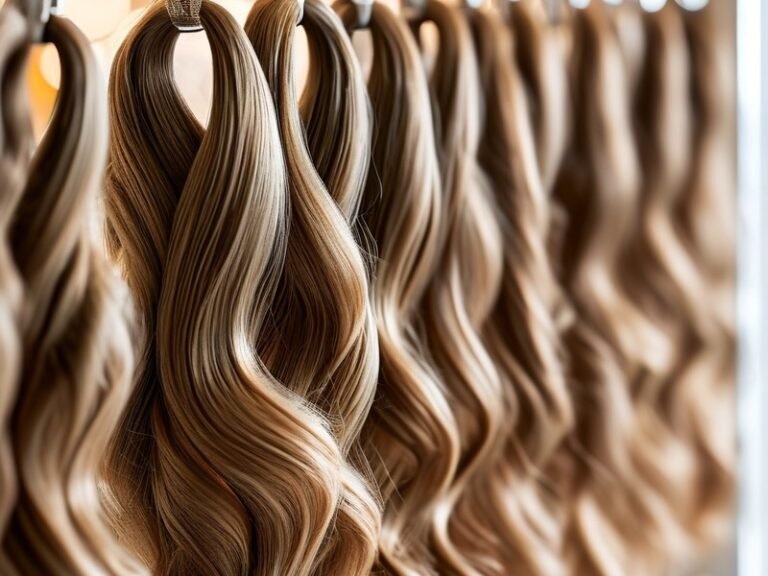
Double Drawn Hair Suppliers for Resale: What Salon Owners Should Know
Yes, double drawn hair can be a strong resale line for salons, but only if your supplier is honest about hair origin, thickness grade, processing, and batch consistency. The short version: buy samples first, check root-to-tip fullness after washing, and don’t confuse a marketing label with a real wholesale grade.
Double drawn hair means the bundle has been sorted so shorter hairs are removed and replaced with longer hairs, giving the bundle a thicker look from near the root to the ends. For salon owners and resellers, that usually means happier clients who want volume, but it also means tighter margins if you buy from factories using mixed lengths, excessive silicone, or weak wefts.
What Does Double Drawn Hair Actually Mean for Resale?
In wholesale terms, single drawn hair keeps more natural length variation. It often looks thicker near the top and taper toward the ends, similar to natural hair growth. Double drawn hair goes through an extra sorting and drawing process, so a 20-inch bundle contains mostly 20-inch hairs rather than a wide mix of 14-, 16-, 18-, and 20-inch strands.
That process costs more because it takes more labor and more raw material to build one full bundle. It also gives a fuller finish, especially for blunt styles, bob cuts, sew-ins, and clients with fine hair who want visible thickness without adding too many tracks. A weft is the stitched hair track sewn into the hair for install; the weft needs to be neat, flexible, and securely reinforced.
Be careful with the words “100% double drawn.” Some suppliers call every thick bundle double drawn, while others sell “double drawn quality” that is really just a heavier bundle with short hairs hidden inside. Ask what percentage of hairs reach the labeled length. A responsible vendor may not quote an exact number without seeing the batch, but they should explain their standard and let you inspect samples.
For resale, double drawn works best when your clients care about immediate fullness and a polished style. It is not automatically better hair than single drawn; it is a different construction. Raw hair, meaning hair with little to no chemical processing, can be single or double drawn, just as virgin hair, meaning unprocessed hair from one donor, can also be sorted into a double drawn product.
How Can Salon Owners Verify Double Drawn Quality Before Ordering Bulk?
Never place a large resale order from photos alone. Order one sample in the texture and length you plan to sell, then wash, condition, air-dry, and heat-style it the way your clients would. A heavily coated bundle can feel amazing when it arrives, then become dry, tangled, or matted after the silicone wash-off.
Start by holding the bundle upright and checking the ends. True double drawn hair should still have some natural taper, because human hair is not broom-stick uniform, but the ends should not look sparse. Run your hand from root to tip, then from tip toward the root on a small section to feel cuticle direction. Cuticle aligned hair has the outer hair layers running the same way, which reduces tangling.
Weigh the bundle before washing and after it is fully dry. Most wholesale bundles are sold around 100 grams, but some markets use 95 grams, 105 grams, or 3.5 ounces depending on the product line. Weight alone does not prove double drawn quality, because a heavy bundle can still contain lots of short hairs, but it helps you compare suppliers fairly.
- Length check: Pull a small section straight and compare how many hairs reach the labeled length. Real double drawn should look noticeably fuller at the ends than standard single drawn.
- Smell test: Strong chemical, sour, or perfumed smells can signal rushed processing or heavy masking.
- Shedding check: Gently brush the sample before and after washing. A few loose strands are normal; constant shedding from the weft is not.
- Weft check: Look for tight stitching, clean folding, and no large gaps. Reinforced wefts can help, but bulky stitching may create discomfort.
- Texture test: Curl pattern should return after washing and air drying, especially for body wave, deep wave, curly, and kinky curly lines.
- Color test: Compare lift behavior if you offer custom coloring. Processed hair may bleach unevenly or feel weaker after lightening.
- Repeat sample: Buy a second sample from a different batch before committing to inventory. This catches the common “good sample, weak bulk” problem.
Which Double Drawn Hair Products Are Best for a Salon Resale Shelf?
Your shelf should match the services your salon already sells. If most clients request sew-ins, start with bundles and closures. A closure is a small lace or silk piece, usually 4×4, 5×5, or 6×6, used to close a sewn-in style without leaving natural hair out. A frontal is a wider ear-to-ear piece used for ponytails, lace-front styling, and more flexible partings.
Bundles remain the easiest resale starting point because clients understand them and stylists can control the fullness. For most installs, two bundles may work for shorter lengths, three bundles are common for 16 to 22 inches, and four or more may be needed for 24 inches and up or very full styles. Those are planning ranges, not universal rules; head size, weft spacing, density preference, and cutting all change the amount needed.
Density means the amount of hair per area on a wig or closure. Many clients request 150%, 180%, or 200% density, but those numbers are not standardized across every supplier. Compare actual weight, knot work, lace size, and ventilation instead of trusting a higher percentage label. A well-made 180% unit can outperform a poorly made “250%” unit.
If your salon offers extension services rather than only wig and weave styling, consider tape-ins or k-tips. Tape-in extensions use lightweight adhesive wefts applied in sandwich sections, while k-tip extensions use small keratin bonds fused with heat. Bulk hair, which is loose hair without a weft, is useful for braiding, boho braids, or custom bond work, but it is not the same purchase as machine wefted bundles.
Do not overstock every texture at first. Begin with two straight or body-wave lengths, one curly option, one natural brown shade, and a small number of closures. Reorder based on sell-through, install feedback, wash longevity, and return complaints. Hair inventory ties up cash, and unpopular lengths can sit on shelves for months.
What Should You Ask Double Drawn Hair Suppliers Before Buying?
Start with the product itself, not the price list. Ask whether the hair is raw, virgin, Remy, or processed. Remy means the cuticles are kept mostly aligned and oriented the same way, though the term is used loosely in the market. “Virgin” should mean no perming, dyeing, or harsh processing, while “raw” usually refers to minimally processed donor hair with a more natural feel.
Ask the supplier to define their double drawn standard in writing. Request bundle weight, length range, hair origin if traceable, texture processing, steam or chemical use, available colors, and whether lengths are measured stretched. Curly hair should be measured pulled straight, but not every vendor follows that practice consistently. Clear definitions prevent arguments when a client says a 20-inch curly bundle looks short.
MOQ, or minimum order quantity, matters for cash flow. Some suppliers advertise low MOQs of 1 to 10 pieces for sample orders, then require 30, 50, or 100 pieces per length or texture for wholesale pricing. Factories may offer better pricing at higher volume, but salon owners should not buy 100 bundles just to unlock a discount unless they already have booking demand.
Lead time is another real cost. Stock items may ship in 2 to 7 days, while custom labels, special curls, colored units, or large wholesale orders can take 2 to 6 weeks. Festival season, holiday periods, Chinese New Year, and shipping delays can extend that. Ask whether the supplier keeps stock in China, in a US warehouse, or both, and get cutoff times for custom packaging.
Quality handling matters as much as production. Ask whether the supplier replaces manufacturing defects, how they define excessive shedding, whether washed or installed hair qualifies, and who pays return shipping. Also ask about packaging, label customization, invoice accuracy, and batch matching. A supplier who communicates clearly before payment is usually easier to work with when a problem appears.
What Are the Most Common Sourcing Mistakes Salon Buyers Make?
The biggest mistake is buying based only on softness. Soft hair can be naturally good, but it can also be coated with silicone to feel smooth for the first week. After shampooing, low-quality hair may turn dry, frizzy, or difficult to comb. Always judge hair after cleansing and drying, not straight from the plastic bag.
Another mistake is choosing the cheapest vendor without calculating full cost. Add shipping, payment fees, packaging, possible customs delays, sample costs, losses from defects, and the labor cost of fixing a client’s install. A $12 bundle that tangles after one wash is more expensive than a dependable $28 bundle that lasts through multiple salon visits with proper care.
Some buyers also overpromise lifespan. Even good double drawn human hair needs maintenance. Clients should detangle gently, wash with sulfate-free products, deep condition regularly, avoid excessive heat, sleep with a satin bonnet or scarf, and protect curly textures during workouts or swimming. Properly maintained sewn-in hair can often last several months to over a year depending on the grade, use, and upkeep, but no honest supplier should promise the same result for every client.
Misreading inventory demand is another trap. Long lengths and deep curls photograph well, but they may not sell as quickly as natural black straight and body-wave bundles in 16 to 22 inches. Track what clients actually book, then build a small reorder plan. Keep notes by length, texture, batch date, supplier, and complaint type so you can spot patterns quickly.
Finally, don’t assume a polished storefront means reliable factory control. Many traders use factory photos and do not control sorting, wefting, sterilization, or packaging. Ask specific production questions, request fresh videos of stock, compare batch samples, and pay attention to whether answers stay consistent. A knowledgeable supplier should be able to discuss short-hair ratio, weft width, curl memory, processing, and color limits without deflecting.
Frequently Asked Questions
Is double drawn hair better than single drawn for resale?
Double drawn is better for clients who want thick, full ends and a voluminous finish, especially in lengths over 18 inches. Single drawn can be the better value for clients who want natural movement and do not need maximum fullness. For resale, carry a small sample of each if your market includes both budget-conscious and premium buyers.
How do I know if a wholesale supplier is selling real double drawn hair?
Test samples from more than one batch, inspect end fullness after washing, weigh the bundles, and check shedding, tangling, and curl return. Ask the supplier to explain their drawing standard, bundle weight, length tolerance, and processing method. If they only use slogans, pressure you to buy in bulk, or cannot answer production questions, keep looking.
What is a good starting order for a salon selling hair extensions?
Start with enough inventory to cover confirmed bookings and a small retail display, usually 10 to 20 bundles across your best-selling lengths, plus a few closures. Add tape-ins or k-tips only if your stylists are trained and clients are already asking for those services. Reorder only after you have wash-and-wear feedback from real installs.
If you want the full background before you order, our guide on Bulk Human Hair for Boho Braids for Resale: What Salon Owners Should Know walks through it in plain terms.
If you want help narrowing textures, weights, and MOQs for your salon’s resale plan, send us your service list and best-selling lengths. We can recommend a practical starter assortment based on real salon demand instead of pushing the largest order.
Send Us Your Hair Inquiry
Need bulk pricing, samples, or a private-label quote? Fill in the form and our team will get back to you within one business day.