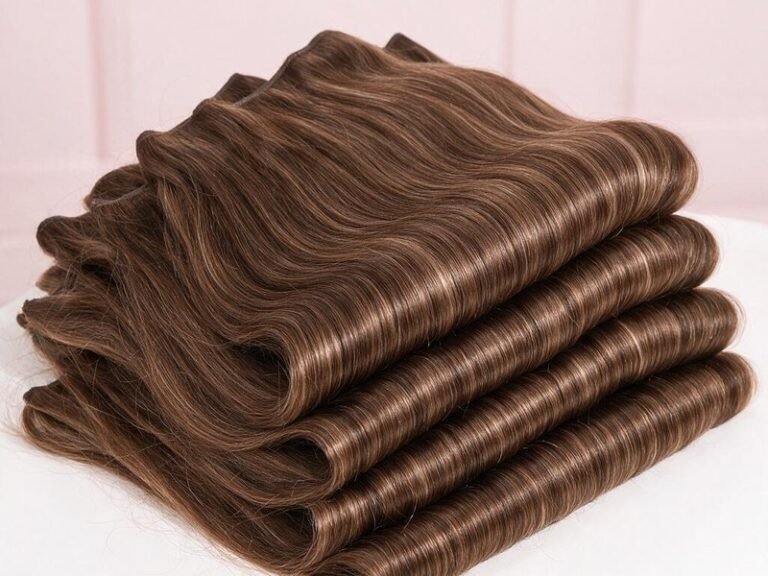
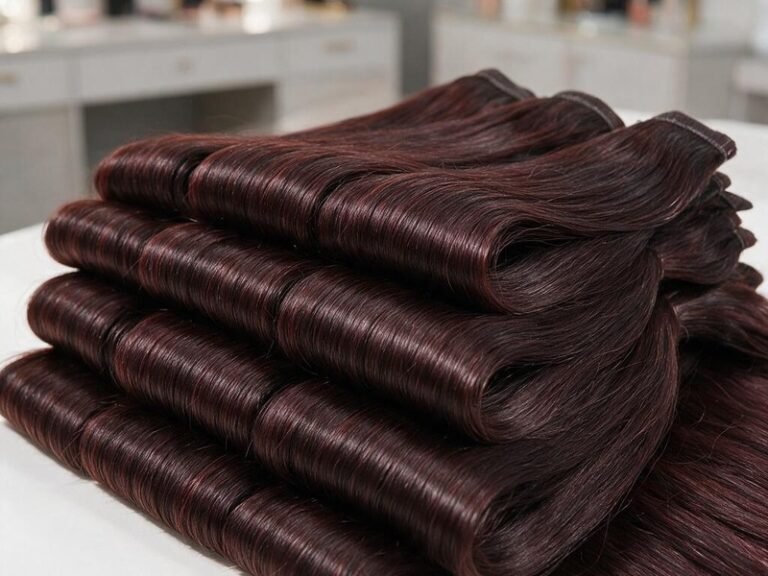
Top Tips for Storing Virgin Hair Wefts Long Term
Store virgin hair wefts long term by keeping them clean, completely dry, detangled, and in breathable packaging somewhere cool, dark, and dry. Virgin hair is unprocessed human hair with no chemical processing, and wefts are hair stitched or bonded onto a track; good storage prevents dryness, matting, mold, and tangles. Do this and 100-gram bundles can still sell like fresh stock months later.
Should I store virgin hair wefts in plastic or fabric?
Buyers often ask this after an order arrives in a poly bag. That plastic is for shipping; sealed wefts can trap moisture and grow mildew, especially after a hot delivery. I’d switch each bundle to a cotton dust bag or loose acid-free tissue inside a cardboard box. You want dust protection, not an airtight tomb. When adding weft hair extensions to shelves, keep bands and labels intact so buyers can check length and texture without handling every bundle.
How do I prep wefts before long-term storage?
Don’t store worn or returned hair unwashed; misted photo samples must be fully dry too. Shampoo gently, condition from mid-strand to ends, rinse clear, and let the weft air-dry flat on a clean towel. A 100-gram bundle can take 12 to 24 hours to dry, depending on length, so don’t rush it. Detangle from ends upward with a wide-tooth comb or paddle brush. Fold or roll loosely, keep the track flat, and never use a tight rubber band; it causes creases and breakage.
Where should long-term hair inventory live?
Choose a spot around 60 to 75°F and 30 to 50 percent humidity, away from heaters, vents, steam, and sun. A climate-controlled closet shelf beats a garage, attic, car trunk, or unregulated storage unit. Sun fades color and dries the cuticle; heat makes ends feel like straw. Keep boxes on a shelf or pallet, not directly on the floor. If you carry bulk stock, this raw hair bundles storage guide covers those risks and airflow needs.
How should I organize lengths and textures?
Keep stock sortable so you aren’t tearing through 30 bundles when someone wants 20-inch body wave. Use one labeled box per texture and length, placing new bundles behind older ones so old stock sells first. We see buyers mix 12-inch and 26-inch wefts in one tote, then cause tangles during a Saturday rush. Keep each bundle in its own bag, and don’t stack heavy boxes on top because weight bends tracks and flattens curls. If you’re planning a reorder, the shop all hair extensions page helps match textures before increasing the MOQ.
How often should I check stored wefts?
Every two to four weeks, open boxes and check for dampness, musty smells, flattened curls, or loose threads. Ten minutes in a salon stockroom can catch a humidity issue before it ruins 20 or 30 bundles. If hair feels dry, use one tiny drop of leave-in conditioner, but don’t saturate hair going back into storage. Rewrap torn tissue, replace packaging bands—not hair bands—and move older lengths forward. Shelf life, processing, or shipping questions can also go through our FAQ page.
Frequently Asked Questions
How long can virgin hair wefts stay in storage?
With clean, dry, breathable packaging and stable conditions, six to twelve months is realistic for resale. Hair can last longer, but extended storage increases flattening and dry ends. Rotate inventory and sell older bundles first.
Can I vacuum-seal wefts to save space?
Skip vacuum sealing for long-term storage. It compresses tracks, flattens curls, and can trap hidden moisture; save it for short trips only. Use breathable bags and shallow boxes; reserve sealed packaging for same-day shipping.
Good storage isn’t fancy: dry it, block dust, keep conditions steady, and rotate stock. If shelves are low, browse current weft colors and lengths and reorder before the busy season hits.
Send Us Your Hair Inquiry
Need bulk pricing, samples, or a private-label quote? Fill in the form and our team will get back to you within one business day.