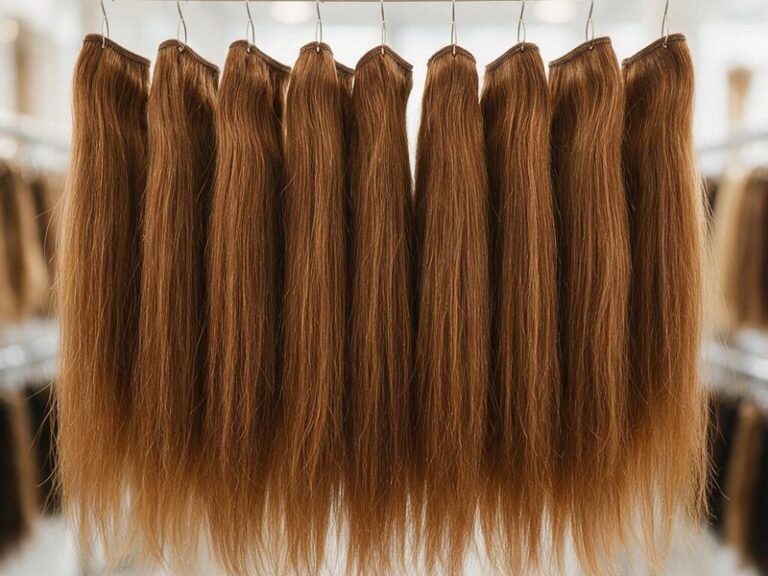
What Is a Hair Extension Dropshipping Program for Salons
A hair extension dropshipping program for salons is a partnership with a hair supplier where the salon sells extensions directly to clients without holding physical inventory—the supplier ships orders straight to the salon or the client’s door. Unlike traditional wholesale orders where you purchase 10+ bundles at a time to hit minimums, dropshipping lets you order one unit at a time as clients book services. We work with dozens of US salons that use this model to test new extension types before committing to full stock.
How does a hair extension dropshipping program work for salons?
First, you apply to a supplier’s program (most waive application fees for licensed salons) and get access to a wholesale pricing list and product assets you can use on your service menu or social media. When a client books an extension service and pays your full price, you place the order with your supplier for the exact texture, length, and method they need—say, 3 bundles of weft hair for a sew-in, plus a lace closure (a small piece of hair with a lace base that covers the top of the scalp for a natural-looking part). The supplier ships the order directly to your salon, usually within 2-3 business days for in-stock items, so it arrives right before the client’s scheduled appointment. You never handle bulk inventory until it’s time to install, and you skip packing or shipping entirely if you sell take-home extension products directly to clients.
Is dropshipping hair extensions profitable for salons?
Short answer: yes, if you price your services correctly and account for the higher per-unit cost. Most salons mark up dropshipped hair 50-100% on top of the wholesale cost, plus charge a separate installation fee, which lines up with standard salon extension pricing. If you’re still figuring out how to structure your service menu to hit your margin goals, check out our guide on pricing hair extension services for profit. The biggest profit win is no dead inventory—you don’t lose money on a 28-inch straight bundle that sits on your shelf for 6 months because no client wanted it.
The real downsides no sales rep will mention first
First, per-unit costs are 15-25% higher than bulk wholesale—you’ll pay more per bundle or pack of tape in hair than you would if you ordered 20+ units at a time. You also have less control over shipping timelines; if a supplier runs out of stock of a specific raw kinky curly texture last minute, you might have to reschedule a client, which hurts trust. Returns are trickier too—most dropship suppliers don’t accept returns on opened or used hair, so you’ll have to set clear client expectations upfront about color and texture matching. You can’t physically inspect the hair before installation, so if there’s a quality issue, you’ll have to troubleshoot with the supplier mid-appointment.
What to vet before joining a program
- Licensed salon-only pricing (you need at least 30% off retail to hit healthy margins)
- Same or next-business-day fulfillment for all in-stock items
- Clear return policy for unopened, unused hair (at least 7 days from delivery)
- Stock of the exact extension types and textures your clients request most
- No hidden per-order minimums (you should be able to order 1 single bundle or pack)
- Real human customer support for urgent order issues, not just a chatbot
Who this model is (and isn’t) right for
Dropshipping is perfect for new salons that don’t have $500+ to tie up in initial extension inventory, or established salons that want to test a new extension method before buying bulk. It’s also great for salons with inconsistent extension demand—if you only book 2-3 extension clients a month, there’s no need to stock 15+ bundles of varying lengths and textures. It’s not a good fit if you book 10+ extension clients a week; at that volume, you’ll save more money with bulk wholesale orders than you’ll lose to dead stock. If you fall into that high-volume camp and need help timing your orders, our guide on restocking hair extension inventory breaks down the best cadence. If you have more general questions about supplier partnerships, our FAQ page covers the most common salon inquiries.
Do I need a business license to join a salon dropshipping program?
Most reputable suppliers require a valid cosmetology license or salon business license to join their salon-specific dropshipping programs. This is how they keep wholesale pricing exclusive to industry professionals, instead of letting casual resellers undercut salon rates. Some general dropshipping programs don’t require a license, but their per-unit prices are usually too high to make a decent profit on salon services.
Can I dropship hair extensions directly to my client’s home?
It depends on the supplier, but most salon-focused programs let you ship to either your salon address or a client’s residential address. This is handy if you’re offering virtual color matching consultations or selling take-home clip-in sets for clients to use on their own.
If you’re curious about testing a hair extension dropshipping program for your salon, start small with one or two of your most requested extension types first. You can browse our full selection of professional-grade extensions to see what would fit best with your current service menu.
Send Us Your Hair Inquiry
Need bulk pricing, samples, or a private-label quote? Fill in the form and our team will get back to you within one business day.