Virgin Hair Bundles: How to Choose a Reliable Supplier
Virgin hair bundles can be a strong product for salons, braiders, beauty-supply stores, and resellers, but only if the supplier is honest about grade, origin, processing, and consistency. The short version: buy samples first, verify cuticle quality, understand the real wholesale terms, and place a repeat order only after the hair survives washing, heat, and normal install wear.
Virgin hair means human hair that has not been chemically processed, dyed, permed, relaxeded, or bleached by the factory. In practice, labels get used loosely, so a supplier calling every bundle “12A virgin raw hair” does not prove anything. This guide walks you through the checks that actually reduce risk.
What Should You Look for in Virgin Hair Bundles?
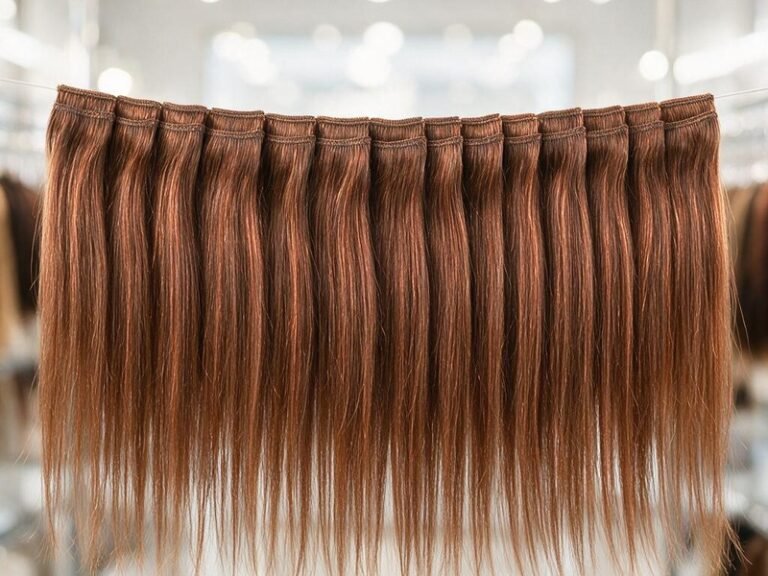
Start with the hair itself. Good virgin hair bundles should have intact cuticles, a natural feel, minimal shedding after the initial loose hairs are removed, and a consistent wave or curl pattern from bundle to bundle. Cuticle aligned hair means the outer cuticle layers run in the same direction, which helps reduce tangling and matting. It is different from Remy hair, a term that usually means the hair was gathered with roots and ends oriented the same way, even if the hair has been treated.
Raw hair is often described as unprocessed donor hair with very little steam treatment, and it may vary more in texture and color. Virgin hair can also be unprocessed, but many factories use steam or gentle shaping to create consistent body wave, straight, deep wave, or curly patterns. Ask the supplier which step is used. If they claim every bundle is perfectly identical, completely natural, and available in unlimited volume, be cautious.
Check bundle weight before buying in volume. Most wholesale bundles are around 95 to 100 grams, with some premium or longer lengths at 100 grams or slightly more. Lengths commonly run from 8 inches to 30 inches or longer, but long hair costs more because donor supply is tighter. If a supplier quotes the same low price for 10-inch and 30-inch bundles, that is a pricing red flag.
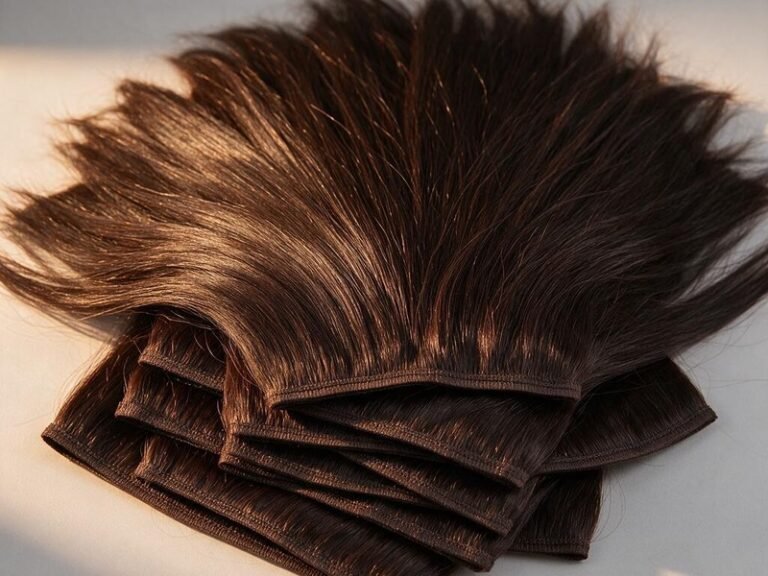
Inspect the weft, too. A weft is the stitched track at the top of a machine-made bundle where the hair is secured. Neat, reinforced wefts reduce shedding during cutting and sewing. Loose stitching, thick bulky tracks, uneven hair distribution, short filler hairs near the weft, or a strong chemical smell usually point to rushed production or lower-quality sorting.
How Do You Verify a Hair Vendor Before Ordering Bulk?
Never start with a large wholesale order based only on photos. Order samples in the exact textures and lengths you plan to sell, then test them the way your customers actually use hair. A reliable B2B supplier should allow sample orders, answer detailed questions, provide clear bundle specs, and discuss production capacity without pressuring you.
- Smell test: New hair may have a slight factory or shampoo scent, but a strong chemical, sour, or perm-like odor can signal processing or poor washing.
- Wash test: Shampoo and condition the bundle, then let it air dry. Watch for excessive tangling, dullness, coating loss, or curl pattern collapse.
- Shedding test: Run your hand through the wet and dry hair several times. A few loose strands are normal; clumps or hairs pulling from the weft are not.
- Bleach test: Take a small section and lift it to a lighter level. Virgin hair usually lifts more predictably than heavily coated or mixed hair, though results still vary by donor and texture.
- Heat test: Flat-iron a sample at a normal working temperature. Synthetic or heavily coated strands may melt, clump, or produce an unnatural smell.
- Color match: Compare multiple bundles under natural and indoor light. Off-black virgin hair should not suddenly look gray, blue, or uneven after washing.
- Install test: Have a stylist sew or apply the hair. Comfort, weft bulk, shedding after cutting, and behavior after several washes matter more than a one-day photo.
Ask direct sourcing questions: Where the hair is collected, whether it is 100 percent human hair, whether cuticles are intact and aligned, whether the texture is natural or steam-shaped, and how the factory controls short hairs and mixed lengths. A trustworthy supplier may not disclose every private factory contact, but they should be able to explain the product clearly. Vague answers, copied photos, refusal to show video, or pressure to pay through an untraceable method should make you pause.
You should also verify business basics. Request packing details, weight per bundle, MOQ, stock status, production lead time, shipping options, payment terms, and replacement policy for defective goods. For B2B purchasing, ask whether the supplier supports private labeling, custom packaging, bundle deals, closure and frontal matching, and repeat-order texture consistency. A closure is a small lace or silk piece used to close an install, while a frontal spans ear to ear across the front hairline.
What Are the Most Common Supplier Red Flags?
One major red flag is confusing grade labels with actual quality. Terms like 9A, 10A, 12A, or “VIP grade” are not universal industry standards. They can help a supplier organize product lines internally, but they do not guarantee donor quality, cuticle alignment, lifespan, or purity. Compare physical samples and written specifications instead of paying more for a number printed on a wrapper.
Another warning sign is suspiciously low pricing for long lengths, curly textures, or large quantities. Human hair costs more than synthetic fiber, and long aligned donor hair has real supply limits. Low-priced bundles may contain short hairs, mixed origins, animal hair in extreme cases, synthetic fillers, silicone coating, or non-remy hair stripped and treated to feel soft initially. That hair can look good on arrival, then tangle or dry out after the first wash.
Watch for inconsistent stock. If a supplier sells the same SKU for months but every reorder changes curl pattern, color, weft thickness, bundle weight, or hair feel, your customers will blame your brand, not the factory. Ask how they maintain lot consistency and whether they can reserve stock for recurring orders. For custom textures or larger volumes, expect some natural variation because this is human hair, not synthetic fiber, but the variation should stay within a clear range.
Bad communication is also costly. A supplier who disappears after payment, changes shipping dates without explanation, or cannot confirm whether the hair is virgin, Remy, raw, or processed will create problems for your business. You need someone who responds during reasonable working hours, documents orders, and handles issues before they become chargebacks or salon emergencies.
What MOQ, Pricing, and Lead Time Terms Should B2B Buyers Expect?
MOQ means minimum order quantity, and it varies by supplier and product type. Stock virgin hair bundles may have a low MOQ, sometimes around 5 to 10 bundles per order or per texture, while custom labels, custom lengths, special curl patterns, or factory-direct container orders usually require higher quantities. Do not assume a published MOQ applies to every texture; long lengths and curly hair may have separate limits.
Pricing should make sense by length, texture, and volume. Straight or common wave patterns in short lengths usually cost less than deep curly, loose curly, or 26-inch-plus hair because longer donor hair is harder to source. Wholesale price breaks may improve at 50, 100, or several hundred bundles, but you should not overbuy just to chase the lowest per-bundle cost. Dead inventory in unpopular lengths hurts cash flow.
Lead times depend on whether the order is in stock or made to order. Stock bundles may ship within a few business days, while custom packaging, private labels, larger production runs, or special textures can take several weeks. During peak seasons, delays can increase, so confirm production time and transit time separately. If you supply salons or holiday markets, build a buffer instead of planning around the fastest possible date.
Understand the full landed cost, not just the bundle price. Ask about packaging weight, freight, insurance, customs documentation, duties, local taxes, and any processing fees for labels or hangtags. A slightly higher factory price with reliable weight, clean wefts, and steady stock can be more profitable than a cheap bundle that causes returns. Keep a simple comparison sheet with price per 100 grams, length, texture, MOQ, lead time, payment terms, and defect policy.
How Do You Match Bundles With Closures, Frontals, and Other Extension Types?
If your customers want full installs, matching texture matters as much as bundle quality. An install is the professional application of extensions by sewing, gluing, taping, clipping, or other methods. Many clients buy two to three bundles with a closure for shorter styles and three to four bundles or more for longer, fuller looks. Density refers to how full a wig or unit looks; common densities include 130 percent, 150 percent, 180 percent, and higher, but actual fullness should be checked by weight and construction.
Closures and frontals should come from hair that matches the bundle texture and color as closely as possible. Lace size, knot work, bleaching tolerance, shedding around vents, and how safely the hairline can be plucked all affect salon results. Ask your supplier whether closures and frontals are single-donor matched, batch matched, or simply sold as matching products. Natural color can vary, so ordering them together lowers mismatch risk.
Beyond sewn-in bundles, your line may include bulk hair for braiding, tape-in extensions with adhesive tabs, and k-tip extensions with keratin bonds that are applied with heat. Each format has different factory requirements. Bulk hair needs clean ends and minimal tangling without a weft; tape-ins need consistent tab placement and hair-to-tape ratio; k-tips need secure bonds and cuticle control so the hair does not matte as it grows out.
Do not treat one sample bundle as proof that every product category is good. A factory can make solid straight wefts but average tape-ins, or beautiful curly bundles but weak lace frontals. Test each construction separately before adding it to your menu. This is especially important if you sell professional-only products to stylists who depend on predictable application time and long-term wear.
How Can You Keep Virgin Hair Quality Stable After Delivery?
Reliable sourcing continues after the shipment arrives. Record the batch, texture, length, and purchase date for every order, and keep one bundle from each lot as a reference when possible. Photograph the weft, ends, wave pattern, and bundle label under consistent light. If a future order changes, you will have evidence to discuss the difference with the supplier instead of relying on memory.
Store hair in a dry, dust-free area and avoid crushing the wefts or folding curly textures in the same position for long periods. Before sale or install, gently remove loose manufacturing hairs, inspect the weft, and shampoo only if needed with a gentle sulfate-free cleanser. Deep conditioning can help curly or coily textures, but heavy oily products near tape tabs or keratin bonds can reduce grip.
Give customers realistic care guidance: detangle from ends upward, air-dry when possible, braid curly hair before sleep, avoid excessive heat, and wash after heavy sweating or product buildup. Properly maintained virgin hair can last through multiple installs over many months, but no hair is “tangle-free forever.” Neglect, chlorine, heavy gels, rough combing, and poor braid-down prep can damage even premium hair.
Handle complaints quickly and compare the returned hair with your sample standards. Ask when the issue started, what products were used, whether the weft was cut, and how the hair was washed. Some problems come from manufacturing, while others come from installation or maintenance. A professional supplier should review clear photos or videos and work with you on defective replacements, credit, or future-order adjustments when the issue is factory-related.
Frequently Asked Questions
How can you tell if bundles are really virgin hair?
Look for intact, aligned cuticles, natural color variation, a realistic smell, and consistent behavior after washing and heat styling. Virgin hair can still be steam-shaped into curls, so the best confirmation comes from sample testing, written supplier specifications, and repeat-order consistency rather than a tag or grade number.
How many samples should you order before choosing a supplier?
Order at least two or three samples from each serious supplier, including one common texture, one curly or harder-to-match texture, and one longer length. Test samples from more than one supplier side by side, then place a small trial order before committing to bulk inventory.
If you are building a wholesale hair line, we can help you compare virgin hair bundle textures, weights, closures, and lead times before you place a larger order. Send us your target lengths, textures, and monthly volume, and we will recommend a practical starting assortment based on real inventory rather than grade-label hype.
If you want the full background before you order, our guide on Human Hair Bundles Deep Wave: How to Choose a Reliable Supplier walks through it in plain terms.
Send Us Your Hair Inquiry
Need bulk pricing, samples, or a private-label quote? Fill in the form and our team will get back to you within one business day.