Sourcing Body Wave Bundles: A Practical Guide for Hair Businesses
Most hair businesses lose money on body wave bundles not because the texture is hard to sell, but because they order the wrong quality, weight, or donor type. Your goal is to find a supplier that can repeat the same curl pattern, clean processing, and honest hair origin across every batch.
Body wave stays one of the safest starting textures because it works for everyday clients, sew-ins, quick weaves, closures, frontals, and wig making. This guide walks through what to ask factories, how to compare samples, and where new buyers usually get trapped.
What Are Body Wave Bundles, and Why Do Clients Buy Them?
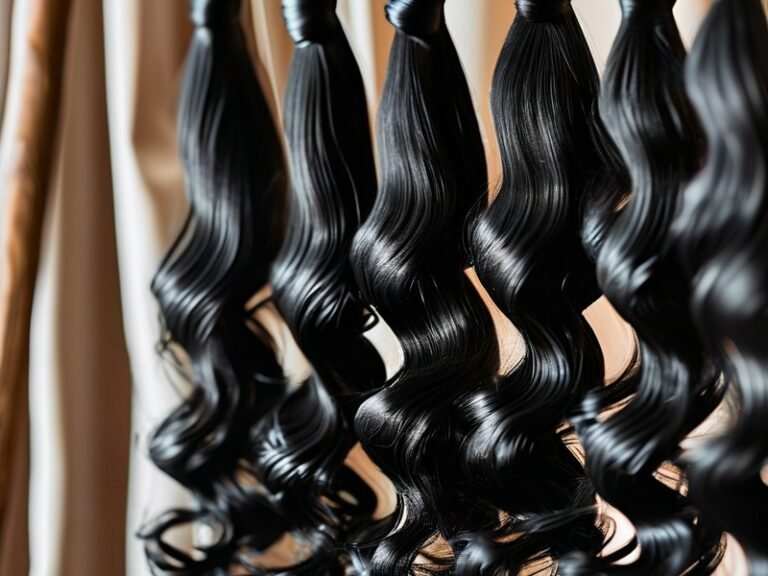
Body wave bundles are wefted human hair extensions sewn into horizontal tracks, with a soft “S” pattern that is looser than deep wave and more defined than straight hair with a slight bend. A weft is the stitched band at the top of the bundle where the hair strands are secured. Stylists sew or glue the weft onto braided hair or use the bundles to make wigs.
The texture sells because it looks natural, moves well, and can be straightened or washed back toward its wave pattern. That flexibility matters for clients who want volume one week and a silk-press look the next. It also blends more easily with relaxed textures, blow-dried natural hair, and fine-to-medium density hair than very tight curls.
For a business, body wave is useful because it pairs with almost every hairpiece. A closure is a small lace or silk piece, usually 4×4 inches, that closes a sewin at the top or crown. A frontal is a wider ear-to-ear piece that recreates the full hairline. Bundle deals with a closure or frontal give customers a complete look and raise average order value without requiring custom wig labor.
The trade-off is that body wave shows quality problems quickly. If the hair is over-processed, the waves become frizzy, stringy, or straight after washing. If cuticles run in different directions, tangling starts around the nape. Sourcing this texture well means paying attention to donor hair quality, not just the pretty look of a fresh sample.
Virgin, Remy, Raw, or Cuticle Aligned: Which Hair Should You Stock?
These terms are often mixed together in supplier listings, so do not place a bulk order until the vendor defines them in writing. Virgin hair means human hair that has not been chemically processed, colored, permed, or relaxed. Remy usually means the hair was gathered with roots and ends oriented in the same direction, although the term is used loosely in the market. Raw hair generally refers to minimally processed donor hair with no steam texture or heavy chemical treatment.
Cuticle aligned hair means the outer cuticle layers all run in the same direction, from root to tip. This matters most for body wave because the hair rubs against clothing and shoulders. Properly aligned cuticles reduce matting, cut down shedding, and help the wave pattern recover after washing.
Many body wave textures are created with steam processing, even when the base hair is good-quality virgin hair. That is not automatically bad. Steam can create a consistent S pattern without the damage caused by harsh perming, but excessive heat or acid processing makes the hair dry and shortens its lifespan. Ask whether the pattern is steam-set, chemically textured, or naturally wavy donor hair.
For most US hair businesses, the sweet spot is clean virgin cuticle aligned body wave with a repeatable steam-set pattern. Raw naturally wavy hair can be excellent, but supply is less uniform, lengths can be limited, and the wave may vary more by donor. If you market strict consistency, raw hair may create more customer questions than premium pricing solves.
What Body Wave Bundle Specifications Should You Compare?
Never compare bundle quotes by “Grade 10A,” “Grade 12A,” or similar labels alone. Those grades are not regulated, and two factories can call completely different hair by the same grade. Compare measurable details: hair origin, donor type, cuticle direction, processing method, bundle weight, length range, weft style, moisture level, smell, shedding, and after-wash behavior.
- Bundle weight: Most wholesale bundles are around 95–105 grams per piece, often sold as 100 grams or 3.5 ounces. Confirm exact grams because a cheap 80-gram bundle can look expensive per piece but poor value per full install.
- Lengths: Body wave is usually measured while the hair is pulled straight. Common stock runs 10–30 inches, with 32–40 inches costing much more because long donor hair is limited.
- Weft type: Machine wefts are standard and sturdy. Thin or “genius” wefts can be less bulky, but some versions shed more if cut or sewn incorrectly. Ask whether the weft can be cut without unraveling.
- Color: Natural black and natural brown are standard. If customers want blondes, pastel colors, or bright fashion shades, expect higher cost, longer processing, and more quality risk.
- Pattern consistency: Ask for photos and videos from the same batch, not only studio images. Body wave should be a soft S pattern from top to ends, not loose roots with frizzy curls at the bottom.
- Hair mix: Request confirmation that the product is 100 percent human hair with no synthetic or animal-hair mix. Synthetic fibers may clump, melt under high heat, or feel unnatural when washed.
- Moisture and finish: A slight conditioner feel is normal, but greasy hair can be masking dryness, silicone buildup, or processing damage. Clean, conditioned hair should still feel substantial after washing.
A typical sew-in install usually needs 3–4 bundles for 12–16 inches, 3–4 bundles for 18–22 inches, and 4–5 bundles for 24 inches or longer, depending on head size and desired fullness. An install is the method of attaching extensions, such as sewing wefts onto braided foundation. If you sell wig units, density also matters. Density is the amount of hair on a wig cap, commonly shown as percentages such as 150 percent, 180 percent, or 200 percent.
How Do You Vet a China-Based Human Hair Supplier?
Start by separating factories, trading companies, and resellers. A factory may offer better repeat production, but not every supplier claiming “factory direct” actually controls production. A capable trading company can still be valuable if it manages quality control, stock programs, packaging, and export paperwork. The key is transparency about who processes the hair, who holds stock, and who handles claims.
Ask specific sourcing questions instead of requesting only a price list. A serious supplier should answer without deflecting: Where is the hair collected? Is it virgin, Remy, raw, or cuticle aligned? Is the body wave steam-set or chemically processed? What is the exact gram weight? What is the standard MOQ? How long is production after payment? What happens if a batch sheds, smells, or changes texture?
MOQ, or minimum order quantity, varies widely. Stock virgin body wave bundles may start at 1 piece per length for samples and 10–50 pieces for wholesale pricing. Custom labels, custom packaging, special colors, or very long lengths may require 50–100 pieces or more. Be cautious if a supplier advertises unlimited stock in every length at the lowest price; long lengths and premium donor hair do not work that way.
Lead times should also be realistic. Stock bundles may ship in 2–7 business days, custom packaging can take 10–25 days, and custom colors or large production orders may require 2–6 weeks. Holiday seasons, Chinese New Year, shipping delays, and customs checks can add time. Build buffer into launch dates instead of promising customers delivery based only on the fastest sample shipment.
Ask for batch photos, short videos, factory floor views, weft close-ups, and washing tests if available. A vendor should be able to show dry hair, wet hair, brushing, shedding checks, and pattern recovery. You also want a stable account manager who answers technical questions, not someone who only sends promotional graphics and pushes you to buy the highest grade label.
What Should Your Sample Testing Process Look Like?
Order samples from at least three suppliers before choosing a main body wave line. Keep the test fair by ordering the same length, weight, color, and texture from each vendor. Label each sample by supplier and date, because hair can look almost identical when freshly oiled and curled.
First inspect the hair dry. Run your fingers from top to ends, then gently from ends upward near the cuticle. Hair should feel smoother going root to tip than tip to root, which is a basic sign of cuticle direction. Check for short hairs poking from the weft, uneven ends, strange odors, excessive silicone, split ends, visible lice-treatment smells, or patterns that look more curly than body wave.
Then examine the weft. Pull lightly along the stitching, inspect loose threads, and note whether the track is bulky, flat, wide, or reinforced. If you plan to cut wefts for wigs, ask first whether cutting is recommended. Some thin wefts create more shedding when cut, even if the hair itself is good.
Wash the sample in lukewarm water with a gentle sulfate-free shampoo, then condition from mid-strand to ends. Let it air dry without heavy product. Good body wave should return to a recognizable S pattern, keep its softness, and not turn frizzy, straw-like, or completely straight. Record shedding by counting loose hairs after washing and brushing; a few loose strands are normal, clumps are not.
Heat test the hair only if your customers regularly straighten body wave. Use controlled heat around 300–350 degrees Fahrenheit with a heat protectant, then wash and air dry to see whether the wave recovers. Hair that burns, smells synthetic, becomes singed, or loses the pattern permanently after one pass may not suit your market. Do not test every sample at 450 degrees; that can damage even good hair and gives you unrealistic results.
Finally, track the numbers. Include sample cost, shipping, grams per bundle, actual usable length, weft quality, shedding, drying time, pattern recovery, and supplier response speed. The cheapest sample often fails after washing, while the best vendor for your business may not be the one with the shiniest initial photos.
What Pricing Realities Should Hair Businesses Expect?
Wholesale body wave pricing changes with length, donor quality, origin, processing, currency, stock availability, and order volume. Short lengths cost less because donor supply is easier. Long lengths jump in price because fewer donors provide healthy 28–40 inch hair, and long hair requires more careful sorting and processing. If every length has nearly the same wholesale price, question the hair mix or actual weight.
Be careful with pricing that seems too good to be true. A low quote may mean 80 grams instead of 100 grams, mixed cuticles, non-Remy hair coated in silicone, short hairs sewn into the weft, synthetic blend, or heavily processed hair that looks good for one wear. Those products generate chargebacks, salon complaints, and bad reviews that cost more than the savings.
At the same time, the most expensive quote is not automatically the best. Some suppliers charge premium prices because of marketing labels, influencer-style packaging, or invented grade names. Your customers care about tangling, shedding, length honesty, natural appearance, and how long the hair lasts. Pay for those measurable qualities, not just a grade badge.
Calculate landed cost, not factory price. Add freight, insurance if needed, payment fees, customs clearance, taxes, packaging, labels, storage, and replacement cost for defects. A supplier with a slightly higher product price but consistent stock, clean wefts, and reliable claims handling may give you better margin over a year than a cheaper vendor with irregular batches.
For retail positioning, think beyond “buy low, sell high.” Salons and braiders need hair that installs well and keeps clients happy. Online resellers need photos that match the product and enough stock to avoid selling popular lengths on backorder. Wig makers need dependable wefts and matching closures or frontals. Choose your price tier around the customer you serve, not a generic luxury image.
How Do You Match Body Wave Bundles With Closures and Frontals?
Matching the bundle texture is only half the job; the lace piece has to match in color, wave, luster, and hair quality. A closure is used for a defined parting area, while a frontal covers the front hairline from ear to ear. If the bundles are low luster and natural but the closure is shiny or overly curly, customers will see the difference immediately.
Order closure or frontal samples from the same production line whenever possible. Ask whether the hair on the lace is cuticle aligned and whether the knots are lightly bleached, pre-plucked, or natural. Lace color matters too: transparent lace may look softer in marketing photos, but it still must be tinted to match the client’s scalp. Medium brown lace can work better for some skin tones without extra work.
Body wave frontals usually need more maintenance than straight pieces because the baby hairs and front hairline are exposed to friction, edge products, water, and styling. Explain this to buyers rather than promising a no-maintenance unit. A good frontal can still require lace care, minimal glue use, nightly protection, and gentle brushing to avoid shedding around the knots.
For bundle deals, test one complete set before scaling: three or four bundles plus one closure or frontal in the same length family. Wash and air dry everything together. The wave pattern should look related, not like pieces from three donor batches. If matching is inconsistent, your supplier may not be suitable for kit sales even if individual bundles look fine.
What MOQ, Packaging, and Private Label Terms Are Worth Negotiating?
New buyers often ask for private labeling before validating the hair. It is tempting, but custom tags, satin bags, boxes, and thank-you cards do not fix tangling or short lengths. Start with stock hair, test it on real clients, collect feedback, and add private label once you know which lengths and texture line sell consistently.
When you are ready, ask for exact MOQs for each customization step. Hangtags may require a lower MOQ than custom boxes. Printed bundles wraps, silk bags, ribbon, lace packaging, and branded boxes may each have separate minimums and setup time. Some suppliers can source packaging for you, but compare quality and delay risk before bundling everything into one order.
Negotiate terms that support repeat business, not only the first shipment. Ask about stock reservation for popular lengths, repeat-order production windows, batch numbering, defect allowances, replacement policies, and whether photos are required for claims. Reasonable suppliers know that a small percentage of manufacturing issues can happen. Unrealistic suppliers may promise “zero shedding forever,” which is not credible for a natural fiber product.
Keep labels honest. If the hair is steam-processed virgin hair, do not market it as raw unprocessed hair. If lengths are measured straight, state that clearly. If 100 grams is the target, allow a tiny manufacturing variance in writing but reject bundles that are consistently underweight. Accurate product claims reduce returns and build trust with stylists who will reorder monthly.
How Can You Reduce Returns and Customer Complaints?
Most body wave complaints fall into a few categories: tangling, shedding, dryness, pattern mismatch, length confusion, and lace issues. Many can be prevented with clear product education and realistic care instructions. Human hair extensions do not receive natural scalp oils after they are collected, so they need gentle cleansing, conditioning, and moisturizing without being weighed down.
Tell clients to detangle from ends upward with a wide-tooth comb or detangling brush, wash in lukewarm water, and avoid aggressive rubbing. They should not sleep on wet hair and should use a silk or satin bonnet or pillowcase. Body wave should be allowed to air dry or diffused gently when possible. Excess heat, heavy oils, glue in the weft, and sewing through the same track repeatedly can cause dryness and shedding.
For salons, include install guidance. Sew around the weft instead of piercing it excessively when possible, do not cut unstable wefts unless approved, and reinforce the top track if the client has a thinner hairline. For wig makers, advise proper knot care and avoid pulling too tightly around the frontal ears. These details make the hair perform closer to its intended lifespan.
Set expectations on wave pattern too. Fresh body wave can look slightly looser after brushing, tighter when wet, and softer after conditioning. Natural hair is not a synthetic factory curl that stays identical through every product and styling method. If a client wants a very tight, fixed curl, deep wave or curly hair may be a better fit than body wave.
Use consistent vendor batch codes and ask customers to send photos before washing, after washing, and after install if they report a problem. This protects both you and the supplier. It also helps you separate true manufacturing defects from improper maintenance, chemical damage, excessive heat, or stylist error.
Common Sourcing Mistakes That Hurt Hair Business Margins
The first mistake is buying from a price list only. Body wave is a texture category, not one product. Two suppliers can both sell “12A body wave” while offering completely different donor hair, gram weights, weft strength, and processing quality. Always buy samples and test after washing before committing to a launch.
The second mistake is ordering too many long lengths. Long bundles photograph beautifully, but 28–40 inch hair ties up cash and sells more slowly than 14–22 inch stock for many businesses. Start with popular mid-lengths, add a few statement lengths, and reorder based on sales data. You can always scale up once customers ask for longer hair.
The third mistake is trusting marketing words more than specifications. “Raw,” “virgin,” “single donor,” “cuticle intact,” and “luxury” need definitions. Ask for written details and test the claims. If a supplier cannot explain the difference or changes the answer when asked again, keep looking.
The fourth mistake is ignoring communication after payment. A good vendor should provide order confirmation, weight checks when possible, packaging updates, production timing, and response to quality issues. If pre-sale replies are slow, post-sale claims will usually be slower. Reliable communication is part of the product.
The fifth mistake is overpromising longevity. Well-sourced cuticle aligned body wave can last through repeated installs and washes with proper care, but no honest supplier should promise a fixed lifespan for every client. Maintenance, heat use, products, cutting methods, install tension, and nightly care all affect wear time.
Frequently Asked Questions
How many body wave bundles do I need to sell for a full install?
Most clients need 3–4 bundles for lengths 12–22 inches and 4–5 bundles for 24 inches or longer, depending on head size and desired fullness. If using a frontal, some stylists use one fewer bundle because the frontal covers more of the front area, but that varies by cap method and density.
Can body wave bundles be straightened and then returned to waves?
Good-quality body wave can usually be straightened with moderate heat and heat protectant, then washed and air dried to bring back much of the S pattern. Repeated high heat, cheap irons, heavy products, or over-processed hair can loosen the pattern and cause dryness, so test your vendor’s hair before making strong claims.
What is a good starting wholesale order for a new body wave hair business?
Start with samples from several vendors, then place a small test order in common lengths such as 14, 16, 18, and 20 inches rather than buying every length. Add a few matching closures or frontals once the hair passes washing, heat, shedding, and weft tests. This gives you enough inventory to create real content and serve early clients without locking all your cash into long lengths.
If you are ready to test a repeat body wave line, send us your target lengths, bundle weight, order quantity, and whether you need closures or frontals. We can help you compare stock options, lead times, and private label choices before you commit to a full production order.
If you want the full background before you order, our guide on Sourcing Ashine Water Wave Hair Bundles: A Practical Guide for Hair Businesses walks through it in plain terms.
Send Us Your Hair Inquiry
Need bulk pricing, samples, or a private-label quote? Fill in the form and our team will get back to you within one business day.