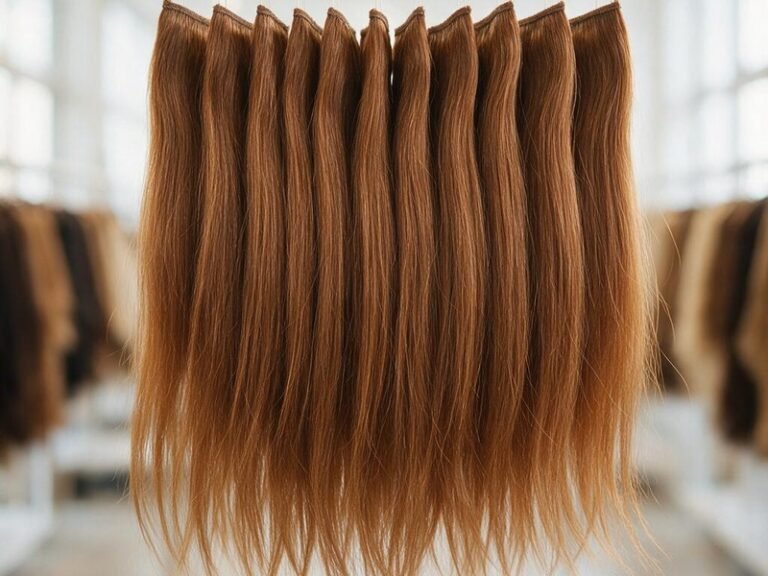
Blonde U Part Wig: Wholesale Sourcing Mistakes to Avoid
A blonde U part wig can sell well, but only if the shade, hair quality, cap construction, and leave-out design are right. The biggest wholesale mistake is treating it like a standard blonde wig: the U-shaped opening has to match real clients’ leave-out, blending expectations, and install habits.
A U part wig is a cap wig with a U-shaped opening at the top or crown that lets the wearer pull out a section of their own hair to cover the wig edge. For blonde units, buyers often run into brassy strands, weak over-processed hair, mismatched density around the opening, and weak combs or clips. This guide walks through the mistakes that cause returns, negative reviews, and margin loss before you place a bulk order.
What Should Buyers Check First in a Blonde U Part Wig?
Start with hair quality and color process, not just the lightest price. Blonde shades usually require lifting, and every lift can weaken hair if the factory rushes processing, uses poor donor hair, or masks damage with heavy silicone. A unit may feel soft during inspection but become dry, tangled, or brittle after one wash once the coating is gone.
Ask whether the hair is virgin hair, Remy, raw hair, or another factory grade. Virgin hair means hair that has not been chemically processed before color treatment; Remy generally means strands are gathered with cuticles facing a similar direction; raw hair usually describes minimally processed donor hair. The term that matters most for longevity is cuticle aligned, meaning the hair cuticles run in the same direction from root to end. That helps reduce tangling, especially after bleaching.
For a blonde U part wig, do not assume all #613, honey blonde, ash blonde, or platinum units are equal. #613 is a very light blonde base, but factories interpret it differently. Some batches lean yellow, some lean pale gold, and others have slightly darker roots or toned ends. If your brand sells exact shade matching, order physical color rings or sample units before committing to a wholesale run.
Also inspect whether the blonde hair is single drawn, double drawn, or premium double drawn. Single drawn hair has more natural length variation, double drawn has more uniform thickness, and premium grades are usually fuller from root to end. Blonde units need extra attention here because short filler hairs can become frizzy near the wefts and stand out against lighter colors.
Are Buyers Choosing the Wrong Blonde Shade for Their Market?
One of the most common buying errors is ordering only #613 because it looks bright in product photos. Many U.S. clients want wearable blonde, not stage-bright yellow. Salon clients, braiders, and everyday wearers may ask for honey blonde, champagne, warm beige, ash blonde, rooted blonde, or highlighted blends. A narrow shade range can limit repeat orders even if the cap itself fits well.
Think about who will wear the unit. A client with naturally light brown or blonde leave-out may need an ash or neutral tone. A client with dark brown or black natural hair may prefer a rooted U part wig, balayage effect, or a smaller leave-out area so the contrast is less obvious. If your customer base mostly wears protective styles with minimal hair left out, a U part may not be the best design for every client.
Shade consistency matters across lengths too. A 12-inch #613 unit and a 26-inch #613 unit from the same batch should match, but longer hair sometimes looks darker or warmer because more hair is layered together. Ask your supplier to compare units side by side in natural daylight, not only under factory lighting. Warehouse ring lights can hide brassiness and make ash tones look warmer than they really are.
If you plan to tone or custom-color units yourself, order blonder bases cautiously. Over-lifted hair may not survive more chemical processing. Ask for tested guidance on whether the hair can be toned, darkened, or highlighted, and test one sample before promising customization to clients.
What U Part Cap Mistakes Create Returns?
The U opening is the main functional part of the product, so its size and placement deserve more attention than packaging. A U part wig that looks good on a mannequin may fail on a real client if the opening is too wide, too narrow, too far forward, or too close to the crown. Clients have different leave-out patterns, part widths, hairline density, and head shapes.
Some wholesale units use a fixed opening designed for a generic leave-out section. That can work for standard resale, but it limits fit flexibility. Other caps have adjustable straps, clips, combs, or optional trim lines. Confirm what the cap allows before marketing it as “leave-out friendly” or “glueless,” since a U part still depends on proper placement and the wearer’s natural hair.
Check the stitching around the opening. Blonde units reveal thin fabrics, dark cap material, knots, tracks, and short hairs more easily, especially when sunlight hits the crown. The edge should lie flat without buckling, and the wefts should not crowd the leave-out area. If the client has to sew, cut, or reinforce the cap right away, the unit is not ready for premium pricing.
Cap size is another frequent miss. Many wholesale orders default to medium caps, but U.S. buyers may need small, medium, large, or adjustable options. Measure circumference, ear-to-ear over the top, front-to-back nape, and nape width. A cap that rides up or gaps at the sides makes blonde leave-out blending harder because the color transition and cap edge become visible.
How Does Density Change the Look and Cost of a Blonde U Part Wig?
Density means how much hair is sewn into the cap, usually described as percentages such as 130%, 150%, 180%, or 200%. New buyers sometimes assume higher density is always better, but dense blonde hair can look bulky, feel heavy, and put more tension on clips and combs. For a U part wig, too much hair around the opening can also push the leave-out in the wrong direction and create an unnatural mound at the crown.
For everyday wear, 130% to 150% often gives a natural look for shorter lengths, while 180% can suit clients who want a fuller style. Lengths past 24 inches may feel thin at the ends if the hair is single drawn, even with decent density at the base. That is why density and drawn quality should be checked together instead of treated as separate selling points.
Blonde hair reflects more light than dark hair, so track placement and uneven ends are more visible. Run your hand through the unit, hold it up to daylight, and inspect the perimeter and crown. Look for sparse gaps, excessive short hairs, thin weft edges, and uneven layering. Ask the factory to show the exact unit before shipment, not only a styled promotional photo.
Cost trade-offs should be realistic. A true 180% cuticle-aligned blonde unit uses more lightened hair and usually costs more than a 150% unit in a dark shade. If a quoted price seems unusually low, check whether the supplier reduced grams, used mixed-length hair, substituted non-Remy strands, or made the opening larger to save hair. Those shortcuts show up after washing or styling.
Which Wholesale Order Terms Cause the Most Problems?
Many avoidable losses happen before production, not after delivery. Buyers place orders based on one photo, accept vague color names, skip sample testing, or fail to confirm MOQ and lead time in writing. MOQ means minimum order quantity, and it can vary by length, shade, cap size, density, and custom label requirements. A supplier may offer a low MOQ for stock #613 but require a much higher MOQ for ash blonde or custom packaging.
Lead times also need detail. Stock units may ship in a few days, but custom blonde batches, private labels, special densities, or mixed sizes can take weeks. Ask when processing starts, whether hair is already in stock, how long color processing takes, and whether holidays or peak seasons affect the schedule. Do not promise salon delivery dates until the supplier confirms the actual shipping window.
Quality approval should be part of the order process. Request pre-shipment photos or video of the exact units, including the crown opening, wefts, knots, ends, elastic straps, combs, and color in natural light. For repeat orders, keep a retained sample and compare new batches against it. This gives you a practical standard if shade or construction changes between runs.
- Confirm the hair grade: Ask if the blonde unit is cuticle aligned, Remy, virgin before lifting, or processed donor hair.
- Lock the shade standard: Use a color ring or physical sample, not only a phone picture.
- Check gram weight: Compare total grams by length and density so “180%” means the same thing across orders.
- Inspect the opening: Review U width, placement, stitching, and whether leave-out can realistically cover the edge.
- Test the fit: Try the cap on more than one head size and check strap, comb, and clip security.
- Wash a sample: Feel for dryness, tangling, shedding, color runoff, and return of brassiness.
- Confirm terms in writing: MOQ, density, lengths, shade, cap size, production time, shipping, and defect policy should all be clear.
How Do You Test Blonde Hair Quality Before Reordering?
Do not judge the hair only by finger-combing a brand-new unit. Lightly shampoo one sample with a moisturizing sulfate-free shampoo, condition it, and let it air dry. Healthy cuticle-aligned blonde hair should still feel manageable, although it may need more hydration than untreated black or brown hair. Watch for severe tangling at the nape, matted wefts, snapping ends, or a sudden rough texture after washing.
Check shedding the right way. A few loose hairs from sewing and shipping are normal, but continued clumps after gentle combing are not. Inspect weft tightness and secure any weft before cutting if your team customizes caps. Avoid aggressive brushing while wet, and use a wide-tooth comb starting from the ends. For heat styling, use moderate heat and a heat protectant, because blonde hair is usually more vulnerable to dryness and split ends.
Tone testing is important if you sell ash or platinum looks. A purple shampoo or toner may correct mild warmth, but it cannot fix poor blending, damaged strands, or uneven lifting. If the hair turns muddy, absorbs product unevenly, or feels gummy after toning, the base hair was already compromised. That is a supplier issue, not just a styling issue.
Keep records after testing. Note the factory batch, length, density, gram weight, shade name, wash result, shedding level, and heat response. This matters because blonde hair can vary between donor batches even when the cap design stays the same. Over time, those records help you negotiate better quality and reject inconsistent runs before they reach customers.
Should You Offer Related Blonde Products Alongside U Part Wigs?
U part wigs work best as part of a broader blonde hair assortment, not as a standalone answer for every client. Some clients do not have enough healthy leave-out, do not want to blend natural hair, or need a protective style with no leave-out. For those buyers, closures, frontals, or other cap constructions may be a better fit.
A closure is a small lace or silk piece, usually around 4×4 inches, used to recreate a part and cover the crown. A frontal is a longer ear-to-ear piece that creates a hairline and allows more styling flexibility. If a customer wants no leave-out, a closure or frontal wig usually makes more sense than pushing a U part. Knowing the difference reduces consultation mistakes and returns.
You can also support blending with matching clip-ins, weft hair, or bulk hair. A weft is a stitched track of hair used for sew-ins or wig making, while bulk hair is loose hair without a weft, often used for braiding or certain custom systems. Tape-in extensions are thin adhesive wefts applied near the root, and k-tip extensions are individual keratin-bonded strands; both can help clients blend color but require professional installation, also called an install.
For resale, pairing a blonde U part wig with matching tone advice and care products can improve satisfaction, but do not overpromise. Be honest that blonde human hair needs hydration, gentle washing, limited heat, and careful bedtime protection. Clients who understand that trade-off are usually happier than buyers attracted only by “613” and a low price.
Frequently Asked Questions
Is a blonde U part wig good for customers with dark natural hair?
It can work if the customer is comfortable leaving out enough hair to blend, especially with a rooted or highlighted blonde shade. If she wants a fully protective style with no leave-out, a closure or frontal wig is usually the better recommendation.
What density should I stock for a wholesale blonde U part wig?
Most everyday lines do well starting with 150% to 180%, depending on length and customer style preference. Avoid assuming 200% is automatically premium; too much blonde hair around the U opening can look bulky and strain the cap clips.
If you are planning a blonde U part wig order, start with samples in two or three marketable shades and compare wash tests, cap fit, and gram weight before scaling. Send us your target lengths, density, cap size, and order quantity, and we can help you build a wholesale assortment with fewer costly surprises.
If you want the full background before you order, our guide on Blonde 6 6 Human Hair Wig: Wholesale Sourcing Mistakes to Avoid walks through it in plain terms.
Send Us Your Hair Inquiry
Need bulk pricing, samples, or a private-label quote? Fill in the form and our team will get back to you within one business day.