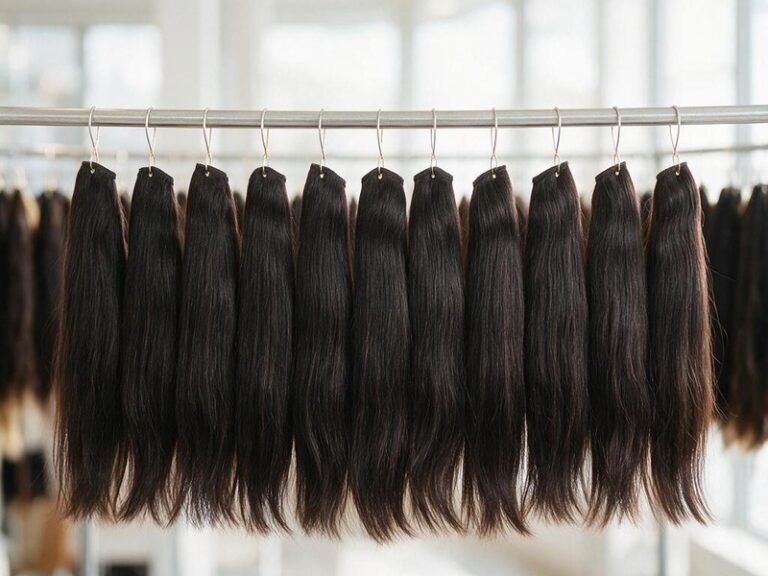
Private Label Clip in Hair Extensions: What New Brands Should Know
Private label clip in hair extensions let a new brand sell ready-to-wear human hair sets under its own logo without custom equipment. Most new brands should start with 100–150 grams of Remy clip-ins—human hair with cuticles kept in one direction—in 18–22 inches, test fit and colors, then add branded packaging after reorders. Here’s what matters from the supplier side.
What should the hair be?
Start with Remy human hair, because the one-direction cuticles reduce tangling after washing. Cuticle aligned hair describes that same root-to-tip orientation; it’s worth it because clients touch them. Virgin hair means uncolored, unprocessed hair, but it costs more and limits colors, so many brands start with colored Remy. A standard set has 100–150 grams across 8–10 pieces; big volume may need another 100-gram set. Our private label raw hair guide explains why raw hair costs more and sells slower.
How many grams are in a clip-in set?
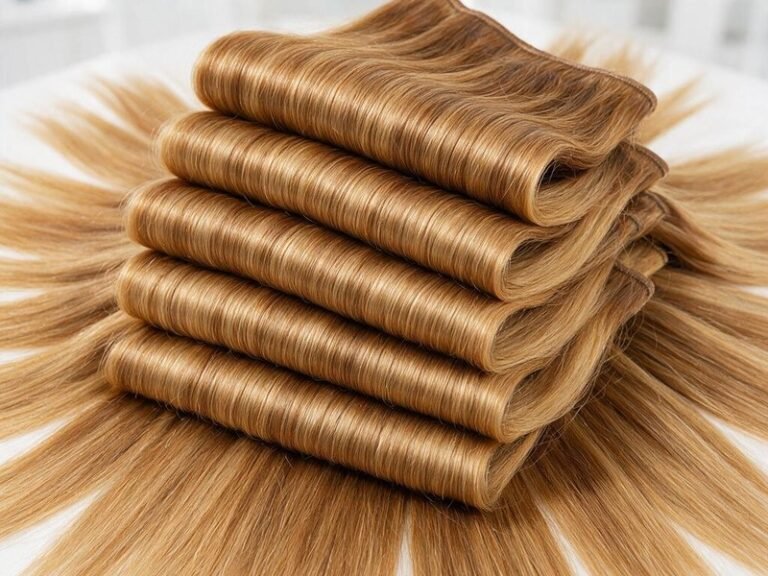
Most sets use 100, 120, or 150 grams; 120 grams works for everyday 18–22 inch thickness. For 24–28 inches, use 150–180 grams so ends don’t look thin. A set usually has 8–10 wefts—the stitched bands holding hair—with clips attached. Fine hair prefers lighter pieces; thick hair may stack two tracks in one row. You can source this base as weft hair extensions, but not every weft survives repeated clipping.
What MOQ and lead times are normal?
Most factories set an MOQ, or minimum order quantity, around 100 sets per length and color, though some allow 30–50 plain-pack samples. Custom boxes, labels, and satin bags add 2–4 weeks and often carry 100–500 piece minimums. Production takes 3–6 weeks after sample approval, plus 7–15 days shipping to US warehouses or salons. Reorders move faster if names, weights, and clip counts stay identical. Start with three lengths, two browns, one blonde, and one dark shade instead of 30 SKUs.
Sample checks before you deposit
- Put it on a model and check whether clips sit flat without pulling.
- Brush from ends to weft 50 times; a few shed hairs are normal, clumps are not.
- Wash and air-dry one piece to check for tangling, curl loss, or color change.
- Compare shades to a color ring in daylight and indoor light, because monitors lie.
- Wear it a full day to test temple weight and removal ease.
Where new clip-in brands lose money
Shade mismatch causes more returns than damage, so use a color ring and real swatch photos before selling blondes. Cheap clips are next; bending metal or slipping silicone gives clients one bad day and your brand a bad review. Non-Remy or mixed hair can cut cost 20–35%, but it tangles faster and only suits a clearly marketed budget line. Don’t buy luxury boxes before reorders; a branded hangtag and protective bag are enough at launch. If you’re comparing options, browse shop all hair extensions and verify gram weight and policies on the FAQ page before ordering.
Are private label clip-ins bad for fine hair?
Not if it’s light enough and clips sit where hair can support them. Fine or thin hair does better with 100–120 grams and smaller pieces spread across sections. Sleeping in them or daily tight placement can cause breakage, so market them as occasional styling.
Can I put my logo on sample-stock clip-ins?
Yes, many suppliers let you add hangtags, satin bags, or labels to stock sets, avoiding custom-packaging MOQs. Fully custom boxes or embossed cases usually have a separate minimum and longer lead time. Ask whether future batches match the sample, especially for blondes and curly textures.
If you’re launching soon, keep orders small, document sample results, and ask for batch photos before payment. That gives you a branded clip-in line you can defend without gambling rent money on inventory.
Send Us Your Hair Inquiry
Need bulk pricing, samples, or a private-label quote? Fill in the form and our team will get back to you within one business day.