Flat Tip, I-Tip, and U-Tip: Which Bonds Should Vendors Carry
If your clients are asking for individual bonds, flat tip, I-tip, and U-tip are the three styles that usually come up first. They all give a fuller, strand-by-strand result, but they don’t install the same way, and they don’t sell at the same pace. Here’s how we usually guide vendors and salon owners who don’t want to tie cash up in the wrong bond.
What each bond actually is
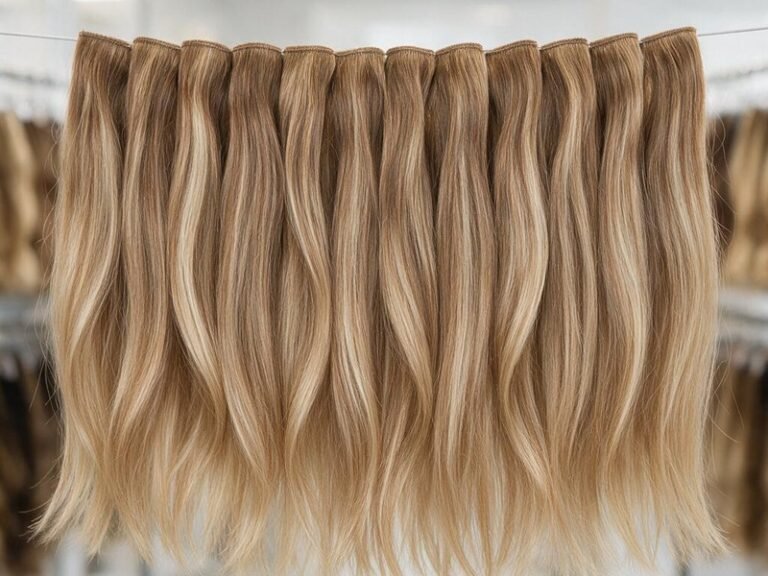
Flat tip hair comes with a flattened keratin bond that gets heated and sealed around a small section of natural hair. It lies close to the scalp, so it’s less bulky than a round bead when a client wears her hair up. We usually see it at around 1 gram per strand, with 18 to 22 inches moving fastest in most US markets.
I-tip uses a stick-shaped tip and no heat. The stylist threads the natural hair through a microbead, inserts the I-tip, and clamps it shut. That makes it easier to remove and reuse if the hair is still in good shape, though bead placement matters a lot.
U-tip has a curved, nail-shaped keratin bond that is melted around the hair with a fusion connector. It’s the classic long-wear bond and tends to feel very secure, but removal takes more care because the keratin has to be crushed with the right solution. In simple terms: flat tip is low profile, I-tip is bead-based, and U-tip is traditional fusion.
Which one gives salons fewer headaches?
If you’re selling mostly to licensed stylists who already do extension work, flat tip is often the easiest middle ground. The bond is thin, install time is reasonable, and clients generally don’t complain about bulk near the hairline. A full head commonly takes 100 to 150 grams, depending on density and length.
I-tip is great for salons that want to avoid heat or offer move-ups without replacing every bond. The catch is that cheap beads spin, slip, or tarnish, so don’t skimp there. Stylists also need clean sections, or the beads start showing after a few shampoos.
U-tip has a loyal following because it can wear 3 to 4 months with proper care. It’s more labor intensive, though, and a sloppy install can leave bonds that feel hard or tangled. If your customer base likes long-lasting fusion and your stylists know keratin removal, it’s worth carrying.
What vendors should stock first
For a first order, I’d carry flat tip in natural black, dark brown, and one or two balayage tones, then add I-tip once your stylists ask for beads. U-tip can be a smaller specialty stock, maybe 10 to 20% of your bond inventory unless you already have fusion clients. That keeps your shelves flexible instead of burying money in one niche.
Length-wise, 20 and 22 inches are safer than loading up on 28-inch bonds. Longer hair costs more, has fewer buyers, and sits longer if the texture or color isn’t exactly right. If you sell K-tip hair already, flat tip and U-tip fit naturally beside it because the install conversation is similar.
Don’t forget that some buyers also browse shop all hair extensions before deciding, so clear product labels matter. Call each bond by its common name and list gram weight, length, texture, and whether heating tools are needed. Confused customers don’t buy; they message three suppliers and pick whoever explains it fastest.
If you’re unsure how much depth to carry, our notes on hair stock turnover can help you plan without overordering.
Price, quality, and complaint patterns
- Cheapest upfront: mixed or lightly processed hair may win budget clients, but dry ends and tangling cause returns.
- Best repeat-order balance: quality cuticle-intact flat tip usually gives vendors fewer after-sale issues.
- Most reusable design: I-tip can be taken down and reinstalled, but only if the hair stays healthy.
- Most secure wear: U-tip is strong for dense hair and clients who want months between appointments.
- Most common add-on sale: replacement beads, fusion tools, bond remover, and color rings.
- Biggest ordering mistake: buying too many highlighted shades before local clients request them.
- Smart sample move: test shedding, curl recovery, and washing before committing to a bulk run.
Those sample tests matter more than vendors sometimes think, especially with bonds because the tips can look perfect while the hair quality disappoints later. If you want a simple process, use our wash, curl, and shed tests before reordering. We’d rather see a buyer place a smaller first order and reorder than push a big invoice that becomes dead stock.
How to choose based on your market
City salons and bridal-focused clients often prefer flat tip because it’s discreet and works well in upstyles. If your stylists serve clients with fine or medium hair, they’ll usually want careful placement and enough strands to avoid tension. Keep colors conservative at first, then add highlights based on consultations.
I-tip tends to do well with clients who change their style often or salons that market maintenance appointments. It also pairs nicely with education: teach bead sizing, sectioning, and safe removal, and reorders become steadier. Just set expectations that beads can loosen if clients use too much oil near the root.
U-tip is strongest where clients already know keratin fusion and don’t mind a longer chair appointment. It may not be your highest-volume line, but it can attract a premium service menu. If clients also ask about sew-ins, you can compare demand with your weft hair sales instead of guessing.
Quick FAQ for new bond buyers
Are flat tip and K-tip the same thing?
A lot of US stylists use the terms loosely because both use keratin and heat. Flat tip refers to the flattened shape, while K-tip can describe various keratin fusion tips. Label your products clearly so stylists know exactly which tool and removal method they need.
How many grams do clients usually need?
For added fullness, 80 to 120 grams is common, while a full volume install often runs 120 to 180 grams. Very thick or longer natural hair may need more, so encourage stylists to book consultations before ordering. That one step cuts rush shipments and color mistakes way down.
Start with flat tip as your core bond, add I-tip for bead-work salons, and keep U-tip selective until fusion orders become consistent. If you’re ready to compare options or need help planning a first order, tell us your market, lengths, and typical salon price range.
Send Us Your Hair Inquiry
Need bulk pricing, samples, or a private-label quote? Fill in the form and our team will get back to you within one business day.