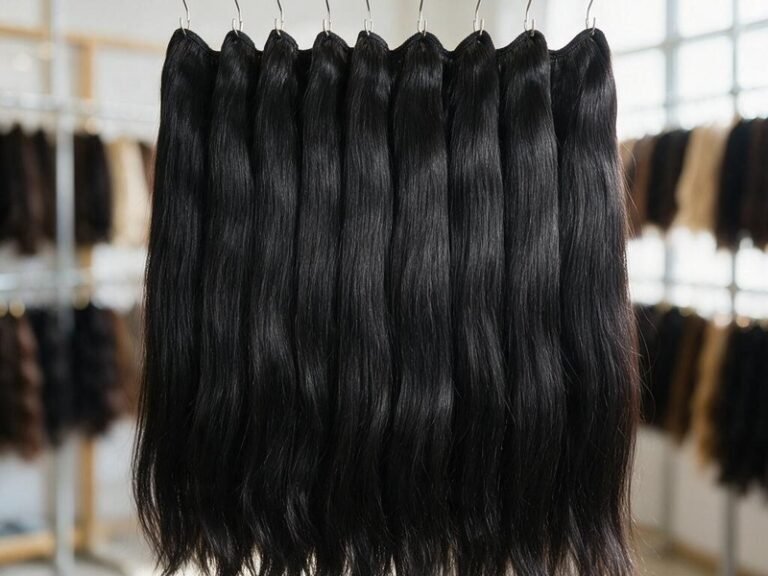
Best Frontal Wifs: Sourcing Tips for Vendors and Salons
The best frontal wifs for vendors and salons are 13×4 or 13×6 human-hair units with aligned cuticles, clean hairlines, and lace that tints well. A frontal is an ear-to-ear lace front, while a closure is a smaller 4×4 lace piece, so frontal wigs allow more parting options. Source factories that list weight, density, lace, and grade up front; cheaper prices usually mean shedding, returns, and weak curl hold.
What should the best frontal wifs include?
Start with hair, not labels. Virgin hair is unprocessed; Remy hair means cuticles—the outer scales—all run root to tip, even after light processing. Aligned cuticles shed less and survive heat and washing better than coated or mixed hair. Ask for cap weight in grams: a 14-inch 150% density unit is often 150–180 grams, while a 20-inch 180% unit can hit 220–260 grams. Density is hair volume in the cap; 130% looks natural, 150% is the safest salon default, and 180% is fuller but hotter.
What is the difference between 13×4 and 13×6 lace?
The numbers mean 13 inches across and 4 or 6 inches of parting depth. A 13×4 frontal wig fits most installs and allows parts a few inches back. A 13×6 offers deeper parts and more ponytail room, but costs more, takes longer to tint, and can lift on oily skin. HD lace is thinner and less visible; Swiss lace is stronger and easier for beginners. Test both before stocking extra lace most clients won’t show.
Where buyers lose money on frontal units
The biggest margin leak is buying only on price. A cheap 10-inch unit may save $15 upfront, but thin lace, short filler, and loose knots cause refunds and bad reviews. Tangle-prone dry ends mean mixed cuticles; double drawn hair uses matched lengths to stay thick root to end and costs more with less filler. You can read more in our piece on double drawn hair meaning, but the real test is fingers through dry ends. Bleached knots, plucking, and elastic straps add labor, so choose upgrades that fit your brand instead of paying for all.
How do I vet a supplier without ordering 50 pieces?
Order samples first, even when MOQs say 20, 50, or 100 pieces. Most real factories sell one or two samples near wholesale so you can check knots, ventilation, and curl memory. Ask in writing for lace color, cap size, origin, density, lead time, and whether photos show the exact unit. Wash the sample once; heavy shedding after a gentle co-wash is a warning sign. This guide to evaluating a lace front wigs website covers listing red flags, and our FAQ page has lead times and return rules.
What specs should I confirm on every bulk order?
- Confirm cap size; most stock caps fit medium 21.5–22.5-inch heads.
- Specify lace color and type; HD, Swiss, transparent, and brown lace are not interchangeable.
- List density percentage and gram weight so fullness is not interpreted.
- State whether knots are pre-bleached and the hairline comes lightly plucked.
- Lock production and shipping dates plus defect return terms before paying a deposit.
Is 150% or 180% density better for a frontal wig?
For most salon clients, 150% is safer because it looks full but not bulky and styles easily. Choose 180% for long lengths, curly textures, or clients wanting thick hair. Higher density costs more and feels warmer, so don’t default to it without demand.
How long should a good human hair frontal wig last?
With daily wear and gentle glue removal, a quality human-hair frontal wig often lasts 8–18 months. Occasional wear stretches that, but thin HD lace may tear first. Many vendors stock Swiss lace for beginners and HD for events.
If you’re ready to compare units, browse our hair extensions and start with one sample frontal before your next restock. Send us your length, density, and budget, and we’ll help you pick specs that fit your clients without a giant opening order.
Send Us Your Hair Inquiry
Need bulk pricing, samples, or a private-label quote? Fill in the form and our team will get back to you within one business day.