How to Read Hair Extension Gram Weight and Density Specs
If you’ve ever placed a wholesale hair order that looked thin enough to see through when it hit your door, you’re not alone. We see at least 3-4 new buyers a month mix up gram weight and density specs, thinking they ordered a full, luxe set when they actually paid for hair so sparse their clients complain before they even leave the chair. A lot of suppliers don’t explain these numbers clearly on purpose, because it lets them quote a lower price for a skimpier product.
First: Gram weight is not the same as density, full stop.
Let’s get the most common mix-up out of the way first. Gram weight is a hard, measurable number: it’s how much the actual hair on a weft, tape-in pack, or bundle weighs when you put it on a scale, no packaging, no clips, no tape tabs included. When we weigh bundles in our warehouse, we strip off all the plastic bands and hang tags first, because if a supplier counts packaging in that gram count, you’re paying for plastic, not hair. Density, on the other hand, is how tightly those strands are packed per square inch of the weft, tape tab, or tip base. You can have a 100g weft that’s thick and dense from top to bottom, and a 100g weft that’s sparse at the root and scraggly at the ends, because the cuticles were stripped or the hair was stretched during processing. I’ve seen suppliers advertise 100g tape-in packs that actually only have 72g of hair, because they count the 28g of adhesive tape tabs in the listed weight. That’s the scam you’re guarding against when you know what these numbers actually mean.
What actual standard gram weights look like across product types
There’s no universal “right” gram weight, but there are industry baselines you can use to spot a weird listing fast.
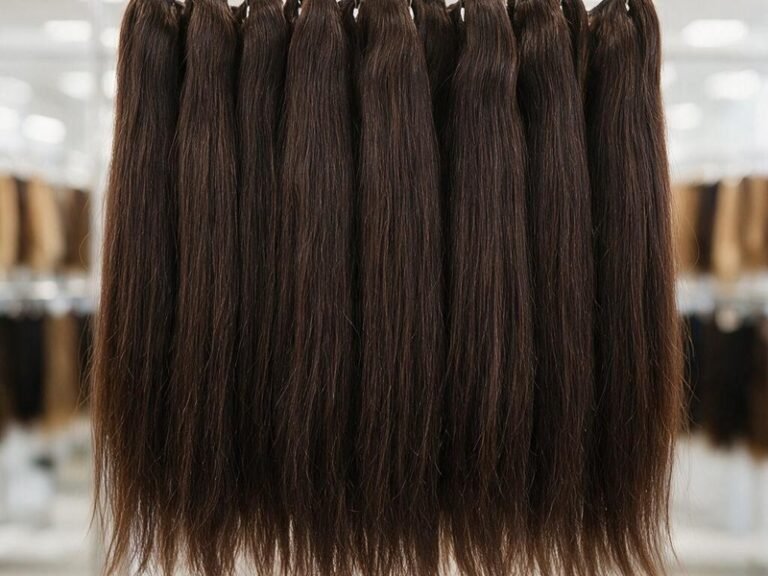
- Single drawn machine wefts usually clock in at 100g per bundle for lengths 12-18 inch, jumping to 110-120g for 20-30 inch lengths because longer hair needs more weight to avoid looking stringy.
- Tape-in packs are almost always 50g total (20 pieces, 2.5g per tab) for a standard half-head, with 100g packs for a full head install.
- K-tip and i-tip bonds are usually 1g per strand, sold in 100g packs (100 strands) for a standard full install.
- Bulk braiding hair is usually sold in 100g bundles, though many budget lines cut that to 70 or 80g to hit a lower price point.
If you’re shopping weft hair for sew-in installs, for example, a listing advertising 100g bundles for 28 inch hair at the same price as a 14 inch bundle is almost certainly cutting corners on actual hair content. Most stylists who buy bulk hair for braiding learn this the hard way, when they order 10 packs expecting enough for waist-length knotless braids and end up running to a local beauty supply mid-appointment because each pack was 25g lighter than advertised. Remember, longer hair is heavier per strand. A 100g bundle of 30 inch straight hair will look noticeably thinner than a 100g bundle of 14 inch straight hair, because each individual strand is longer, so you get fewer total strands per 100g. That’s not a scam, that’s just basic math. If you want that same full look at 30 inches, you need to bump up to 120g per bundle, plain and simple.
How density numbers work (and when suppliers lie about them)
Most of the time, you’ll see density listed as a percentage, most commonly for closure/frontal pieces and clip-in sets, but some suppliers will quote it for wefts too. 100% density is meant to match the average natural head of hair’s thickness per square inch. 150% is thicker, great for clients who want full, voluminous looks without extra bundles, and 180%+ is ultra-thick, for people who want that super full, glam style. But here’s the catch: there’s no third party testing density. A supplier can slap a “180% density” label on a 100% density closure and charge you $20 more, and you won’t know until you hold it up next to a real 180% piece. That’s one of the most common tricks we break down in our guide to reading Chinese hair supplier price lists—two suppliers can quote you the same per-bundle price, but if one is selling 100g 120% density wefts and the other is selling 90g 100% density wefts, you’re not comparing apples to apples.
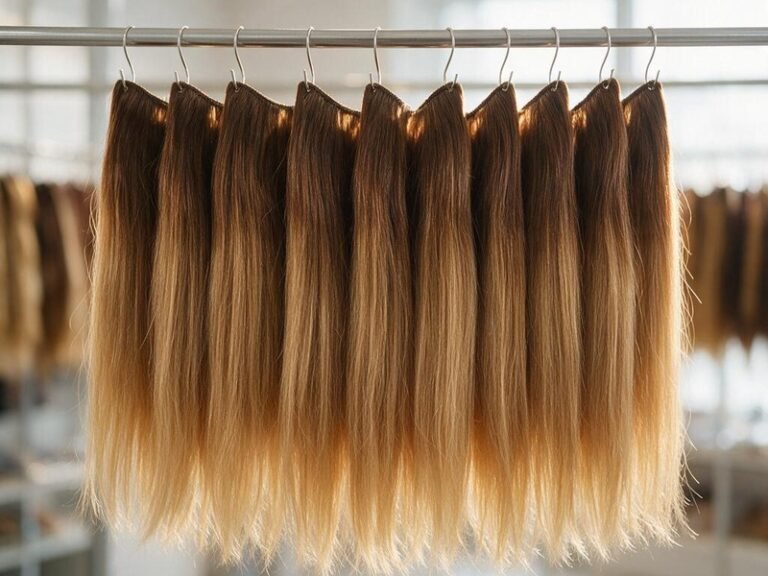
The easiest way to check density without fancy tools? Hold the weft or closure up to a bright light. If you can see straight through the base with zero effort, that density claim is inflated. You shouldn’t be able to see large gaps between tracks or thin spots along the weft line, even on 100% density pieces. Also, check the ends. A lot of suppliers will pack the root of the weft tight to look dense, then thin the ends out so much they look wispy after one wash. A truly dense piece will have a consistent thickness from root to tip, with only a tiny bit of natural taper at the very ends.
The gram weight mistakes that cost salon owners real money
We had a salon owner out of Atlanta call us last quarter, fuming, because she’d ordered 50 packs of tape-ins from a random supplier she found on Instagram for her bridal season rush. The listing said 50g per pack, 10 pieces per pack, enough for two half-head installs per pack. When they showed up? Each pack was 28g total, because the supplier counted the weight of the cardboard packaging and the release paper on the tape tabs. She had 17 bridal clients booked over three weeks, and she had to scramble to find replacement stock last minute, paying 30% more for rush shipping to make her appointments. That’s not a rare horror story.
Another common mistake? Assuming that higher gram weight always means better value. I’ve seen buyers jump on a “deal” for 150g bundles at $20 a pop, only to find out the hair is mixed with 30% synthetic fiber, so it tangles after one wash and melts when you hit it with a flat iron over 300 degrees. If you ever get a shipment and the weight feels off, don’t guess. Grab a cheap kitchen scale, tare it to zero, strip off all packaging and non-hair components, and weigh it. If it’s more than 5% off the listed weight, reach out to your supplier immediately. Reputable suppliers will have clear weight guarantees written into their ordering policies for exactly this reason, so buyers don’t have to wonder if they’re getting what they paid for. Also, don’t forget to account for cut direction. Remy hair that’s all aligned cuticle will feel heavier per strand than non-Remy hair that’s been stripped and coated in silicone, even at the exact same gram weight, because the cuticles aren’t catching and creating frizz that makes the bundle look thicker than it is. That silicone coating will wash off after 2-3 shampoos, and you’ll be left with a thin, tangly mess, even if the initial gram weight checked out.
Quick rules of thumb to use when you’re comparing listings
You don’t need a lab to vet a supplier’s specs, but there are a few quick checks you can run before you place a big MOQ order to avoid wasting money. First, ask for a short video of the supplier holding the weft or pack up to a window, running their fingers from root to tip, so you can see the thickness all the way down. If they refuse to send that, walk away. Second, always ask if the listed gram weight is net hair weight, not including packaging, clips, tape, or bonds. If they can’t answer that straight, or dance around the question, they’re hiding something. Third, remember that price correlates to real hair content. Honestly, if a supplier is selling 22 inch 100% virgin human hair bundles for $25 each, there is no way those bundles are actually 100g of 150% density Remy hair. The math doesn’t add up, even with the lowest factory labor costs in China.
For sample orders, always weigh the hair the second it arrives, before you wash it or test it with heat. That way you have hard numbers to reference if you decide to place a bulk order, and you can confirm the sample matches the specs listed for wholesale stock. A lot of suppliers send perfect, fully weighted samples to hook buyers, then ship skimpier stock for full orders, so keep your sample’s weight and density noted so you can compare when your big shipment arrives.
Quick answers to the questions we get every week
Should I always pick the highest gram weight and density available?
Nope. If your client has fine, thin natural hair, a 180% density set or super heavy 120g wefts will look fake and put too much tension on their natural strands, leading to breakage. Most of your everyday clients will be perfectly happy with standard 100g bundles and 130-150% density closures, and you can upsell thicker density for clients who specifically want that ultra-full look. Carrying only the thickest, heaviest hair will also eat into your profit margins, because you’re paying for extra hair most clients don’t actually want.
How much weight difference is a normal manufacturing variance?
Anywhere from 2-5g per pack or bundle is totally normal. Hair is a natural product, not injection-molded plastic, so you’ll never get every single bundle to hit exactly 100.0g down to the milligram. If a shipment is 10g or more light per pack, though, that’s not a variance—that’s a supplier cutting corners.
Do textured hair types weigh the same as straight hair at the same length?
Great question. Curly and coily textures will look thicker at the same gram weight as straight hair, because the curl pattern adds volume without extra weight. If you’re ordering curly hair, you can usually stick to the standard gram weights for each length, and you’ll get a fuller look than you would with straight hair of the same weight. Don’t let a supplier upsell you extra heavy bundles for curly installs unless you’re going for an over-the-top, ultra-voluminous style.
At the end of the day, these specs aren’t rocket science, but they are the fine print that separates a good order from a costly mistake. You don’t have to memorize every single number, but knowing the difference between net hair weight and packaged weight, and being able to spot a fake density claim, will save you hundreds (if not thousands) of dollars in misordered stock over time. If you’re ready to place an order and want to see exactly what we list for gram weights and density across every product line, you can browse all wholesale hair extensions to see spec lists posted front and center for every SKU, no fine print, no hidden weight tricks. If you have a question about a specific product’s specs before you order, shoot our team a message and we’ll send you unfiltered photos and videos so you know exactly what you’re getting, no surprises.
Send Us Your Hair Inquiry
Need bulk pricing, samples, or a private-label quote? Fill in the form and our team will get back to you within one business day.