Air Shipping Hair Extensions in Humid Climates: Preventing Mold
Last summer, we had a Florida-based salon owner call us panicking because 12 bundles of 22-inch straight weft she’d received had faint fuzzy mold along the folded weft edges, three days after delivery. It wasn’t a factory defect—we’d sealed the order correctly, but a combination of a 12-hour air freight tarmac hold, 92% humidity in the Miami cargo hold, and a tight plastic outer wrap trapped enough moisture to spark growth before she even opened the box. Air shipping hair extensions is faster than ocean, but that speed doesn’t make your order immune to mold issues when you’re shipping to or through sticky, humid weather zones.
Why mold hits air-shipped hair extensions faster than you’d think
Most buyers assume air freight holds are cold, dry, and totally sealed from outside weather. That’s only true for long-haul international flights at cruising altitude. Once the plane descends, sits on the tarmac, or transfers to a regional jet or last-mile delivery truck, temperature swings are wild, and humidity levels can spike 60% in an hour during summer storm season.
When hair leaves our warehouse, we dry it to a stable 8-10% moisture content, perfect for long-term storage and too dry to support mold growth. But if a package goes from 60-degree cargo hold air to 95-degree tarmac heat in 10 minutes, condensation forms on the inside of packaging, just like water beads on a cold soda can on a hot porch. Mold spores are everywhere—on cardboard, in air, on packing tape—and they only need 48 hours of trapped moisture above 12% on human hair (a protein fiber) to start colonizing. We see these issues pop up most on orders routed through Houston, Miami, or Atlanta cargo hubs between June and September; before we adjusted our packaging, roughly 1 in 40 orders hit minor moisture issues in those months.
The packaging mistake even experienced buyers make
The biggest misstep we see, over and over, is buyers requesting extra-thick, vacuum-sealed plastic wrap to prevent theft or tangling. It makes intuitive sense, right? Tighter seal = less chance of damage. But it’s the worst thing you can do for humid-climate shipments.
If even a tiny amount of moisture gets trapped during sealing, or seeps in through a pinhole when the package is exposed to humid air, that non-porous plastic locks it right against the hair cuticle and weft thread, with zero way to evaporate. We had a buyer last year who ordered 500 bundles of bulk hair for braiding and insisted we double-seal every 10-bundle pack in 6mm shrink wrap, no air holes. Half the order grew light surface mold by the time it reached her Atlanta warehouse, because the shrink wrap trapped condensation from two separate tarmac delays. We don’t honor that request anymore, no matter how many times a buyer asks.
Our standard humid-climate pack uses breathable acid-free tissue around each bundle, a thin plastic dust liner with 2mm pinholes every 3 inches to let moisture escape, and a corrugated outer carton with a moisture-absorbent sachet taped to the inner lid, held away from direct contact with the hair. Direct contact with desiccants can leave dry, brittle patches on color-treated hair, so we make sure there’s a 2-inch gap between the sachet and the top layer of bundles.
What we adjust in our warehouse for humid-season shipments
We don’t wait for problems to pop up to make changes. After that rough summer three years ago, we rewrote our packing SOPs for any order going to a high-humidity US destination between May and October, no extra charge to the buyer.
First, all hair gets a second 20-minute low-heat drying cycle two hours before packing, to make sure there’s no residual dampness deep in the weft threads or near the roots of bulk hair. We never pack hair right after washing or color processing—we let it acclimate to our warehouse’s controlled 45% humidity for 12 hours first, so moisture levels are even all the way through each bundle. We swap our standard 1g silica sachets for 5g clay desiccants for these shipments, too; they work better at high humidity levels and don’t leak powdery residue if they get fully saturated.
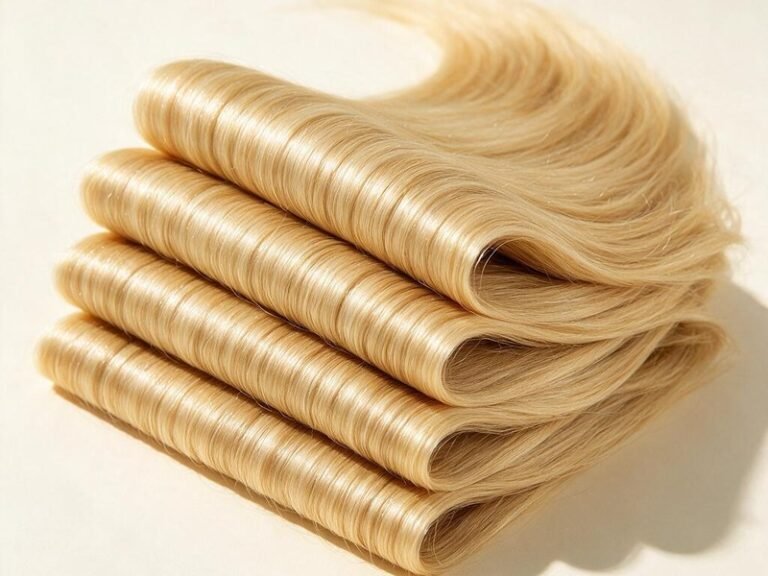
For customers ordering machine and hand-tied weft hair, we skip the tight fold we use for dry-season packing and roll bundles loosely instead, so air can circulate along the stitched edge. That stitched edge is where 90% of mold growth starts, because the cotton thread holds moisture longer than the hair itself. The tradeoff? Looser rolling makes cartons about 8% bigger, which adds roughly $0.15 per bundle to our air freight cost. We eat that cost, because replacing moldy orders, refunding shipping, and losing a repeat buyer is way more expensive.
Steps you can take on your end to cut risk
We can control what happens in our warehouse and how we pack orders, but once the package leaves our facility, there are small choices that make a huge difference in whether your order arrives in perfect shape.
If you’re placing an order between June and September that’s routing through a southern cargo hub, just drop a quick note in your order comments mentioning your local humidity levels—we’ll flag it for the humid-climate pack automatically, no upcharge. Skip signature-required delivery that forces the package to sit on a hot, sun-baked porch for days if you won’t be home; send it to a business address where someone can accept and open it within 24 hours. When you do open the carton, don’t immediately shove all the bundles into a sealed plastic bin under your salon sink. Pull them out, lay them flat on a clean dry towel for an hour to air out, even if they feel totally dry to the touch.
If you spot a faint musty smell right out of the box, don’t panic. Wipe the weft edges with a 50/50 mix of distilled water and white vinegar, lay them out to air dry completely in a cool room with a fan running for 4 hours, and the smell will dissipate before it ever turns to actual mold. If you find visible fuzzy mold on more than 10% of your order, don’t try to salvage it—reach out to us right away, and reference our process for filing shipping damage claims so we can get a replacement out fast.
Do these three quick checks the second you crack open a humid-season shipment:
- Sniff the weft line first, not the hair ends—musty odor shows up 2-3 days before visible mold
- Check the fold or roll points of every bundle, since those spots get zero air flow in transit
- Toss any desiccant packets immediately, don’t leave them sitting on top of bundles in storage
The mold myth that costs buyers unnecessary cash
We hear this one every summer: that paying for 2-3 day express air shipping is fast enough that mold can never grow. That’s not true. We’ve seen mold grow on a 2-day express shipment that sat in a delivery truck parked in direct 95-degree Florida sun for 8 hours, because tight plastic wrap trapped condensation from the fast temperature swing. Paying double for the fastest possible shipping doesn’t eliminate risk if your packaging is wrong, or if you leave the box sealed in a hot, steamy space for days after delivery.
Another common myth? That you need to shell out for climate-controlled air freight to avoid mold, which adds 35-40% to your total shipping cost. It’s not worth it for 95% of orders, as long as the packaging is set up correctly and you open the box within 48 hours. Save that premium upgrade only for orders over 200 bundles of very porous, level 10+ blonde hair, which holds moisture easier than natural dark hair. We’ve also had buyers refuse desiccant packets because they thought the clay would damage their tape-in hair extensions—the packets we use are non-toxic, have no chemical offgassing, and won’t break down tape adhesive as long as they’re not pressed directly against the tabs. Skip them, and you’re looking at a roughly 15% higher chance of moisture buildup on summer shipments, per our six years of tracking order issues.
Quick answers to the questions we get most
Can I salvage hair that has light surface mold?
If it’s just a tiny ¼-inch spot along the weft, and the hair shafts don’t smell musty all the way up to the tips, you can usually clean it with that diluted vinegar mix, shampoo and deep condition the hair, and let it dry completely before installing or reselling it. If the mold has spread to the hair shafts, or the musty smell won’t lift after a full wash, toss it. Mold spores can cause scalp irritation for your clients, and it’s not worth the hit to your reputation to cut corners.
Do I need climate-controlled storage for hair in humid climates?
Most of the time, no. You don’t need a fancy commercial storage unit unless your salon or warehouse space regularly hits 70%+ humidity for weeks at a time. Just keep bundles off concrete floors, away from bathroom sinks and shower steam, and store them in breathable cotton dust bags instead of sealed plastic bins, and you’ll be fine.
How long is too long to leave an air-shipped box unopened?
During peak humid summer months, 48 hours is the hard cutoff. After that, any trapped moisture has had enough time to start growing mold, even if the box looks totally dry and undamaged. In the dry winter months, you can get away with 4-5 days, but we still recommend cracking the box open to air out bundles as soon as you can.
At the end of the day, preventing mold on air-shipped hair isn’t rocket science—it’s just small, boring choices made at every step, from our packing station to your salon stock room. If you’re getting ready to place a humid-season order and have questions about packing, shipping timelines, or moisture protection, reach out to our sales team directly to note any special requests before your order ships. We’d rather adjust a pack for free now than deal with a moldy order headache with you later.
Send Us Your Hair Inquiry
Need bulk pricing, samples, or a private-label quote? Fill in the form and our team will get back to you within one business day.