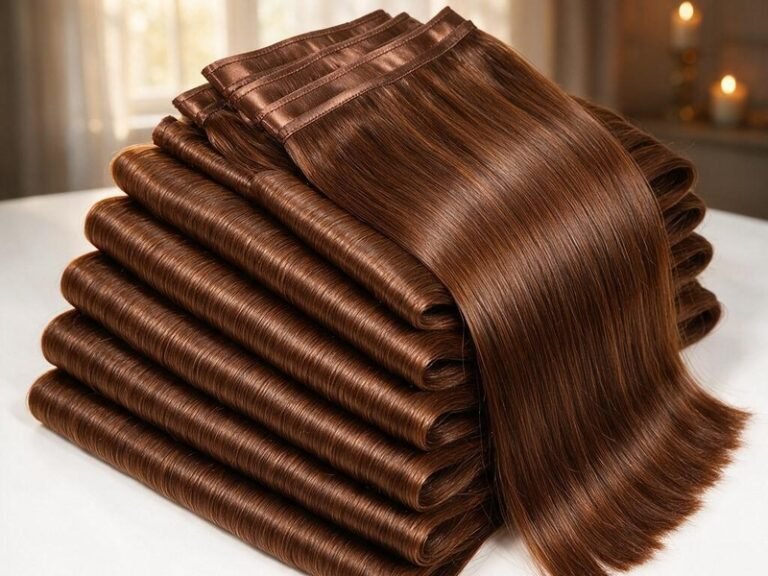
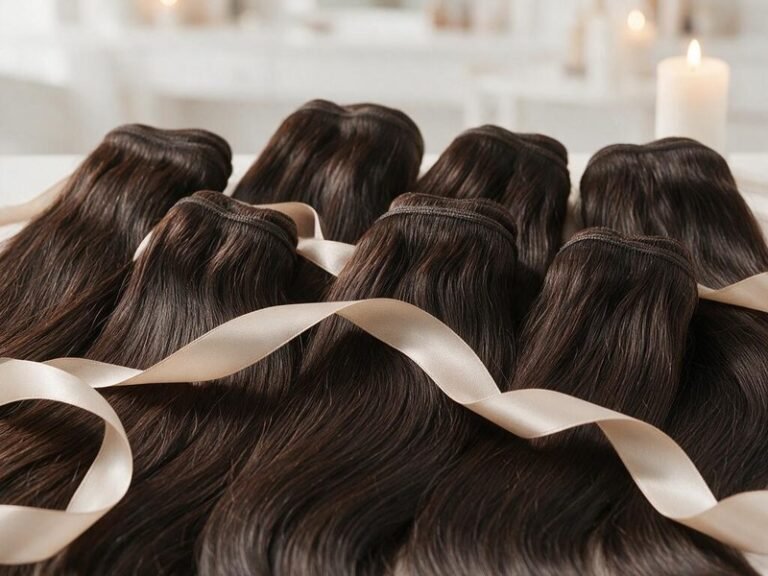
What Are Invisible Tape-In Hair Extensions?
If you’ve had a client beg for extensions that won’t show when they pull their hair up in a high ponytail, you’ve probably heard the term invisible tape-in hair extensions thrown around lately. We get dozens of emails a week from salon owners and resellers asking if these are just a marked-up gimmick, or if they actually deliver on that “no-show” promise, so we’re pulling back the curtain on what we see every day in our warehouse, no marketing fluff. We’ll cover how they’re made, who they work best for, the real downsides no one advertises, and what to look for if you’re adding them to your stock lineup.
What makes invisible tape-in hair extensions “invisible,” anyway?
It’s not some magic hair coating, and it’s definitely not the same as the “invisible bead” method you see stylists post about on TikTok. Regular tape-ins in our tape in hair line use a 1.5” wide, semi-rigid polyurethane tab, with hair machine-sewn straight across the top in a neat, uniform line. Each regular tab weighs about 2.5 grams, and the tape itself is usually a thick, glossy clear or white adhesive that holds firm but has enough bulk to show through if someone has super fine hair or pulls strands tight against their scalp.
Invisible tape-ins trim that tab down to 1” wide, use a softer, matte clear polyurethane that bends with the head’s natural curve, and have hair hand-tied directly to the top edge instead of machine-sewn to a thick fabric strip. Each invisible tab is only 1.5 to 2 grams, so they lay almost completely flat, even when placed within a quarter inch of the hairline. We’ve had stylists test these on clients with baby-fine 613 blonde hair, and there’s no telltale bump or plastic shadow when hair is pulled straight back. That’s the big sell.
Who are these actually best for?
Let’s get this straight first: invisible tape-ins are not for every client, and they’re not a one-size-fits-all stock pick for every shop. They shine most for people with fine to medium density hair, especially anyone who regularly wears high ponytails, slicked-back buns, or half-up styles that would expose extension tabs close to the hairline. They’re also a great pick for first-time extension clients nervous about people noticing their added hair, since the tabs don’t create that obvious “extensions are here” ridge you can feel running fingers close to the root.
If you serve a lot of clients with thick, coarse, or curly hair? Regular tape-ins usually give better hold and more length per piece, because the thinner invisible tab can slip faster if sandwiched between super thick, textured strands that shed heavily at the root. Resellers targeting college students, busy professionals, or anyone wanting low-maintenance length without a 4-hour salon appointment tend to move these faster than heavy, permanent extension options. If you’re used to recommending k-tips for that flat, natural look, it’s worth reading up on how tape-ins compare to k-tips to see which makes more sense for your client base.
The real downsides no ad will tell you about
We’d be lying if we said these were perfect, and we see too many suppliers market them as the end-all-be-all extension option without mentioning the tradeoffs. First: they don’t last as long per install as regular tape-ins. The thinner tab and gentler adhesive means most clients get 4 to 6 weeks of wear before they need a move-up, compared to 6 to 8 weeks for standard tape-ins. That’s not a flaw—it’s the tradeoff for that ultra-flat lay.
Second: you need more pieces to get the same fullness. A standard full head of regular tape-ins is 40 pieces (100 grams total), but a full head of invisible tape-ins is usually 50 to 60 pieces (75 to 90 grams total) because each tab holds less hair. That means your cost per full install is a little higher, so price that into your service menu or resale markup.
Third: they’re less forgiving for new stylists. If you place them too close to the root, or use too much hair in the sandwich between tabs, the thin edge can poke through or create a tiny visible line you wouldn’t get with a thicker, stiffer regular tab. We’ve had new stylists order 10 packs right out the gate, only to realize they need an hour or two of practice on a mannequin to get placement right. One more note: they don’t hold up as well to constant heavy oiling at the root. The matte tape breaks down faster if clients douse their scalp with castor oil or heavy leave-in daily, so set that expectation upfront before install.
What to look for if you’re stocking these for resale or your salon
We see a lot of junk invisible tape-ins hit the market right now, mostly because suppliers know they can mark up any thin-tabbed extension as “premium invisible” and charge 30% more without upgrading the hair quality. First, check the cuticle direction. The hair on the tabs should all be flowing the same direction, root to tip, so it doesn’t tangle or matte after a few washes. If you run your fingers up the strand from tip to root and it feels rough or catches, it’s processed cuticle-stripped hair that will turn frizzy after two shampoos.
Second, test the tape flexibility. A good invisible tab will bend completely in half without cracking or leaving a white crease in the polyurethane. If it’s stiff and snaps when you bend it, it’s just a cut-down regular tape tab being sold as invisible, and it will create that bump you’re trying to avoid. I’d suggest ordering a sample pack first to test the tab flexibility and hair feel before you place a full bulk order, especially if you’re trying a new supplier for the first time.
Third, don’t sleep on remy quality. A lot of suppliers use non-remy hair on invisible tabs to cut costs, because they assume clients will be too focused on the flat lay to notice the tangling. We go into way more detail on minimum order quantities, price tiers, and quality checks in our wholesale tape-in buying guide, but the short version is: you don’t need to pay top shelf price for virgin hair if your clients only wear extensions for special occasions, but you should never stock invisible tape-ins with cuticle-stripped hair, no matter how cheap the per-pack price is.
If you’re trying to decide how much of each to keep in stock, here’s the quick breakdown we give all new wholesale accounts:
- Regular tape-ins: Better for thick/coarse hair, longer 6-8 week wear, lower cost per full head, great for clients wanting maximum fullness
- Invisible tape-ins: Better for fine/medium hair, shorter 4-6 week wear, no visible tabs for updo styles, ideal for first-time extension clients
You don’t have to pick one or the other, either. Most of our salon clients keep both in stock, and mix pieces for clients who want invisible tabs around their hairline and regular tape-ins underneath for extra fullness.
Quick questions we get all the time
Can clients reuse invisible tape-in extensions?
Yep, same as regular tape-ins, as long as the hair is good quality. When you do a move-up, apply new replacement tape to the clean tab, and you can usually reuse the same pieces for 2 to 3 installs total, same as standard tape-ins. Just don’t use acetone to clean the tabs, because it will break down the thin polyurethane faster than regular tabs.
Do these work on curly or coily hair textures?
They can, but match the texture exactly, and place them a little further from the root to account for natural hair shrinkage. The thinner tabs don’t grip as tight to tightly coiled hair, so most stylists we work with use a tiny dot of extra extension glue along the tab edge for extra hold on 3c to 4c textures.
Are these more expensive than regular tape-ins?
On average, they run about 15 to 20% more per pack than regular tape-ins of the same hair quality, because the hand-tying process for the tabs is more labor intensive for factories. If a supplier is charging double for “invisible” tape-ins, you’re paying for marketing, not a better product.
At the end of the day, invisible tape-ins aren’t a gimmick, but they’re not a magic solution either. They’re a specialized tool that solves a really specific problem for clients who want undetectable length without the time commitment of more permanent extension methods. If you’re ready to browse options, or want to double check shipping times, MOQ details, or return policies before placing a bulk order, you can flip through our frequently asked questions for the quick answers most buyers need before they reach out.
Send Us Your Hair Inquiry
Need bulk pricing, samples, or a private-label quote? Fill in the form and our team will get back to you within one business day.