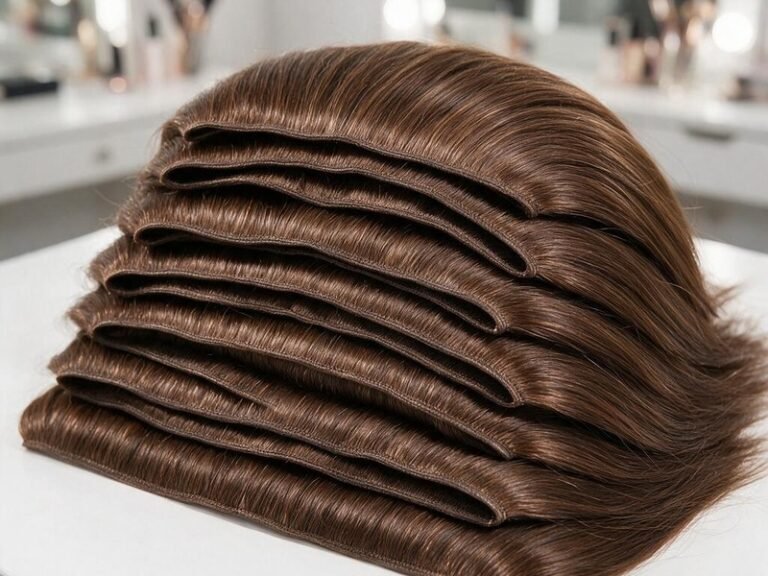
Bulk Hair vs Weft Hair
If you’ve spent 10 minutes browsing hair extension stock, you’ve seen the two terms pop up over and over, often with zero clear explanation of how they’re different, or which one you actually need for your clients. We’ve packed thousands of orders of both in our warehouse over the last 8 years, and we see new buyers order the wrong one at least once a week, usually because a random social media reel made one sound like a universal fix for every service. This isn’t a glossy marketing comparison—this is what we actually tell our regular clients when they’re trying to decide which to stock, including the tradeoffs no one posts about.
The basic difference no listing spells out clearly
First, let’s skip the marketing fluff. Bulk hair is loose, unstitched human hair, sold purely by weight (most of our bundles are 100g each, though you’ll see 50g and 200g options for specialty textures). There’s no track, no stitching, no adhesive strip—just aligned cuticles bundled tight at the top with a small rubber band for shipping. If you want a deeper refresher, we put together a full guide on what bulk hair means for new buyers a few months back. Weft hair, by contrast, is stitched (we never stock the glued, low-grade versions that shed after one wash) onto a thin, sturdy track at the top. Those tracks are what you sew in, clip in, or use to build quick weaves; every bundle has a fixed width of track, usually around 10-12 feet of total track per 100g bundle depending on texture. Curly and kinky textures have slightly shorter total track length, because the curls take up more linear space on the stitching line.
What each one is actually built for
We see this mix-up every single week. Bulk hair is made for jobs where you need individual, loose strands: knotless braids, box braids, boho braid accents, loc extensions and repairs, and hand-tied ventilating work for custom wigs or lace pieces. If you’re a braider who does 15+ braid sets a month, 90% of your non-synthetic stock is going to be bulk hair for braiding. If you’re building custom units from scratch with hand-tied knots, we wrote a full breakdown of bulk hair for wig making that walks through texture matching and weight calculations so you don’t overorder. Weft hair is made for track-based applications: traditional sew-in installs, quick weaves, wig making where you sew tracks onto a cap, and beaded row installs. If you primarily do sew-ins and quick weaves, your core stock will be machine-tied weft hair. You can cut a weft into smaller pieces for micro-bead work, but you can never separate it into single strands without shedding everywhere.
Quick story: last month a new braider in Atlanta ordered 12 bundles of straight weft for a week of knotless braid appointments, because the per-bundle price was $2 lower. She called us Wednesday afternoon, frustrated out of her mind, because she’d spent 2 hours trying to pull strands off the weft for her first client and ended up with a lap full of loose shed hair. We rushed her a bulk order for next-day delivery, but she lost two client slots and a chunk of change in rush shipping. Don’t be that person.
Cost, MOQ, and lead time differences you can actually plan around
Let’s get into the numbers, because that’s what actually matters when you’re placing a wholesale order to stock your shop. Right now, for 12A grade virgin cuticle-aligned hair, straight texture 18-inch: bulk runs roughly $72 per 100g bundle, while the same exact hair in machine weft form runs $68 per 100g bundle. The price gap is small for tiny orders, but if you’re ordering 50 bundles a month, that’s a $200 difference, which adds up fast over a year. Why the gap? Wefting is a mostly automated factory step now, so it takes less hands-on labor to finish a weft bundle than it does to sort and align loose bulk hair so every strand runs the same direction with no short pieces mixed in.
MOQs are almost identical for both, at 1 bundle per texture/length for regular in-stock orders, but if you’re ordering custom colored or custom textured hair, bulk has a slightly higher MOQ (5 bundles per color vs 3 for weft) because the loose strands are harder to rinse evenly without tangling during the color process. Lead times are the same for in-stock items (2-3 business days to pack and ship from our warehouse, 5-7 days express to most US addresses), but custom bulk orders take 2-3 extra days because our quality team has to check for misaligned strands that would cause tangling for braiders.
One big downside of bulk we don’t see anyone mention: it’s way easier for unethical factories to sneak in short filler hairs in bulk bundles, because there’s no stitched track holding the roots in line. We check every bulk bundle for filler by running a wide-tooth comb from root to tip before it ships, but if you’re ordering from a random supplier with no in-house quality checks, you might open a 22-inch bulk bundle and find 30% of the strands are only 12 inches long. I’d suggest ordering a single sample bundle first if you’re testing a new supplier, so you can vet quality before placing a full stock order. Weft bundles are harder to fake that way, because every strand is secured in the track, so you can measure right from the stitch line to confirm length before you use it.
Shedding, tangling, and longevity: the real performance gap
Here’s the part that surprises most new buyers: if both are cuticle-aligned, same grade, and installed correctly, they last 12-18 months for clients with proper care. The difference is how easy it is to mess up an install and cause unnecessary shedding or tangling. Weft hair is way more forgiving for new stylists. As long as you don’t cut straight across a track without sealing the edge, tracks hold strands tight, and shedding is minimal even if you’re a little rough during installs. The big risk with weft is lumps or bulk if you stack too many tracks on one row of braids, which can leave clients with that obvious “wiggy” look around the crown that everyone hates.
Bulk hair is less forgiving. If you’re braiding too tight, or pulling strands at weird angles, you’ll get friction tangles at the root way faster, especially for clients who wait 8+ weeks between maintenance appointments. Bulk also sheds more during the first install, because the loose rubber band holding the bundle together for shipping lets the shortest, properly aligned strands slip out before you even start braiding; that’s normal, not a defect, but it freaks out a lot of new stylists who think they got a bad batch. Quick side note: if you’re comparing curly and kinky textures, the price gap flips a little. Curly bulk is usually $2-$3 cheaper per bundle than curly weft, because the coily texture hides small alignment issues that would be obvious on straight hair, so the factory sorting step is faster.
If you’re still on the fence mid-order, ask yourself these three quick questions before you check out:
- Am I primarily doing braiding, loc work, or hand-ventilated custom pieces? Go bulk.
- Am I primarily doing sew-ins, beaded rows, or machine-made wigs? Go weft.
- Am I trying to offer both service types? Stock 70% of your most requested length in the service you do most, and 30% in the other, so you don’t tie up cash in slow-moving stock.
Quick answers to the questions we field nonstop
Can I use bulk hair for a sew-in install?
Technically yes, but you’ll hate every minute of it. You can make custom wefts with bulk hair using a sewing machine or weft glue, but it takes hours of extra work, and the finished track will be bulkier and more shed-prone than pre-made weft. It’s not a shortcut, and it’s not cheaper once you count labor time. The only exception is custom colored units for long-time clients who need a perfect color match you can’t get in stock weft.
Can I use weft hair for braids?
We covered this earlier with the Atlanta braider story, but it bears repeating: no, not unless you’re using tiny cut pieces as loose boho braid accents. If you try to pull individual strands off a weft for full box braids or knotless braids, you’ll be there all day, you’ll waste half the bundle to shed, and the finished braids will have stiff, lumpy spots where bits of the stitched track get caught in the braid. Save yourself the headache and just order the right product the first time.
Which one moves faster for shop resale?
It depends on your core customer base, but weft hair tends to move faster for general resale to DIY clients, because most at-home users don’t know how to work with loose bulk for braiding, and they’re usually looking for hair to make quick wigs at home. That said, if your audience is mostly local braiders and stylists, bulk will fly off the shelves faster, especially in boho loose wave and deep wave textures. If you’re not sure what your customers want, start with 10 bundles of each in your top two selling lengths, track what sells out first, and adjust your next order accordingly. If you have questions about restock times or custom order minimums, you can always check our frequently asked questions page for the fastest answer.
At the end of the day, there’s no “better” option between bulk hair and weft hair—they’re built for totally different jobs. The worst mistake you can make is ordering the wrong one because you saw a viral video claiming one works for every service, or chasing a $2 per bundle discount that leaves you scrambling to reschedule a full week of client appointments. If you’re ready to restock, you can browse all our in-stock textures and lengths any time, and our team is always here over email if you need help calculating how much you need for an upcoming busy season, or if you want to test a sample bundle before placing a larger order.
Send Us Your Hair Inquiry
Need bulk pricing, samples, or a private-label quote? Fill in the form and our team will get back to you within one business day.