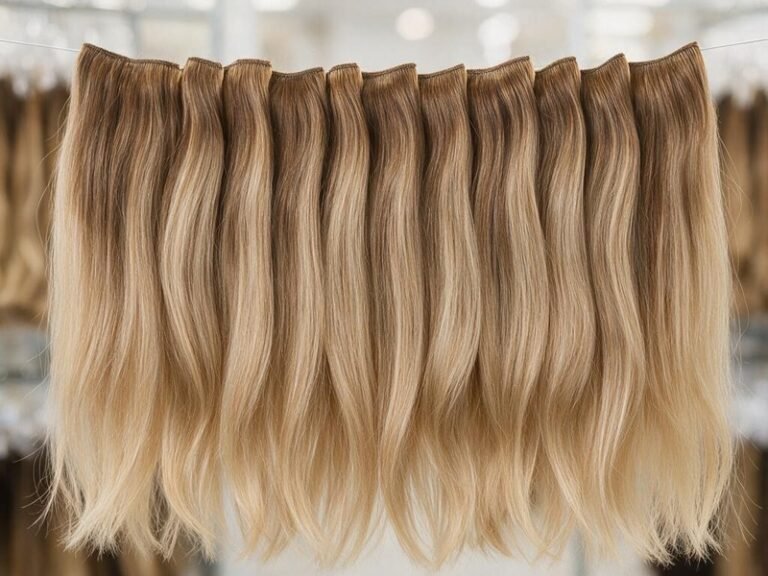
How to Start a Hair Extension Business
If you’ve spent any time around salons, braiders, or even beauty TikTok, you’ve probably noticed hair extensions aren’t a niche trend anymore—they’re a steady, high-margin product that people come back for every 6 to 12 weeks, no matter the economy. We’ve watched hundreds of new vendors launch from our warehouse over the last 10 years, and we’ve seen just as many crash and burn in their first 6 months because they skipped the boring, unglamorous prep work before posting their first reel. This isn’t a get-rich-quick playbook; it’s the real, no-fluff steps for anyone figuring out how to start a hair extension business, straight from the people who pack your orders and fix ordering mistakes before they hit your door.
The first step to start a hair extension business? Pick your actual customer
Most new vendors reach out to us ready to order every texture, every length, every install type under the sun, and that’s the fastest way to tie up all your cash in dead stock. Let’s be real: you can’t serve the 20-year veteran salon owner who does 10 k-tip installs a week, the weekend festival goer looking for 22” neon clip-ins, and the local braiding shop that goes through 50 lbs of loose bulk a month, not when you’re first starting out. Pick one core group first. If you’re a braider yourself, you already know exactly what your peers complain about—matting ends, incorrect weight per bundle, hair that melts when dipped in hot water. If you work front desk at a salon, you know how many clients ask for low-maintenance installs that don’t damage their natural hair. If you’re selling online to strangers, pick one niche first: maybe curly hair for 3c-4a textures, or affordable bundles for first-time extension wearers. You don’t need $10k to launch. Most of our successful new vendors start with $800-$1,200 in initial inventory, targeted straight to the group they already know.
Don’t blow your first budget on logo design and branded packaging
We see this every month. A new buyer places a $500 sample order, then drops $1,500 on custom satin bags, embossed boxes, a fancy website with all the bells and whistles, and 500 business cards before they’ve even sold a single bundle. Don’t do that. Your first 50 customers don’t care if your shipping mailer has a gold foil logo. They care if the hair doesn’t shed, if the color matches what you showed them, and if you answer their texts when they have a question about install. Allocate at least 70% of your startup budget to actual inventory, 15% to basic payment processing and a simple social media profile, and the remaining 15% to shipping supplies and a tiny buffer for returns or wrong orders. You can upgrade packaging once you have consistent reorders, I promise. If you’re nervous about tying up too much cash in inventory upfront, our guide to small batch hair extensions walks through minimum order sizes that let you test products without taking out a small loan.
Pick your core products before you reach out to suppliers
This ties back to knowing your customer. If you’re primarily selling to local braiders, you don’t need 20 shades of tape-ins right out the gate. You’ll want to stock bulk hair for braiding in the most popular lengths (18”, 20”, 24”) in natural black, dark brown, and a few highlighted blends first. If you’re partnering with local salons that do low-damage installs, tape-in extensions in standard solids and a few balayage options will be your top seller, plus a small selection of wefts for sew-in clients.
Don’t fall for the hype of “100% single-donor virgin cuticle hair” as your only offering. That hair runs $80-$120 per bundle at wholesale, and most customers don’t want to pay that markup for an install they’ll only wear 8 weeks. Offer a good/better/best tier for every budget: a value 100% human hair blend for price-sensitive shoppers, a mid-tier remy option for regular wearers, and premium virgin hair for clients who want to reuse it for 6+ months. Be honest about downsides: the value tier tangles a little faster without regular moisture, the premium tier needs careful home care to last, no hair looks good if a client skips maintenance appointments. Your initial stock doesn’t have to be complicated. We’ve seen new vendors launch successfully with three common starter sets, depending on their core customer:
- Braiding supply starter stock: 10-15 lbs of bulk human hair, 3-4 popular lengths, natural shades only, ~$900 initial investment, average 50-60% profit margin
- Salon partnership starter stock: 20 packs of tape-ins, 10 bundles of machine wefts, color ring for custom orders, ~$1,200 initial investment, average 70-80% profit margin
- Direct-to-consumer social media starter stock: 8-10 bundles of mid-tier remy in the most trending textures (body wave, deep curly), 5 packs of clip-ins, ~$700 initial investment, average 65% profit margin
Picking the right products is half the battle, but none of it matters if you work with a supplier that sends you mismatched shades, ships orders 3 weeks late, or ghosts you when a batch has shedding issues. We wrote a full guide on how to vet wholesale hair suppliers to avoid those exact headaches, but the short version is: always order samples first, test the hair yourself by washing, heat styling, and even coloring it, and don’t pick a supplier solely because they have the lowest per-bundle price.
Price your products so you actually make money, not just match other vendors
I can’t tell you how many new vendors match a competitor’s $60 bundle price without doing a single cost calculation. That’s how you end up working 20 hours a week for $2 an hour. Factor in every real cost: wholesale product price, shipping to you, supplies, payment processing fees (usually 2.9% + 30 cents per transaction), ad spend, even the free edge control you throw in with orders. A good rule of thumb for new vendors: mark up core products 2x to 2.5x your total landed cost. If a bundle costs you $35 wholesale, plus $2 shipping, plus $1 in fees, your total cost is $38, so price it between $76 and $95 retail. Don’t underprice yourself just to get sales. Customers who chase the cheapest price will leave the second someone undercuts you by $5, and they’re the most likely to complain about tiny issues to get a free refund. It’s better to have 20 repeat customers who trust your quality than 200 one-time bargain hunters. Don’t forget to account for waste: bundles for content, damaged stock, products given to local creators for reviews. Build that into your pricing too.
The questions I get from every new vendor, answered
Do I need a business license to order wholesale?
For most suppliers, including us, you don’t need a full LLC on day one for a small initial order, but you will need one to scale past a side hustle, open a business bank account, or file taxes correctly. If you’re just testing the idea, you can start as a sole proprietor, but don’t skip setting aside 25-30% of every sale for taxes—so many new vendors get hit with a giant tax bill their first year because they forgot that part. If you have questions about order minimums, shipping times, or wholesale return policies, check our FAQ page for fast answers.
How long does it take to get my first sale?
It depends. If you already have a built-in network from doing hair, posting about beauty, or being part of local beauty communities, you might make your first 5 sales the week you post your inventory. If you’re starting from scratch with no audience, it might take 4-8 weeks of posting consistent content, answering questions, and showing off the actual hair (not just supplier stock photos) to get your first sale. No magic tricks here. Post real videos of you running your fingers through the hair, washing it, showing how it holds a curl, be honest about what it can and can’t do, and people will buy.
What’s the most common mistake new vendors make?
Ordering too much of the wrong inventory. We see people blow their entire budget on 30” pastel pink bundles because they saw one viral video of someone wearing them, only to find out no one in their local market wants to pay for that length or that shade. Start small, reorder the products that sell out fast, and don’t get caught up chasing viral trends that don’t align with what your core customer actually buys.
Starting a hair extension business isn’t rocket science, but it does require showing up consistently, being honest with your customers, and not cutting corners on the product itself. You don’t need a huge following, a fancy storefront, or tens of thousands of dollars in startup cash to make it work. Most of the vendors we work with who now pull in consistent six-figure revenue started out of their spare bedroom, selling to friends and coworkers, one bundle at a time. If you’re ready to pick out stock for your first order, browse our available lines to find textures and lengths that fit your niche, and reach out any time if you need help narrowing down what to buy first.
Send Us Your Hair Inquiry
Need bulk pricing, samples, or a private-label quote? Fill in the form and our team will get back to you within one business day.