Wholesale Hair Buyer Guide for Braiders Starting Retail Sales
Start with one or two hair types clients already ask for, buy a small wholesale test lot, and price for at least a 50% gross margin. This wholesale hair buyer guide for braiders covers what to order, quality terms, and where new sellers lose money.
What should braiders sell first?
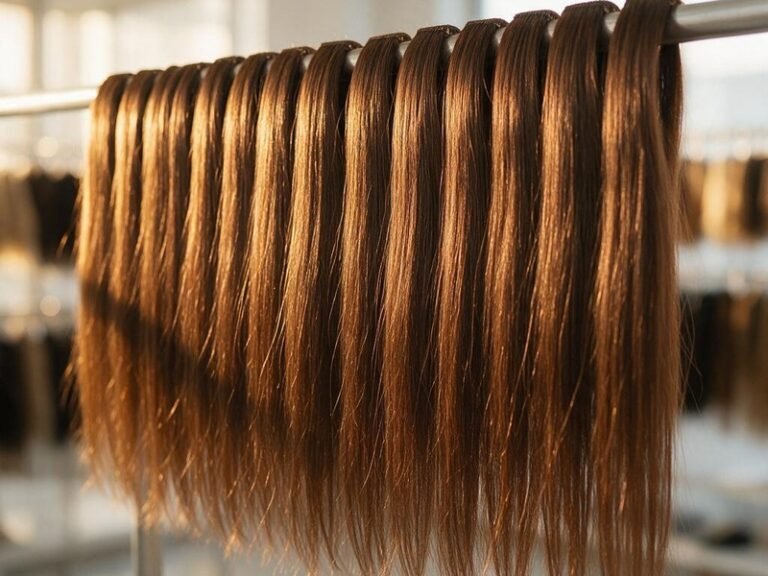
If clients already bring hair, start there. Most begin with bulk hair for braiding, loose hair sold by the bundle or ounce instead of on a track. Add weft hair only for sew-ins; a weft is the stitched track extensions are sewn onto. Don’t open with ten textures and five colors. Pick one texture, one wave pattern, four lengths, then expand after sales prove demand.
How much wholesale hair should a braider buy first?
Order enough for 8 to 12 clients, not a showroom. That usually means 10 to 15 bundles or 1 to 2 kilograms of bulk hair in 14 to 20 inch lengths. Stock suppliers often allow low mixed minimum order quantities, or MOQs; cheap factory quotes may require 50 to 100 pieces per length or texture. Check bulk hair amounts by style so you don’t run out mid-install. Stock takes 7 to 15 business days; custom colors and extra-long lengths can take three weeks.
What do virgin, Remy, and cuticle aligned mean?
These labels get used loosely, so ask before paying for a word. Virgin hair is unprocessed human hair—no perm, color, or bleach—and usually costs more because it can be reused. Remy means cuticles face one direction, reducing tangles, though hair may still be lightly processed. Cuticle aligned means outer layers point from root to tip, helping prevent matting after washes. Non-Remy hair can look good new but tangle quickly, so don’t sell it as premium.
How do you price retail hair without scaring clients off?
Start with landed cost: wholesale price plus shipping, duties, packaging, and payment fees. Target a 50% to 65% gross margin; doubling a $28 landed cost to $56 gives about a 50% margin. Clients pay for convenience, honest labeling, and hair they can carry home today. Don’t beat random online listings; beat them by matching hair to the style you install. Clean labels and satin bags add value, and these retail packaging ideas cost less than discounting.
What do you check before hair goes home?
- Verify grams, length, and texture at delivery.
- Reject hair with harsh smells, mold, or piles of short loose hair.
- A few flyaways are normal; immediate matting is not.
- Match wave patterns so one head doesn’t show two textures.
- Include care instructions: gentle washing, satin sleep protection, and little heavy oil.
- Mark landed cost and retail price on every item for smarter reorders.
FAQ
Do you need a license to buy wholesale hair?
Many suppliers ask for a business registration, EIN, or resale certificate, though some stock suppliers sell small orders to licensed braiders. Use your business email and keep licenses current. Wholesale pricing doesn’t automatically make purchases tax-exempt.
Can one order mix lengths and textures?
Stock suppliers often allow mixed lengths within an MOQ, but factory orders usually require minimums per texture, color, and length. Get the policy in writing before paying. For testing demand, flexible stock is safer than made-to-order hair.
Pick two products your next ten clients ask about and order enough for three to four weeks. Browse current hair extension stock, note your lengths and textures, then contact us with a test order.
Send Us Your Hair Inquiry
Need bulk pricing, samples, or a private-label quote? Fill in the form and our team will get back to you within one business day.