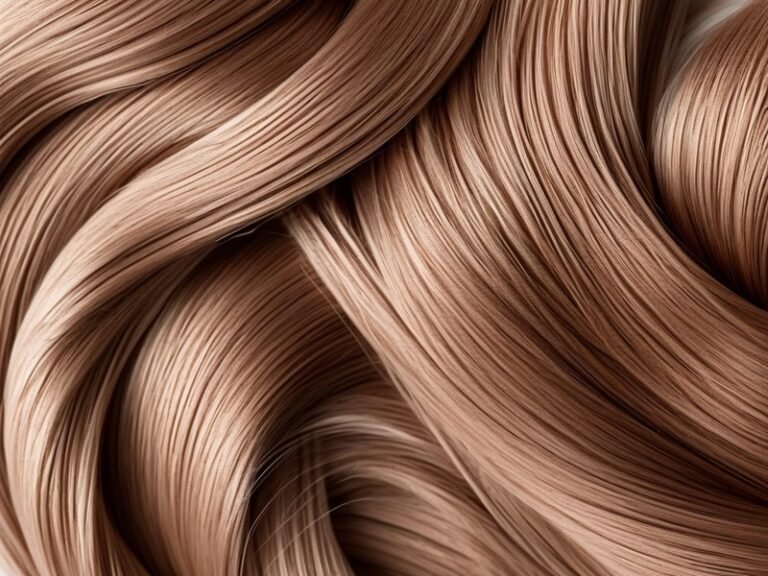
What Is the Hair Cuticle: Expert Tips & Common Mistakes
The hair cuticle is the thin, protective outer layer of each hair strand, made of overlapping scale-like cells that point from root toward tip. For extension buyers, the direction, condition, and treatment of that cuticle directly decide tangling, shedding, shine, wash life, and whether a salon client gets a good install or a matted mess.
A lot of listings use terms like virgin hair, Remy, raw hair, and cuticle aligned hair as if they mean the same thing. They do not. This guide explains how the cuticle works, what buyers should inspect, and where wholesale orders usually go wrong.
What exactly is the hair cuticle?
A human hair shaft has three basic layers. The cuticle is the outside layer, the cortex is the thick inner part that gives strength and color, and the medulla is a softer central channel found in some hair types. You cannot inspect the cuticle clearly with the naked eye, but you can see the results of a healthy or damaged one very quickly.
Healthy cuticles lie flat and overlap like shingles on a roof, running from the root end to the tip end. When all the hairs in a bundle face the same root-to-tip direction, the hair is called cuticle aligned. That matters because cuticle scales catch against one another if some strands are flipped upside down.
A closed, intact cuticle reflects light better, resists moisture loss, helps prevent matting, and usually tolerates washing and heat styling more predictably. A lifted, stripped, or badly processed cuticle looks dry, feels rough, soaks up product quickly, and can become frizzy after one wash. This is why two bundles labeled “100% human hair” can perform completely differently.
For sourcing, do not stop at material claims. Human hair can still be low-quality if the cuticles are removed, coated, mixed, or facing both directions. The better question is: “How was the hair collected, sorted, aligned, and processed?”
Is cuticle aligned hair the same as Remy, raw, or virgin hair?
No. These terms describe different things, and suppliers sometimes mix them loosely in quotations, packaging, and marketplace listings. A clear definition helps prevent chargebacks and awkward salon conversations.
Remy hair means the hair was collected and kept with the cuticle direction mostly aligned. In practice, quality varies. Some Remy hair is lightly processed; some is heavily steamed or dyed. Remy should mean root-to-tip alignment, but the label alone does not prove it.
Virgin hair means hair that has not been chemically processed with perming, relaxing, dyeing, or bleach. It should still have its natural cuticle, but “virgin” does not automatically mean every strand is perfectly aligned. Poor collection or careless machine wefting can still create direction problems.
Raw hair usually means unprocessed or minimally processed donor hair with the natural cuticle intact. It often comes in tighter texture groupings, has less uniform color, and may require more careful texture matching. Raw hair is not automatically flawless; it can still include split ends, gray hairs, short hairs, inconsistent donors, or poor workmanship.
Cuticle aligned hair is the performance description buyers should focus on. It says the scales run in the same direction. That can be raw, virgin, or correctly processed hair. For example, a colored tape-in can still be cuticle aligned if the hair was root-direction sorted before coloring and manufacturing.
Why does cuticle direction cause tangling and matting?
Tangling happens when cuticle scales catch. If one hair points root-to-tip and another points tip-to-root, the opposing scales act like tiny hooks. Brushing may temporarily separate them, but movement, washing, humidity, and product buildup make the problem worse.
The first sign often appears after the client washes the hair. A silicone coating can make a bundle feel slippery when new, even if the cuticles are mixed or damaged. After a few shampoos, that coating washes away and the hair starts knotting at the nape, around the weft holes, or near the ends.
Cuticle friction also creates false quality signals. Hair that feels ultra-soft in the bag may be coated rather than healthy. Hair with a slightly natural grip, especially curly and coily textures, may be perfectly good. Judge the hair after washing, drying, and running your fingers from root to tip and tip to root.
Keep in mind that not all tangling is a cuticle problem. Neglect, deep conditioner on roots, poor sectioning during braiding, chlorine, heavy oil, cheap shampoo, or leaving a curly install untouched for too long can tangle even good hair. But if clean, wet hair locks up repeatedly in multiple bundles, suspect alignment or overprocessing.
How do factories damage the hair cuticle?
Every processing step has a trade-off. Bleach lifts color by opening the cuticle and changing the inner cortex. The lighter the blonde, the more stress the hair receives, especially when dark donor hair is lifted to 613 or pale platinum. A factory can reduce damage with controlled formulas, timing, washing, and acid treatments, but it cannot make heavily bleached hair identical to unprocessed black hair.
Harper dyeing, repeated perm baths, high-temperature steaming, aggressive combing, and poor drying can lift, crack, or strip cuticles. Curly textures often rely on steaming or setting to create consistent patterns. Done carefully, that is normal production. Done too hot or too long, the hair becomes dry, brittle, and prone to frizz once styled.
Some lower-grade hair is acid-washed to remove cuticles. Removing the cuticle reduces opposing-scale tangling, but it also weakens the hair and removes its natural protection. Factories may then add silicone or synthetic softeners to make the hair feel smooth. The result can look attractive on arrival but becomes dry or sheds heavily after washing.
Mixed hair is another common issue. Animal hair, synthetic fibers, fallen hair, floor hair, or short filler hair can be blended into cheaper bundles. Mixed material is harder to style, responds oddly to heat or color, and may feel different after washing. If a price seems too low for long lengths or heavy densities, ask for weight, donor source, grade clarity, and batch photos rather than trusting a premium label.
What should B2B buyers check before placing a hair order?
Start with samples, not marketing words. Order the same texture and length you plan to sell, then wash and air dry the sample before judging it. Test from top to bottom, check the weft, seal, and elasticity, and compare multiple bundles from the same batch. One perfect sample does not guarantee a consistent wholesale line, but a poor sample tells you enough.
- Direction test: Hold a small section and run fingers from root to tip, then tip to root. Opposite-direction strands may feel catchier or push against the hand. This is not a replacement for factory control, but it helps.
- Wash test: Shampoo gently in lukewarm water, condition from mid-strand to ends, air dry, and comb with the proper tool. Excess tangling after washing is a red flag.
- Coating check: Heavy slickness, a strong oily smell, excessive slip, or sudden dryness after one wash can point to temporary coatings.
- Shed check: A few loose hairs are normal from new wefts. Repeated pulling from track stitching, wide holes, or thin weaving means a construction problem.
- Length and weight: Confirm bundle weight, often 100 grams for standard bundles, and understand that curly hair looks shorter when pulled tight. Ask whether length is measured straight.
- Processing level: Ask if the hair is natural color, dyed, bleached, steamed, permed, or texture-set. Blonde, colored, and curly units need realistic care expectations.
- Construction: Inspect machine weft, hand-tied weft, closure, frontal, tape tabs, k-tip bonds, or cap construction. A good cuticle cannot fix bad stitching or weak adhesive.
A few definitions help during purchase discussions. A weft is hair sewn into a track used for weave installs. Bulk hair is loose hair without a weft, often used for braiding or making bonds. A closure is a small lace or silk base, usually 4×4 inches, used to close a sewin. A frontal runs across the hairline, commonly ear to ear. Tape-in extensions use sandwich tabs, while k-tip extensions use keratin bonds. An install is the professional application method used to attach the hair.
Ask suppliers how they control root direction and what happens if a batch tangles after washing. A dependable factory should be able to discuss collection, sorting, washing, processing, wefting, and quality inspection without relying only on grade letters. Grade labels like 9A or 10A are not universal standards, so do not treat them as proof of cuticle quality.
What common cuticle mistakes make buyers lose money?
The first mistake is buying by softness alone. New hair can be made to feel soft with wash-off coatings, but good cuticle aligned hair should remain manageable after shampoo and conditioning. Test the product the way an end client will use it, not just the way it arrives in plastic.
The second mistake is expecting raw hair to behave like manufactured hair. Raw hair can have natural variations in luster, curl pattern, thickness, and end fullness. That is normal. If your brand promises every 22-inch curly bundle has an identical pattern and mirror shine, you may be setting yourself up for complaints or pushing your supplier toward heavier processing.
The third mistake is overpromising blonde and colored hair. Bleached 613 hair, light brown tape-ins, pastel units, and heavily highlighted frontals require more careful handling than natural black hair. They can still be sellable and beautiful, but clients should use lower heat, moisturize regularly, avoid repeated bleach, and brush gently.
The fourth mistake is ignoring product type. Cuticle quality matters in every line, but handling differs. Closures and frontals can overbleach easily at the knots, creating shedding or slippage. Thin hand-tied wefts should not be cut unless the manufacturer approves it. K-tip and tape-in quality depends not only on hair but also on bond formula, tab thickness, and installation technique.
The fifth mistake is poor reorder controls. If you approve a sample, keep the batch label, length, texture, processing notes, and density. Density refers to how much hair is in a unit or row; higher density means more hair, not automatically better hair. Reorders should match donor type, color range, curl setting, and workmanship, not just a product name.
How can salons and resellers protect clients after purchase?
Good hair still needs realistic maintenance. Tell clients to detangle from the ends upward, wash in a downward motion, and avoid scrubbing curly or long extensions in a pile on the head. Sulfate-free shampoo is commonly used because strong cleansers can dry processed hair, but the bigger issue is usually rough handling, heavy product buildup, or skipped conditioning.
Conditioner should go from the mid-strand to the ends, not directly over tapes, bonds, braids, knots, or the root area of a sew-in. Leave-in conditioner and light styling products are useful for curly textures, but heavy oils and gels can trap dirt and create tangling. Clients should sleep with a silk or satin covering and let bonded or taped applications dry fully after washing.
Heat should be kept moderate, especially on blonde hair and lace pieces. A heat protectant helps, but repeated high-heat passes can still dry the cuticle and shorten wear. For curly hair, define strands while wet and avoid aggressive dry brushing unless the style calls for it. Provide these instructions at pickup or installation; fewer support messages come from clear expectations.
Also separate manufacturing defects from client care issues. If knots form immediately after a proper wash across several bundles, document video and photos in clean, wet, and dry conditions. If tangling starts weeks later around tapes, braids, or the nape, ask about products, brushing, chlorine, workouts, and salon maintenance. Fair troubleshooting protects both your brand and your supplier relationship.
FAQ
How can I tell if hair is really cuticle aligned?
Run a clean, damp section from root to tip and then from tip to root to feel for opposing friction, then wash and air dry the sample. True cuticle aligned hair should remain manageable and should not severely lock or mat after gentle washing. Ask your supplier how root direction is controlled during collection and production, because a label alone is not enough.
Does Remy hair mean the cuticle is intact?
Remy usually means the strands are kept in root-to-tip direction, but market use is inconsistent. Some Remy hair has intact cuticles and light processing, while other products use the term loosely even when the hair is coated or heavily processed. Confirm the processing level and test washed samples before buying in bulk.
If you are sourcing bundles, closures, frontals, tape-ins, or bulk hair for your salon or brand, ask for washed sample feedback and clear processing details before committing to a full order. We can help you compare textures, weights, densities, and construction options based on your clients’ habits and price point.
If you want the full background before you order, our guide on How to Close the Hair Cuticle: Expert Tips Common Mistakes walks through it in plain terms.
Send Us Your Hair Inquiry
Need bulk pricing, samples, or a private-label quote? Fill in the form and our team will get back to you within one business day.