Raw Hair vs Virgin Hair: Which Holds Color Better for Salons
Raw hair—unprocessed hair from one donor—usually holds color better than virgin hair because its lift and porosity are more predictable. Virgin hair is chemically undyed but may be steam-set or blended, so factory handling changes the result. Here’s what that means in salon terms.
What’s the difference between raw and virgin hair?
Raw hair comes from one donor, then is washed and sanitized without steam, perms, dyes, or silicone. Virgin hair is chemically undyed but may be steam-set into waves or curls and blended from multiple donors. Both should be cuticle aligned, meaning the outer scales run one direction so the hair tangles less. The practical difference is consistency: raw behaves like one head of hair, while virgin can vary between batches. Our guide to raw Indian temple hair covers sourcing and the price jump.
Does raw hair really take color better?
Most of the time, yes, especially when lifting past dark brown or building an even base for fashion shades. The cuticle is intact and uncoated, so lightener reads the hair’s real porosity. That usually means cleaner ends, less splotching near the weft, and a more predictable tone. The catch: raw hair can be resistant, and coarse gray or strong donor hair may need longer processing or a stronger formula. Always test a strand, because raw describes processing history, not porosity.
Why do salons have color problems with virgin hair?
Virgin hair isn’t bad, but the label only means no dye or chemical straightening; it doesn’t promise one donor or zero steam. Steam-set curls can leave the top or ends porous, so color grabs in uneven bands. Lower-grade hair may include non-Remy hair, where cuticles run different directions and tangle during lightening. Before promising platinum, read how salons can color non-Remy hair safely. A clarifying wash and strand test help, but they won’t fix mixed hair.
What should your color prep checklist include?
- Confirm if hair is raw, steam-processed virgin, or non-Remy before booking lightening.
- Check weight in grams; a 100-gram bundle can look thin after cutting if the client wants fullness.
- Clarify one bundle, skip conditioner, and dry it to see true porosity.
- Test an underside piece through the exact lift and toner, then record timing.
- Explain dark deposits are lower risk; blonde or pastel work costs more time and product.
Raw hair vs virgin hair: which should salons stock?
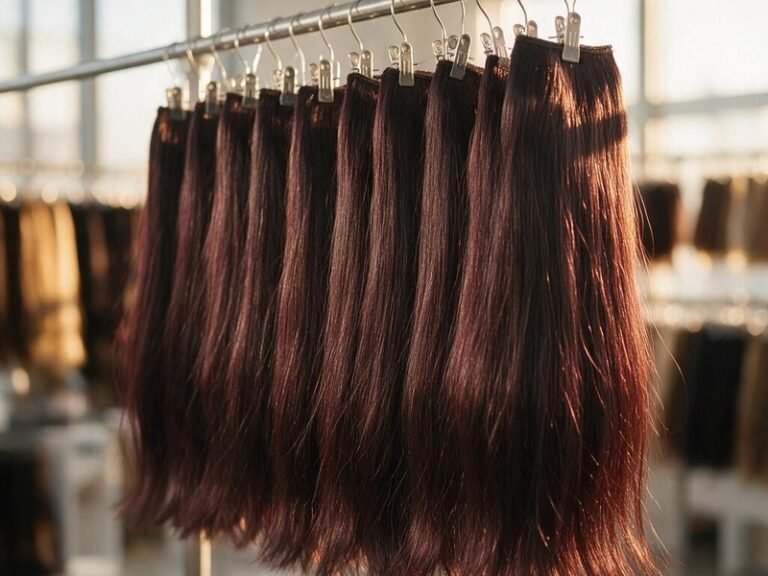
For blonding or custom pastels, raw hair is worth the higher wholesale cost for high-ticket clients. For glosses, root melts, and deposit-only tones, quality virgin weft hair—hair on a sewn track—gives salons a better margin. For braids, bulk hair, loose hair without a weft, can be color-tested in small sections first. Raw hair also costs more and can have longer lead times for curly textures past 24 inches. I’d carry a small raw selection for major color jobs and dependable virgin hair for standard installs.
Salon Color FAQ
Can I dye raw hair the same day it arrives?
You can, but not without a strand test, even if the bundle looks clean. Clarify, inspect the wefts and ends, then test a small piece with your exact formula. That prevents a rushed Saturday redo.
Does virgin hair fade faster after coloring?
Not automatically. Quality virgin hair with aligned cuticles can hold deposit color well, but steamed or porous batches may release tone sooner at the ends. Raw hair usually fades more evenly, though home care and heat matter too.
If restocking for custom color, browse shop all hair extensions to compare weights and lengths before ordering. Note your client’s color goal on the order, and our team will help you choose hair that fits the service.
Send Us Your Hair Inquiry
Need bulk pricing, samples, or a private-label quote? Fill in the form and our team will get back to you within one business day.