How to Start a Hair Extension Brand With a Manufacturer
Most new brand owners I talk to think launching with a manufacturer means dropping $10k on custom packaging and pallets of hair day one. That’s not even close to the truth, and I’ve watched too many first-time vendors burn their startup budget on missteps that are totally avoidable if you know how the factory-to-brand pipeline actually works. We’ve worked with hundreds of new salon owners and resellers out of our warehouse over the last decade, so I’m going to walk you through how to start a hair extension brand with a manufacturer without the expensive missteps, no hype.
Your first move before you start a hair extension brand with a manufacturer
I get it, it’s exciting to brainstorm 12 different SKUs, custom curl patterns, and glittery packaging before you even know what your first customer will buy. But if you email a manufacturer with a vague request for “all types of hair extensions,” you’ll either get a wildly inaccurate quote, or a sales rep will push you to buy way more inventory than you need. Pick 1-2 core products first, aligned with who you’re selling to. If you’re targeting braiders and protective style clients, bulk hair for braiding is a low-lift first SKU with steady repeat orders. If you’re working with salon clients who want semi-permanent installs that last 6-8 weeks, tape-ins are a consistent bestseller for new brands.
- Single-SKU white label launch: MOQ as low as 20 pieces, total starting cost $800-$1,200, lead time 3-5 days
- Two-SKU private label launch with custom tags: MOQ 30-50 pieces total, total starting cost $1,800-$2,500, lead time 10-14 days
- Fully custom product launch with unique colors/curls: MOQ 200+ pieces per SKU, total starting cost $4,000+, lead time 3-6 weeks
Don’t bite off the fully custom option for your first run. You’ll tie up too much cash in inventory before you even know if your customers like the texture or length mix you picked.
Vet manufacturers the way you’d vet a new stylist for your own hair
You wouldn’t let a random stylist bleach your hair without seeing photos of their past work, right? Apply that same energy here. A lot of new brands get hung up on finding the “perfect” factory, but really you’re looking for a partner that’s honest about their limitations, not one that promises you the world for pennies on the dollar. I put together a full breakdown of critical questions to ask an OEM manufacturer before you send any deposit, but the big ones people skip are asking for unedited photos of current stock (not filtered influencer shots), asking what their average defect rate is, and confirming if they handle small reorders fast or if you have to hit the high initial MOQ every time you restock.
A quick reality check on pricing: expect to pay $28-$42 per bundle for good 10A virgin remy hair, depending on length. If a factory quotes you $12-$18 per bundle for “100% virgin unprocessed hair,” walk away. That hair is a mix of low-grade human and synthetic fiber that will tangle and mat after two washes, and you’ll spend more money replacing angry customer orders than you saved on the initial batch. A transparent manufacturer will tell you their defect rate hovers around 1-2% (zero defects is a lie, every production run has small inconsistencies) and will credit you for those pieces on your next order, no arguments.
Know the difference between white label, private label, and custom runs
These terms get thrown around so much that most new brand owners mix them up, and that confusion leads to surprise charges and missed timelines. Let’s break it down like we do for every new client that calls our warehouse:
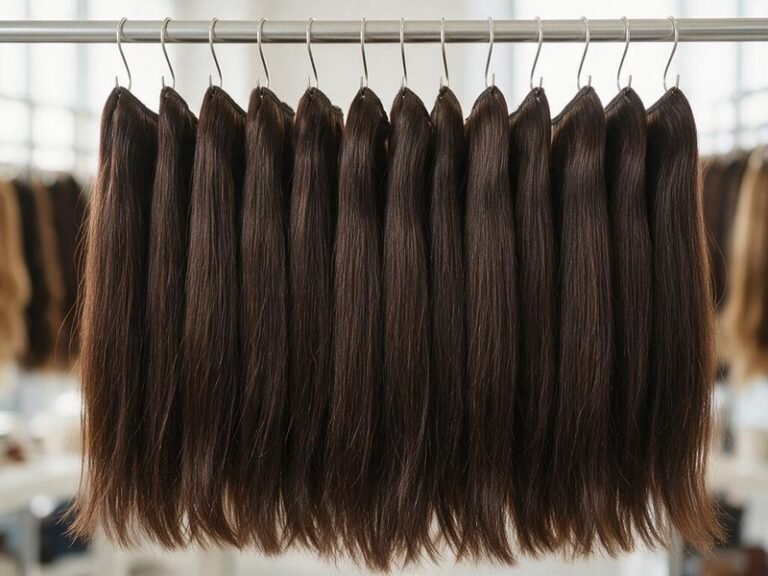
White label is the ready-to-ship hair we keep in stock year-round, in standard textures and colors. You can add your own logo tags, satin bags, and poly mailers, but you can’t change the hair itself—no custom color blends, no pre-cut pieces, no unique curl patterns. This is the fastest, cheapest way to launch, and it’s what 90% of our new brand clients start with.
Private label is the middle ground. We make small, targeted tweaks to our existing stock to match your brand: think pre-cut tape-in hair packs matched to your brand’s exact length mix, custom printed tape tabs, or pre-washed and conditioned bundles with your signature scent. MOQs for private label sit around 50 packs per SKU, and lead times run 10-14 days after you approve a sample.
Fully custom manufacturing is when we source raw hair specifically for your brand, create exclusive curl patterns or custom color melts, or build entirely new product types you won’t find from other vendors. This is the tier where you can build a truly one-of-a-kind brand, but it comes with real tradeoffs: MOQs start at 200 pieces per shade and curl pattern, lead times stretch to 3-6 weeks, and you’ll pay a 30% non-refundable deposit upfront to cover raw material costs. I don’t recommend this tier for brands that haven’t done at least $10k in sales with white or private label stock first.
The post-order steps no one warns you about
Once you send your deposit, don’t sit back and wait for a perfect order to show up on your porch. A good manufacturer will send you a 2-3 piece sample of your exact order (including any branded packaging) before they run the full batch, even if it adds 2 days to the timeline. We do this for every single private label client, because I’ve seen too many brands approve a digital mockup of their logo, only to realize the print is too small or the hair shade is half a tone off when the full 50-piece batch arrives. That sample step is non-negotiable if you don’t want to eat the cost of a full bad order.
When your full order arrives, don’t just drop the boxes in your garage and start taking customer orders. Pull out 10% of the pieces, run your fingers through them to check for excessive shedding, confirm the curl pattern and length match what you ordered, and make sure any branded tags or packaging are applied correctly. If you catch an issue within 48 hours of delivery, almost every reputable manufacturer will fix it, send replacements, or issue a credit. If you wait three weeks until you’re packing orders for a pop-up, it’s way harder to get a resolution.
Also, plan for seasonal delays. Every year, lead times get 2-3 days longer from mid-August through early September (back to school), all of April (prom season), and mid-November through Christmas. Factories don’t speed up production just because you need stock last minute, so place orders 2 weeks earlier than you think you need to during those windows.
The costliest new brand mistake I see every month
I can’t tell you how many first-time brands place their first order loaded with 28-inch and 30-inch bundles, because they think the extra-long lengths are what will go viral on social media. In reality, 70% of orders for most new brands are 16-inch, 18-inch, and 20-inch pieces—those are the everyday, wearable lengths most clients book installs for, and they’re 20-30% cheaper per piece than the super long options. If you blow 60% of your startup budget on 30-inch straight bundles, you’ll be sitting on that inventory for 6+ months while you turn away customers asking for 18-inch body wave.
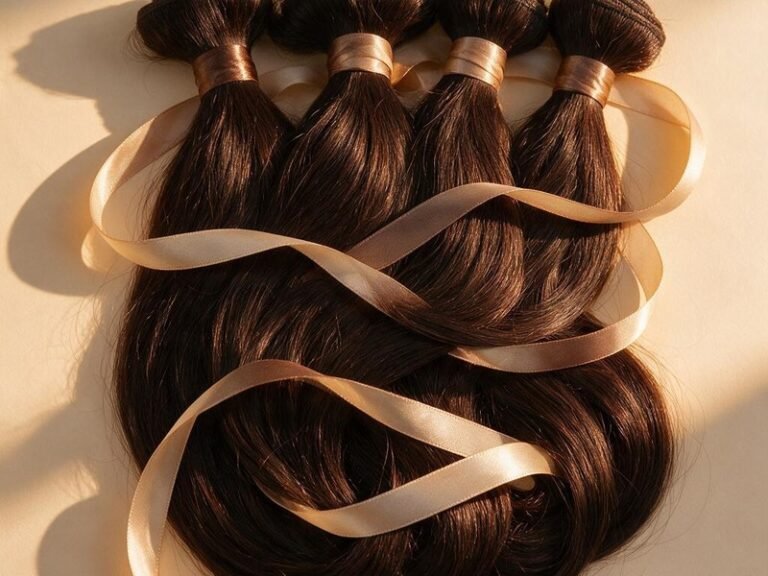
You don’t need fancy custom packaging for your first run, either. Skip the embossed boxes and custom silk hair ties for the first 3 months. Logo-printed tags and simple poly mailers are enough to look professional, and they’ll leave you more cash to reinvest in inventory that actually sells.
Quick answers to the questions I get every week
Do I need a registered business to place my first order?
For most small white label runs, no. You can place an initial order with just a brand name and shipping address, no EIN or resale certificate required when you’re starting out. Once you start doing $10k+ a year in sales, you’ll want to get your paperwork sorted for tax purposes, but you don’t need to wait for that to launch. We work with plenty of solo braiders and side-hustle resellers who don’t have formal business setups when they place their first order.
How much startup cash do I actually need?
You can launch a basic white label brand for $800-$1,200 total. That covers 20 mixed-length bundles or tape packs, simple logo tags, and branded poly mailers. If you want to go the private label route with custom pack sizes, plan for $1,800-$2,500 to cover the slightly higher MOQ and sample costs. You don’t need $10k, an investor, or a huge social media following to start. I’ve seen brands launch with $500 worth of stock, sell out at a local salon pop-up, and reinvest every dollar back into inventory for the first six months. It works if you don’t waste cash on stuff that doesn’t move the needle (looking at you, $500 custom website before you have a single product photo).
What if I get a bad batch?
Reach out to your account rep right away, with clear photos of the issue (shedding wefts, mismatched curl pattern, incorrect packaging) and a count of how many pieces are affected. A good manufacturer will issue a credit for the defective pieces on your next order, or send replacements if the issue is widespread. If a rep ignores your messages or tries to blame you for the defect after you’ve flagged it within 48 hours of delivery, that’s a sign to find a new supplier for your next restock.
You don’t need a perfect business plan, a warehouse, or a million followers to start a hair extension brand with a manufacturer. You just need a clear idea of who you’re selling to, a supplier that will be straight with you about lead times and flaws instead of telling you what you want to hear, and enough inventory to cover your first 20-30 orders without overbuying. If you’re ready to browse options for your first run, you can shop all hair extensions to see current stock levels and minimum order details, or reach out to our team with your core SKU idea and we’ll send over a straight, no-hidden-fees quote within one business day.
Send Us Your Hair Inquiry
Need bulk pricing, samples, or a private-label quote? Fill in the form and our team will get back to you within one business day.