How to Prevent Weft Shedding During Salon Installations
If your salon team is installing sew-in wefts and seeing loose hairs around the chair, the problem usually isn’t one single thing. We see it all the time from buyers: the hair may be good, but a rough cut, weak needle placement, or poor prep can make a perfectly usable bundle shed more than it should. Here’s how to prevent weft shedding during salon installations without wasting hair or blaming the supplier before you’ve checked the basics.
Start by knowing what normal shedding looks like
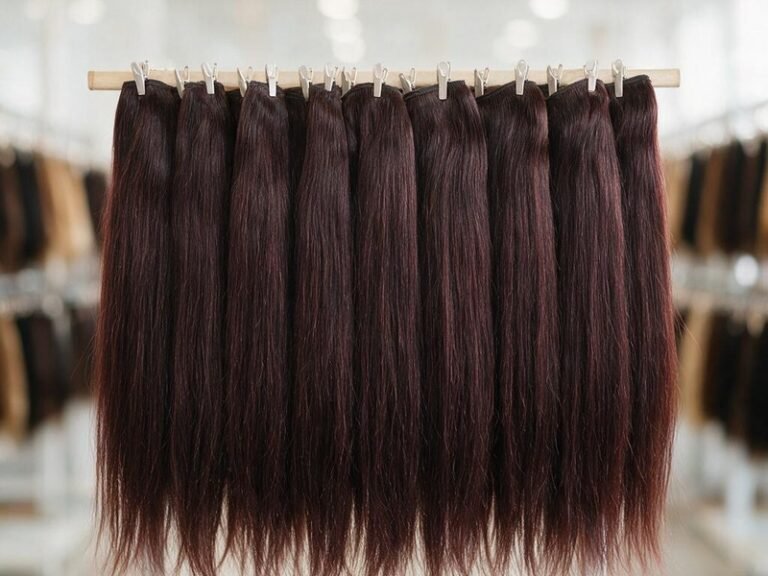
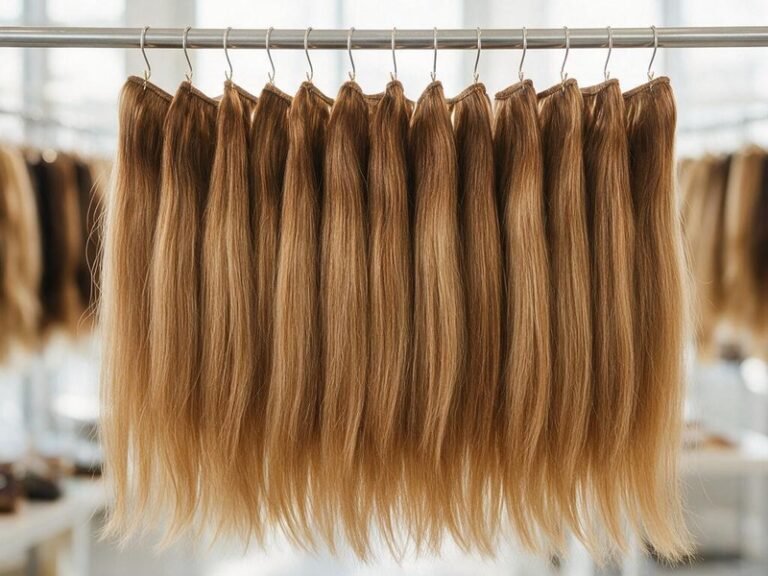
Every human-hair weft will release a few short hairs when you first run a wide-tooth comb through it, especially after factory handling and shipping. That’s loose fiber caught in the stitching, not necessarily a failed weft. A real problem looks like continuous pull-out: hairs sliding from the same seam in clumps, bald spots forming along the track, or the stitch line opening after normal brushing. If you stock weft hair, do a quick bench check before install: hold the weft lightly, give the top a gentle shake, and run your fingers along the hair once or twice. A handful is bad; ten to twenty stray hairs over a full bundle is usually nothing. We wrote more about factory expectations in our stitching density and shedding standards guide, and it’s worth sending that to new stylists so everyone is judging the hair the same way.
Cut the weft the right way, not just wherever
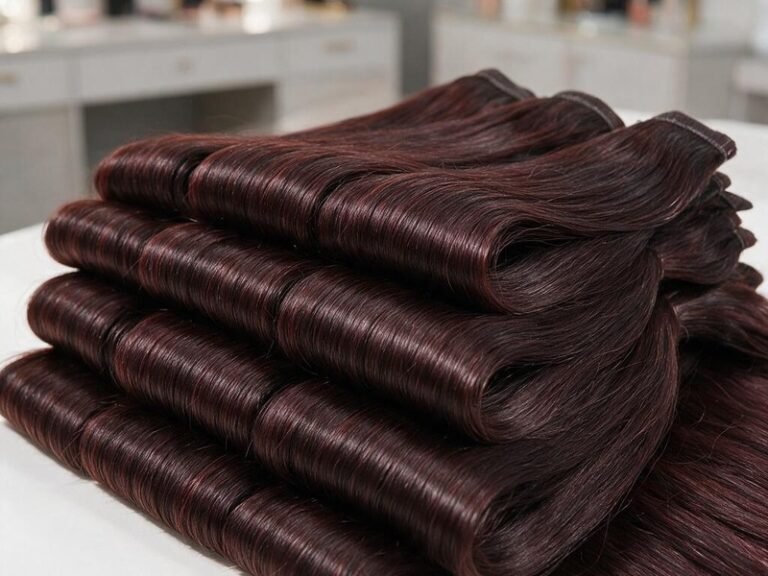
This is the most common preventable mistake in the chair. When a stylist cuts straight through a machine weft and leaves both raw ends unsewn, hairs can release from that open edge for days. The better method is to plan the track first, cut only where needed, and secure the cut end immediately with thread, a tiny fold, or a suitable weft sealer that dries fully. Don’t rush the sealer; tacky product can collect lint and make the seam stiff, which clients hate. If you’re doing custom wig work, width planning matters too, because fewer cuts usually mean fewer vulnerable ends. For hand-tied or thin-cut goods, treat the seam more gently than a standard machine weft; they’re softer by design, but they’re not indestructible.
Needle placement is where good installs go wrong
A stylist can accidentally create shedding by sewing directly through the hair-bearing part of the weft instead of staying in the reinforced stitch lane. The needle should pass through the fabric band or existing stitching, not angled up into the hairs. Use a curved needle with consistent, moderate tension—tight enough that the track lies secure, but not so tight that the weft buckles or threads snap when the client moves. Avoid repeatedly piercing the same spot, because that chews up the seam and turns a clean install into a shedding complaint waiting to happen. If a braider prefers loose hair instead of tracks for certain styles, choose bulk hair for braiding rather than cutting wefts apart and pretending they’ll behave the same way.
Prep, shampoo, and drying habits set the install up to last
Before installation, the client’s braids or cornrows should be neat, flat, and not overloaded with greasy product. Heavy oils near the track don’t stop shedding; they loosen thread, trap dirt, and make the underside harder to clean. After the install, shampoo in a downward motion instead of scrubbing the wefts in circles, and condition from mid-shaft to ends, keeping thick conditioner away from the seams. Clients should blot with a microfiber towel, detangle from the ends upward, and avoid going to bed with soaking-wet hair sitting against the tracks. A hooded dryer or low airflow on the underside helps, because damp wefts left bunched for hours can start smelling, tangling, and shedding from rough handling later.
When a client reports shedding anyway
Don’t assume it’s factory defect on the spot, and don’t tell the client that either until you’ve inspected the work. Ask how she’s washing, brushing, wrapping, and sleeping in the hair, then look closely at the seam, needle holes, cut ends, and whether the loose hairs are long pulled fibers or short cut hairs. If you sell retail hair to multiple stylists, keep a sample from the same lot, note the bundle weight—most common bundles run 95 to 100 grams—and take clear photos before washing or repairing anything. That documentation matters if the issue becomes an RMA, because it helps separate product failure from installation damage or client maintenance. Our RMA claims for matting or shedding walkthrough shows the kind of evidence that actually makes a supplier response faster. If the client wants other extension methods while the sew-in is being fixed, you can review options across the shop all hair extensions page instead of swapping in the wrong texture.
Does sealing every weft stop shedding completely?
No, it won’t stop every loose hair, and it shouldn’t be used as a cover-up for poor-quality bundles. Sealing helps protect cut ends, but clean cutting, proper needle placement, and gentle maintenance still matter more during a normal salon install.
How much shedding after a sew-in is acceptable?
A few stray hairs during the first wash or brushing session is normal, especially if the hair was compacted in packaging. If shedding continues beyond the first week, increases with every brush stroke, or focuses around cut ends and needle holes, inspect the installation before filing a supplier claim.
Train your stylists to inspect seams before they cut, secure every raw end, and keep the needle in the reinforced band. Small changes at the chair usually cut down complaints faster than switching vendors every month.
Send Us Your Hair Inquiry
Need bulk pricing, samples, or a private-label quote? Fill in the form and our team will get back to you within one business day.